



Dark Wood Office Seating
Dark wood office seating brings robust timber and traditional craftsmanship to your workspace, offering sturdy support alongside rich period character.
Dark Wood Office Seating
When you search for dark wood office seating, you encounter practical furniture designed for working environments across several centuries. The selection spans desk chairs, armchairs, and side chairs shaped by hands long ago.
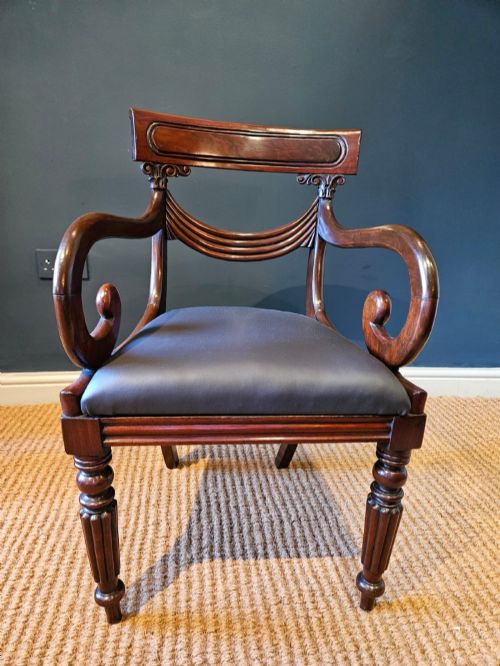
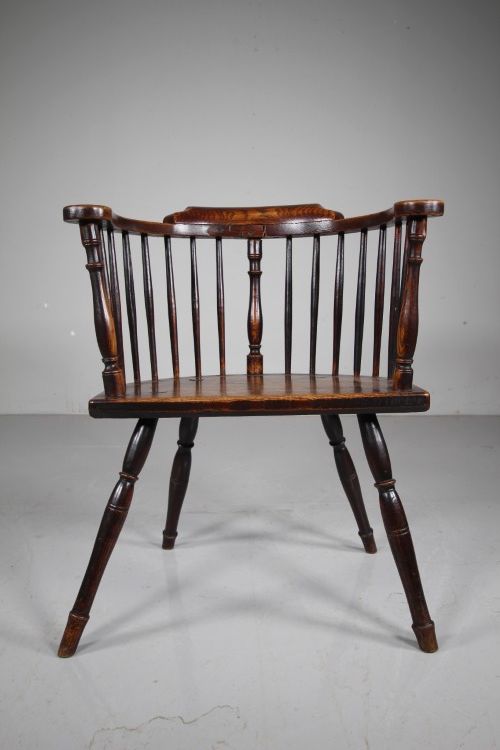
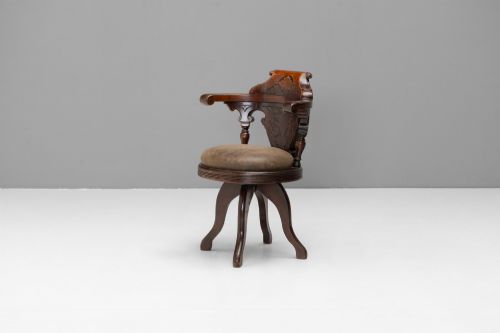
You are most likely to meet Edwardian and Victorian iterations on this page, alongside earlier Georgian country pieces and Regency examples. These items include revolving desk chairs, swivel models, and spindleback armchairs.
Woods such as mahogany, oak, elm, ash, beech, and occasional iron reinforcements define the physical presence of these listings. Upholstery in fabric, leather, and hand-stitched tapestry frequently completes the seating.
Materials and construction
Cabinet makers utilised dense hardwoods like mahogany and oak to build frames capable of withstanding daily clerical or domestic labour. Elm and ash often form the sturdy structural elements of country pieces.
Joinery methods relied on traditional pegging, framing, and turning techniques suited to heavy use. Metal mechanisms for swivel and height adjustment appear on later revolving models from the late nineteenth and early twentieth centuries.
Current listings feature periods spanning the eighteenth century, Regency, Victorian, and Edwardian eras, constructed from mahogany, oak, elm, ash, beech, and iron.
Judging the standard
The distinction between ordinary utility items and superior examples rests on the crispness of carved details and the integration of functional mechanisms. Carved mahogany frames with refined joinery sit at the higher end of the range.
Material selection and the survival of original upholstery, such as hand-stitched tapestry or aged leather, influence the overall character. Simple country elm chairs derive their appeal from honest patination and straightforward construction rather than ornate decoration.
The Dark Wood Office Seating Glossary
- Bergere
- A type of upholstered armchair with enclosed sides, often featuring cane panels. This form provides substantial comfort for seated work.
- Spindleback
- A chair back constructed with vertical turned wooden rods or spindles. This design lightens the visual weight of the timber frame.
- Revolving
- A seating mechanism allowing the top portion to turn on a central axis. This feature facilitates movement around a desk.
- Elm
- A tough, interlocking hardwood frequently utilised in regional country furniture. It resists splitting under pressure.
Dark Wood Office Seating: Frequently Asked Questions
What periods do these chairs cover?
The listings encompass items ranging from the eighteenth century through the Regency, Victorian, and Edwardian eras up to nineteen hundred and ten.
This broad span includes both rustic country workshops and refined urban cabinet makers.
Are swivel chairs a recent invention?
Revolving and swivel office seating existed in the nineteenth and early twentieth centuries, as seen in oak and mahogany models from eighteen seventy onwards.
These early mechanical versions allowed users to turn easily between desk tasks.
What woods were commonly used?
Makers selected mahogany, oak, elm, ash, beech, and occasional iron to construct these durable work seats.
Each timber offers distinct grain patterns and structural resilience suited to different regional styles.
How do I identify a desk chair?
Desk chairs often feature supportive armrests, adjustable height mechanisms, or revolving bases designed for functional workspace use.
Many examples also incorporate upholstered seats in leather or tapestry for extended sitting.