
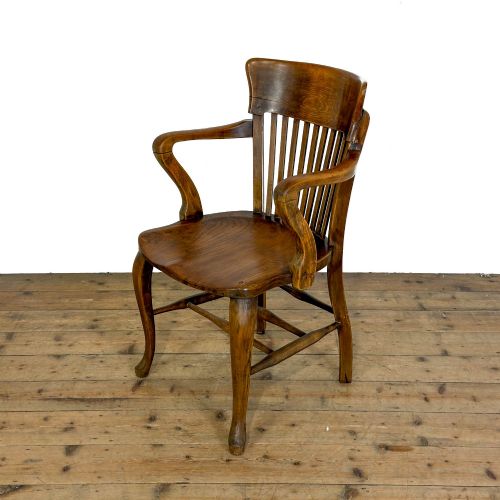

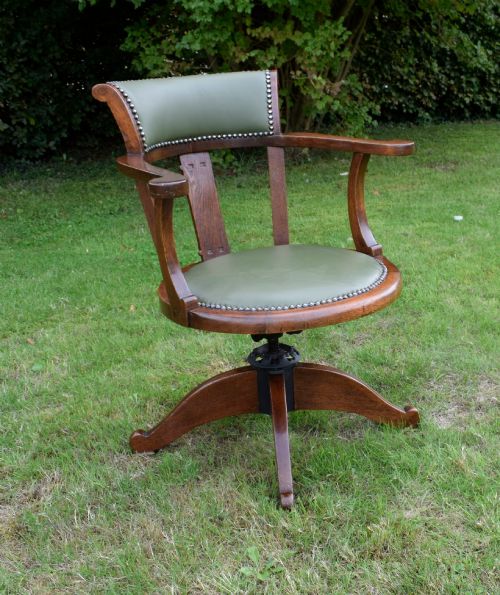
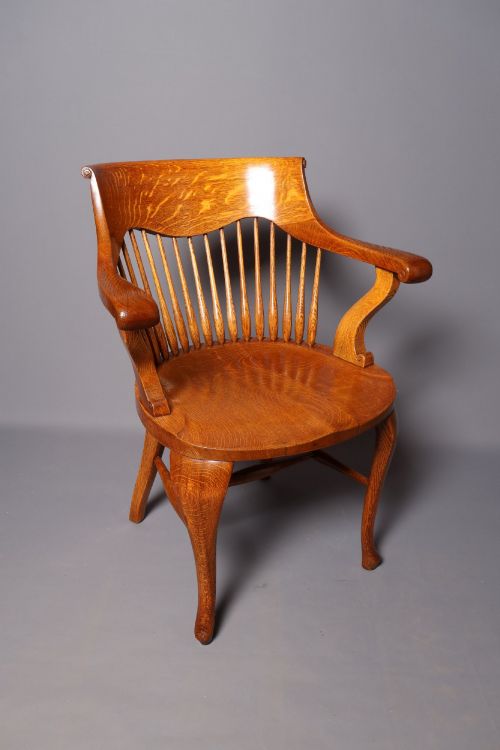


Vintage Study Chair Oak
These vintage study chair oak pieces are solid timber seating designed for the working desk, offering robust construction and period character.
Vintage Study Chair Oak
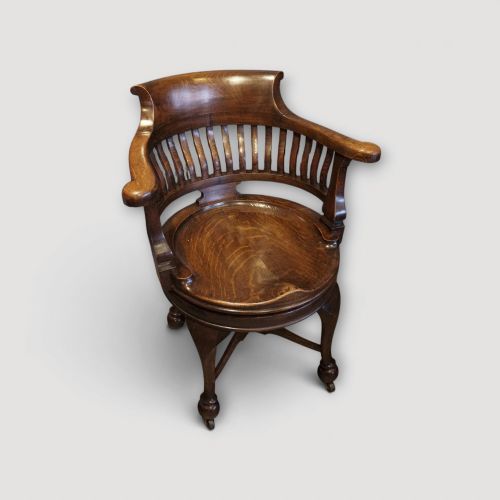
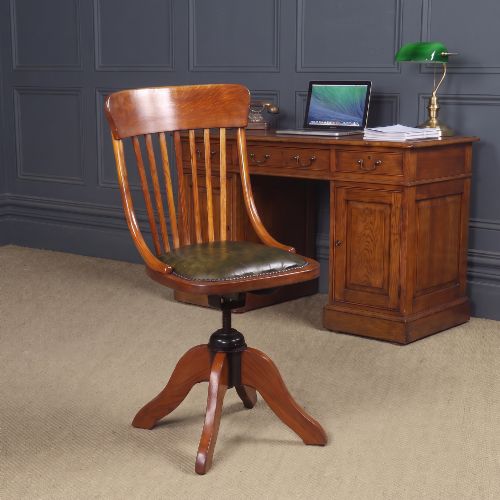
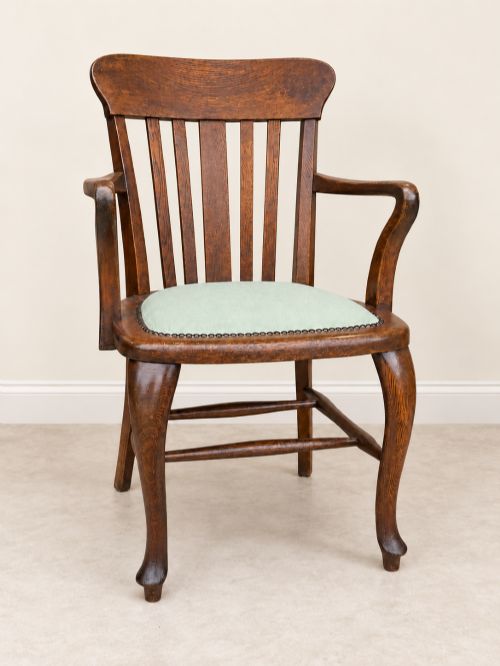
When you search for vintage study chair oak, you encounter functional timber seating created primarily during the Victorian and Edwardian periods, alongside examples from the early twentieth century. These objects function as practical office or library furniture, taking the form of desk chairs, armchairs, and revolving swivel designs.
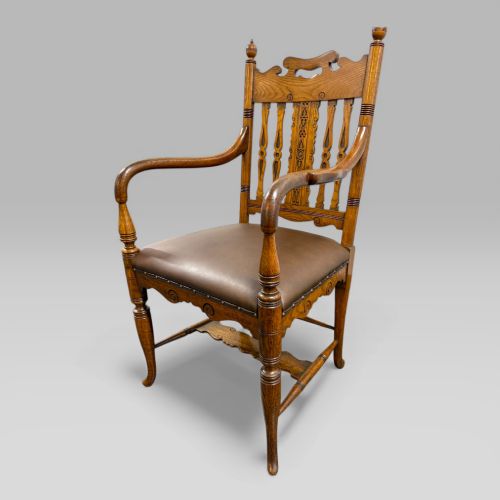
The pieces on this page span several revival styles including Jacobean, Gothic, Arts and Crafts, and Aesthetic Movement, reflecting the tastes of nineteenth and early twentieth-century makers. You are most likely to meet solid oak desk chairs featuring leather, hide, or wooden seats designed for daily study use.
How they were made
Makers utilised solid oak as the primary frame material, often combining it with secondary timbers such as beech in structural components. Joinery relies on traditional methods to support the weight and movement inherent in desk seating.
Upholstered versions incorporate leather, tan hide, velvet, or fabric secured with brass or metal tacks. Swivel and adjustable height examples integrate cast iron and metal mechanisms to provide functional movement.
Listings demonstrate a strong presence of Victorian and Edwardian periods, alongside pieces utilising oak, leather, brass, and cast iron.
What varies in quality
The standard of a piece depends on the depth of the carving, the selection of figured timber grain, and the integrity of the frame construction. Better examples display refined proportions and sophisticated stylistic details such as bergere cane panels or turned spindles.
Originality of the swivel mechanisms, castors, and leather upholstery distinguishes superior items from heavily altered ones. The harmony between the oak frame and its working parts defines the success of each piece.
The Vintage Study Chair Oak Glossary
- Bergere
- A type of chair featuring woven cane panels on the back or sides. This French technique adds lightness to heavy timber frames.
- Swivel chair
- A seat mounted on a central axis that permits rotation. These examples often incorporate adjustable height mechanisms utilising metal and cast iron.
- Smokers bow
- A sturdy low-backed wooden armchair with a turned spindle gallery. This form derives from traditional Windsor chair designs adapted for office use.
- Aesthetic Movement
- A late nineteenth-century design style emphasising visual beauty over narrative content. Pieces from this movement display simplified geometric lines and refined craftsmanship.
Vintage Study Chair Oak: Frequently Asked Questions
How do I identify a swivel desk chair?
Examine the underside of the seat for a central iron or wooden spindle mechanism that allows the top to rotate independently of the base. Many of these chairs also feature four-legged or five-legged wooden bases fitted with castors.
Such mechanical elements are typically found on pieces dating from the late nineteenth century onwards, reflecting the rise of the modern office environment.
What is the difference between an armchair and a library chair?
Library chairs generally possess wider proportions and more substantial padding designed for prolonged reading rather than active desk work. Desk chairs tend to have upright backs and narrower frames to fit neatly beneath writing tables.
Both forms appear frequently in oak, occasionally sharing similar turned arm supports and leather upholstery.
How should I care for leather upholstered oak chairs?
Clean the wooden frame with a soft cloth and feed the oak periodically with appropriate wax to prevent the timber from drying out. Treat the leather seat with a specialised conditioner to maintain its suppleness and prevent cracking over time.
Avoid placing these chairs in direct sunlight or near heat sources, which can damage both the hide and the oak joints.
How can I tell Victorian from Edwardian chairs?
Victorian pieces often display heavier proportions, darker finishes, and elaborate revival carving such as Gothic or Jacobean motifs. Edwardian examples typically exhibit lighter Golden Oak tones, simpler lines, and influences from the Arts and Crafts movement.
Construction techniques also evolve over this period, with Edwardian office chairs frequently adopting more refined swivel and height-adjustment hardware.