
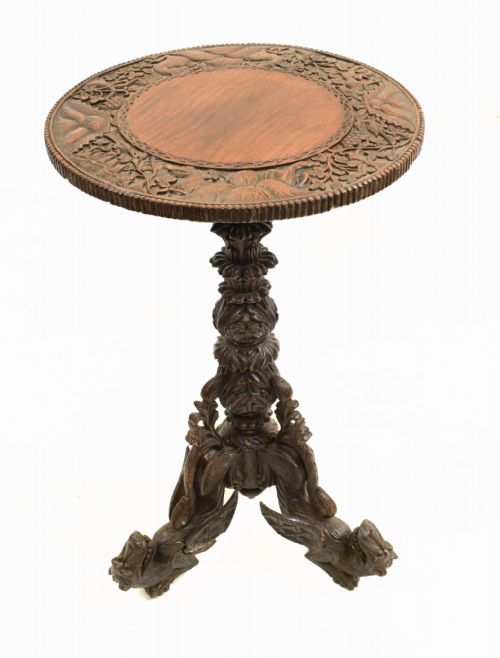


Anglo Indian Teak Side Table
An anglo indian teak side table brings intricate colonial craftsmanship and dense tropical timber directly into a modern interior.
Anglo Indian Teak Side Table
An anglo indian teak side table encompasses a range of occasional, coffee, and folding forms produced during the nineteenth and early twentieth centuries under British colonial influence. These pieces bridge British domestic utility with traditional South Asian woodworking traditions, resulting in distinctive forms like octagonal folding tables and tiered stands.
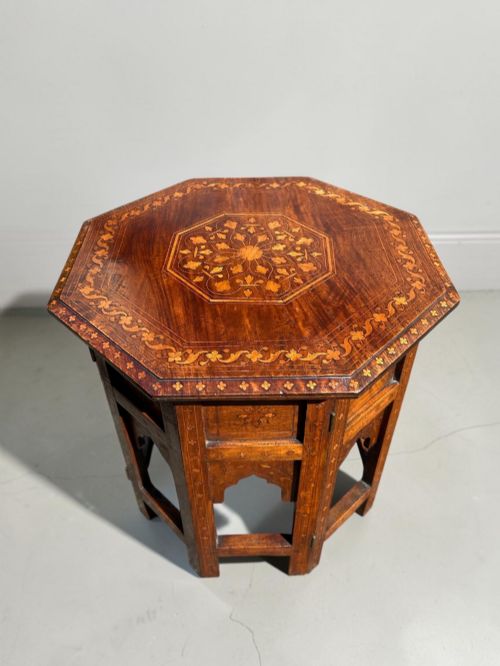
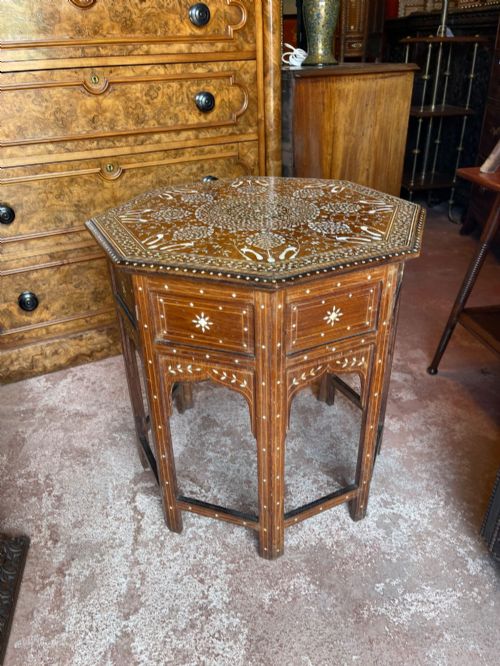
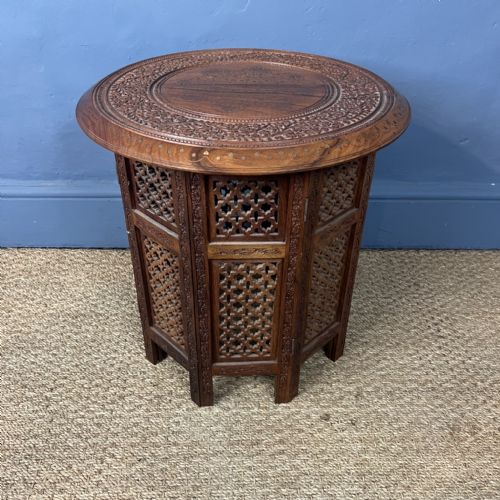
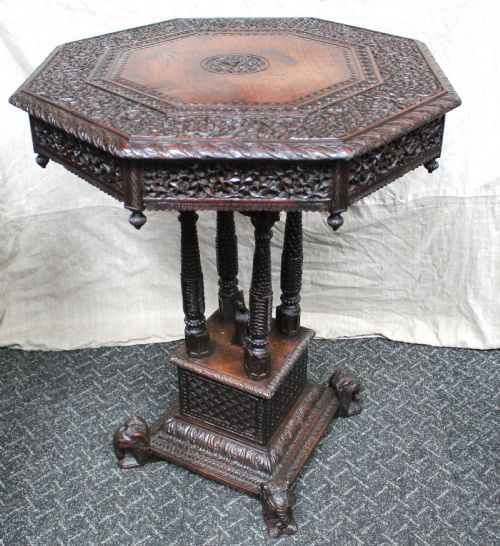
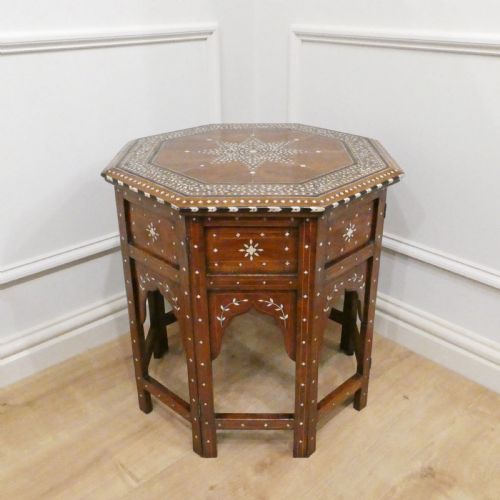
The version most frequently met on this page is the octagonal occasional table, often associated with centres like Hoshiarpur or the Bombay Presidency. These items frequently display dense surface carving or contrasting metal inlay, adapting traditional regional patterns for colonial homes and export markets.
How they were made
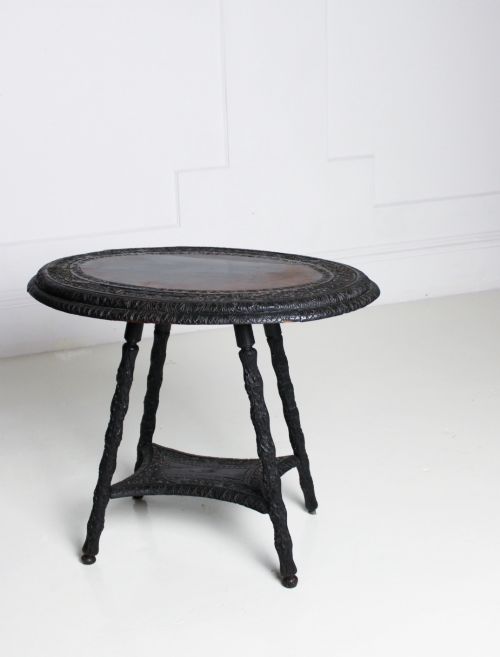
Makers utilised dense timbers, predominantly teak alongside rosewood and padouk, selected for stability and suitability for intricate hand carving. These woods provided a reliable canvas for deep relief work executed with specialised chisels and gouges.
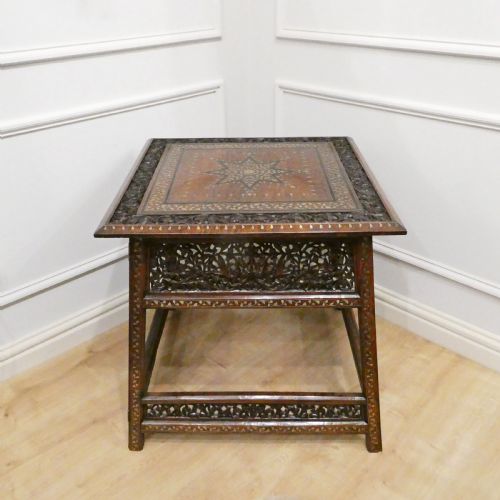
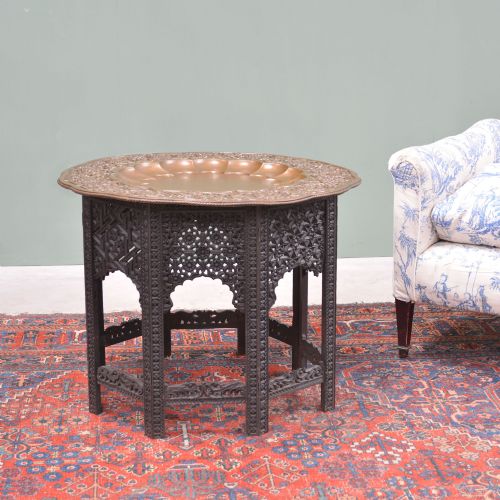
Surface ornamentation combined carving with metal wire inlay in brass and copper, alongside geometric inserts of bone or bone inlay. Folding mechanisms were engineered directly into the timber framework, allowing octagonal and circular tops to collapse neatly onto hinged X-form bases.
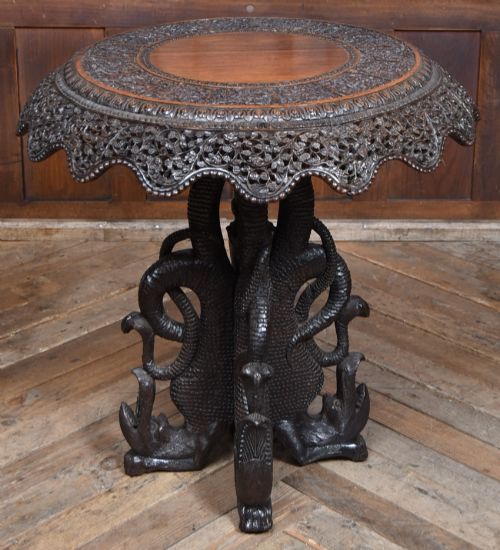
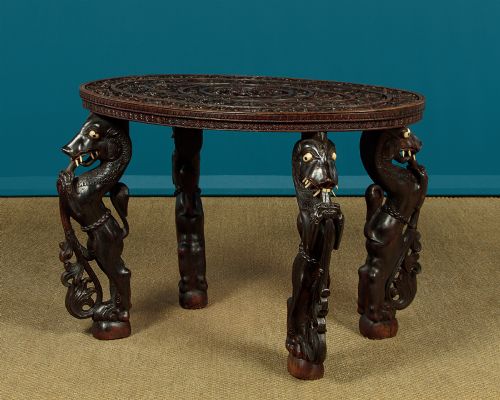
Several tables feature carved elephants acting as structural supports, turning practical furniture into miniature processions.
What varies in quality
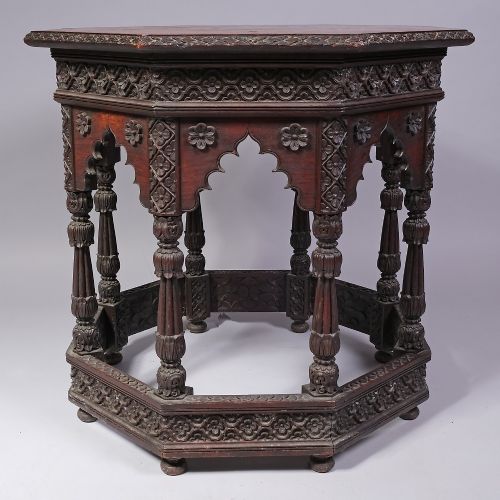
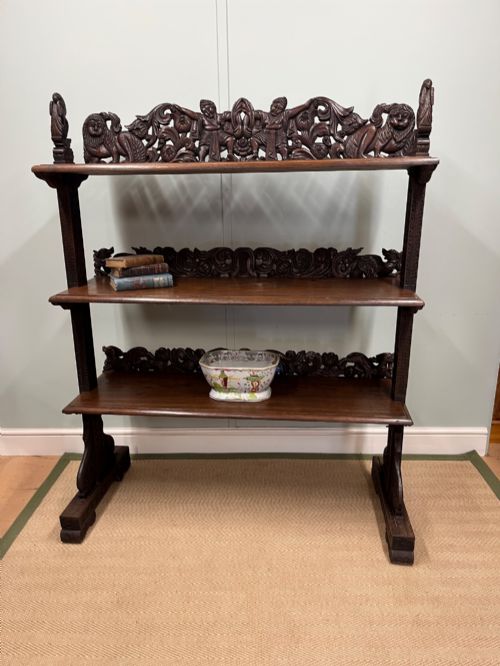
The depth and crispness of the hand carving separate standard commercial output from superior workshop production. Finer examples maintain sharp relief profiles across foliage, animal figures, and architectural motifs without softening or splintering in the grain.
The integrity of the inlay work marks another distinction, as tighter fitting brass wire and fully retained bone segments indicate superior craftsmanship. Structural stability in folding frames and consistent timber selection also govern the standing of an individual piece.
The Anglo Indian Teak Side Table Glossary
- Hoshiarpur
- A district in Punjab renowned for intricate woodwork involving brass and bone inlay set into shesham or teak. Pieces originating from here typically display dense geometric and floral patterns.
- Octagonal
- An eight-sided table top shape frequently utilised in folding occasional pieces from the region. This geometric format allows for balanced decorative panels on every face.
- Campaign furniture
- Portable items designed to fold or dismantle easily for transport by colonial officers. These tables often incorporate clever hinges and removable tops.
- Pier table
- A piece designed to stand against a wall, frequently between windows. Examples in this tradition combine heavy carving with flat rear edges for stable placement.
Anglo Indian Teak Side Table: Frequently Asked Questions
How do I fold an octagonal table?
The folding mechanism relies on an interlocking wooden frame that collapses inward on central hinges. Lift the octagonal top slightly to release the tension before folding the legs flat.
Take care to support the weight of the timber evenly during this movement to prevent straining the original brass pins or wooden pivots.
What woods were used for these tables?
Teak serves as the primary structural timber, chosen for its durability and resistance to shrinking in tropical and temperate climates. Rosewood and padouk also appear frequently in regional production.
Secondary woods or dense hardwoods support the detailed carving work found on table surfaces and folding bases.
How do I clean brass inlay?
Dust the surface regularly with a dry, soft-bristled brush to prevent particulate matter from settling into the carved recesses. Avoid liquid metal polishes that can stain the surrounding teak.
Apply a minimal amount of microcrystalline wax occasionally to protect both the timber and the metal components from moisture.
Where were these tables made?
Production centred in specific regions across the Indian subcontinent, including the Punjab town of Hoshiarpur and workshops within the Bombay Presidency. Artisans in Burma also produced related occasional furniture.
These regional hubs developed distinct carving styles, ranging from dense floral scrolls to figurative elephant motifs and geometric bone inlay.