
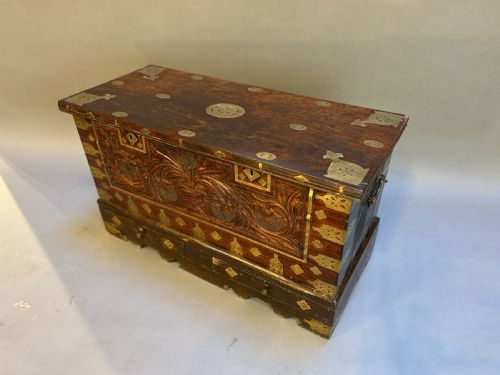


Anglo Indian Storage Trunk
An anglo indian storage trunk is a substantial piece built for travel or domestic storage, combining British campaign utility with colonial craftsmanship.
Anglo Indian Storage Trunk
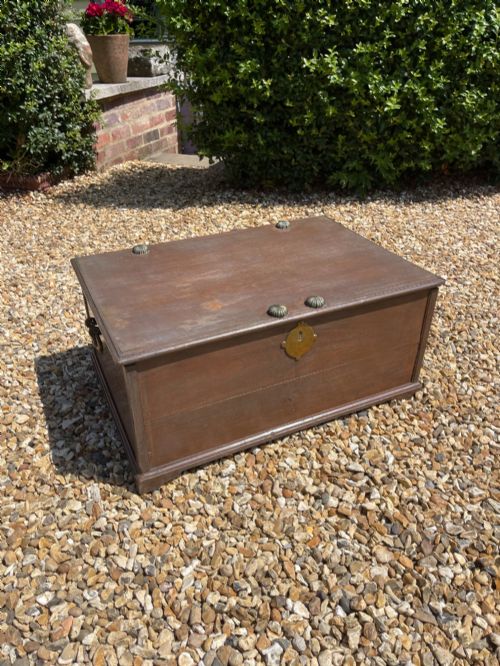
When searching for an anglo indian storage trunk, buyers encounter heavy timber boxes designed for colonial administration, military campaigns, and merchant trade during the nineteenth century. These pieces function as blanket boxes, blanket or storage boxes, and heavy dowry chests intended to withstand long sea journeys.
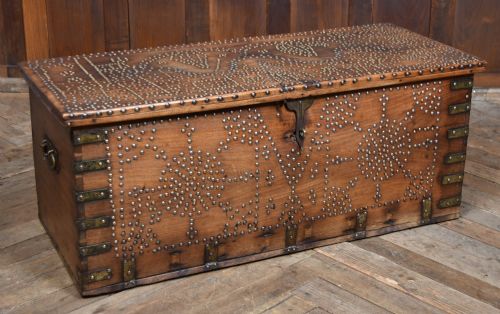
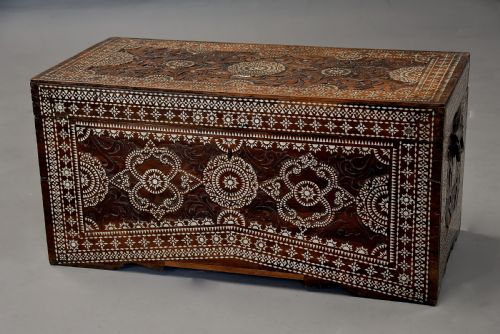
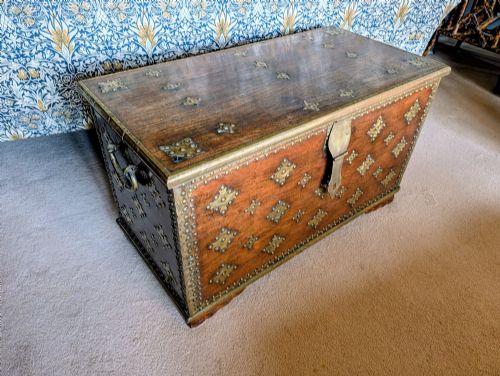
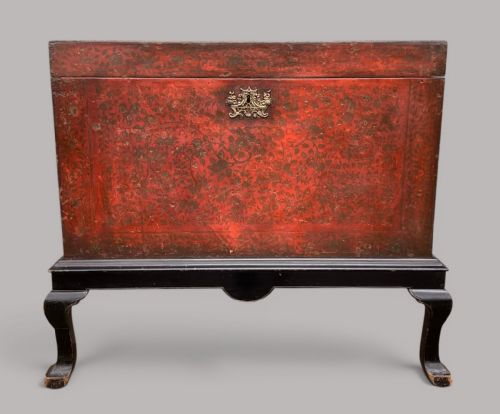
Origins span regions influenced by British trade, including Ceylon, Zanzibar, and mainland India, resulting in diverse decorative treatments from plain brass-bound utility to intricate mother of pearl inlay and red lacquer.
Materials and construction
Construction relies heavily on durable tropical hardwoods such as teak, padouk, camphor wood, rosewood, and satinwood, selected for their resilience against humidity and insects. Camphor wood is particularly prevalent for its aromatic properties that naturally deter pests from stored textiles.
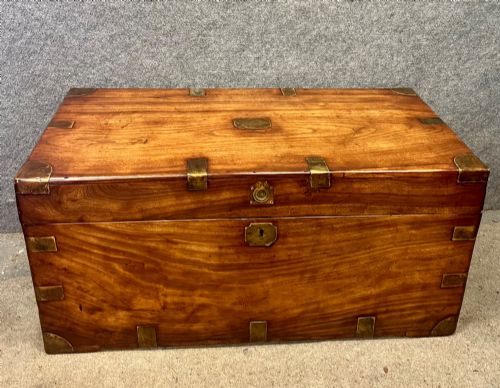
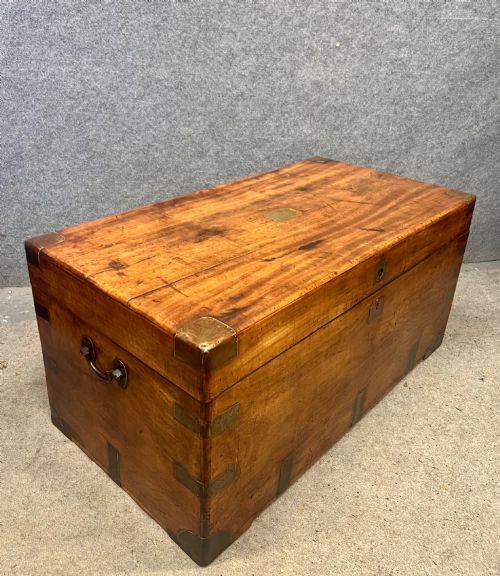
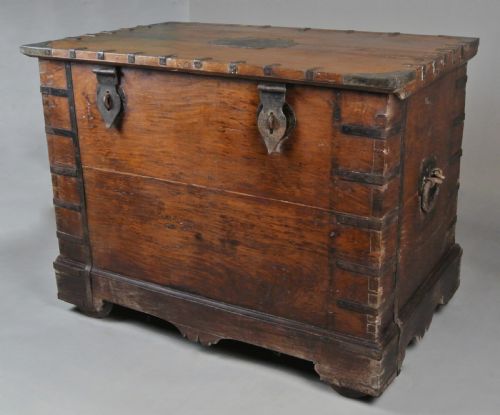
Metal reinforcement is integral to the construction, utilising heavy brass straps, corner brackets, and iron bindings secured with studs to protect joints during transit. Flush-fitting brass drop handles and recessed hardware allow military trunks to pack tightly into cargo holds.
Camphor wood chests retain their sharp medicinal scent for over a century, instantly revealing their contents before the lid is even lifted.
Judging quality in colonial chests
Quality separates along the lines of timber selection, the crispness of brass or iron work, and the integrity of the joinery. Dense heartwoods like padouk and satinwood represent finer tiers of production compared to general utility timbers.
The refinement of decorative elements dictates the upper range, such as precise brass strapwork, complex mother of pearl inlay, or specialist lacquerwork on chests mounted to dedicated stands, contrasting with purely utilitarian iron-bound merchant boxes.
The Anglo Indian Storage Trunk Glossary
- Camphor wood
- A fragrant tropical timber commonly used for nineteenth-century storage chests to protect woollens and linens. Its natural aromatic oils repel moths and insects.
- Campaign trunk
- A portable chest built for military officers on the move, featuring recessed brass handles and reinforced corners to endure rough transport.
- Padouk
- A heavy, dense reddish-brown hardwood utilised in colonial cabinetmaking. It offers exceptional durability and a fine natural lustre.
- Zanzibar chest
- A distinct form of heavily brass-studded storage chest originating from or influenced by trade with the East African coast. They often feature elaborate brass plate work and compartmented interiors.
- Dowry chest
- A large ceremonial box constructed to hold household goods and textiles for a bride. These pieces are frequently monumental in scale and richly decorated.
Anglo Indian Storage Trunk: Frequently Asked Questions
What is an anglo indian storage trunk?
An anglo indian storage trunk is a nineteenth-century wooden chest produced in colonial regions for British military officers, merchants, and local households. These pieces were built to transport belongings across oceans or to store valuable textiles securely.
They combine robust structural framing with native timbers like teak and camphor wood, often finished with brass bindings to protect the edges during transit.
How do I identify camphor wood?
Camphor wood can be recognised by its distinct, medicinal aroma when the chest is opened, even after many decades. The timber displays a pale golden-brown grain that takes a smooth finish without heavy staining.
Cabinetmakers favoured this wood specifically because the natural scent protects stored garments from insect damage.
How do I care for a hardwood chest?
Maintain these trunks by keeping them away from direct heat sources and sudden humidity changes that can cause dense tropical timbers to split. Regular dusting with a soft cloth preserves the natural polish of woods like padouk and satinwood.
Avoid heavy liquid polishes and rely instead on traditional waxes sparingly applied if the timber appears dry.