



Anglo Indian Side Chairs
Anglo Indian side chairs bring together British seating forms and intricate South Asian carving, offering striking regional character for modern rooms.
Anglo Indian Side Chairs
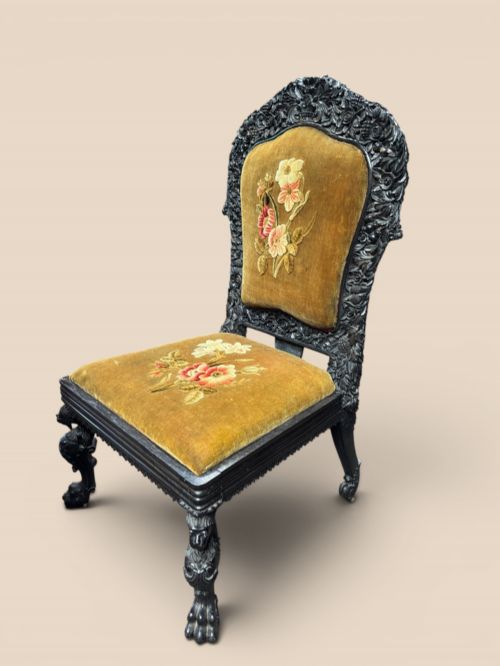
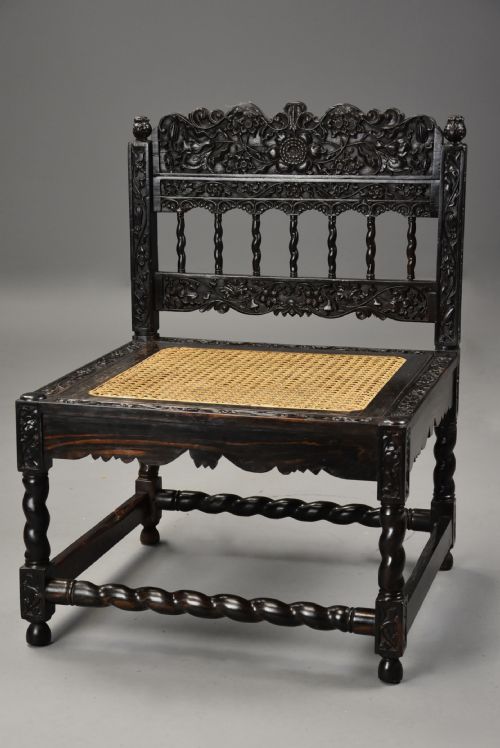
When you search for Anglo Indian side chairs, you encounter seating that merges British domestic forms from the seventeenth to the nineteenth centuries with traditional craftsmanship from the Indian subcontinent, Ceylon, and Burma. These pieces emerge in various forms, including dining sets, hall chairs, library seating, and occasional chairs.
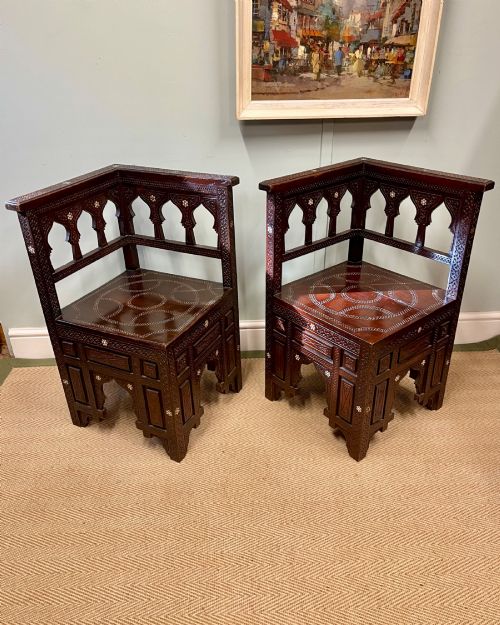
The versions most frequently met on this page date from the nineteenth century, including Victorian interpretations and specific regional styles such as Ceylonese, Burmese, and Moorish Revival pieces. Makers adapted familiar European chair skeletons to incorporate dense, native carving traditions.
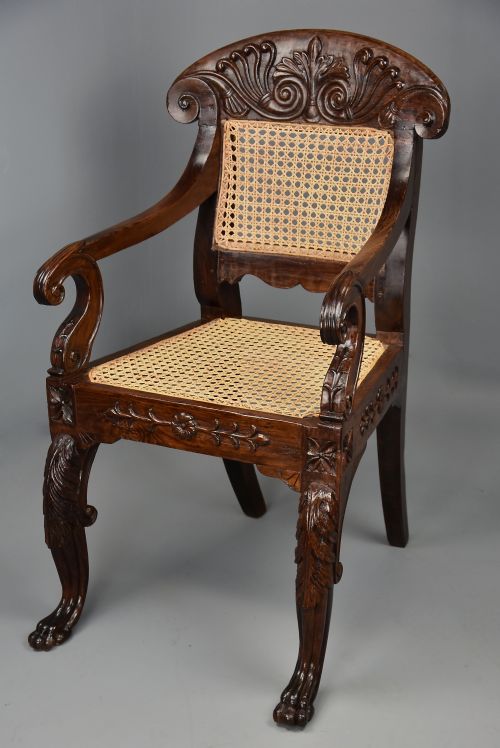
Materials span exotic dense hardwoods like padauk, rosewood, teak, ebony, and satinwood, often paired with cane seats, upholstery, velvet, or bone inlay. The resulting furniture ranges from formal dining chairs to low, heavily carved veranda seating.
Materials and Construction
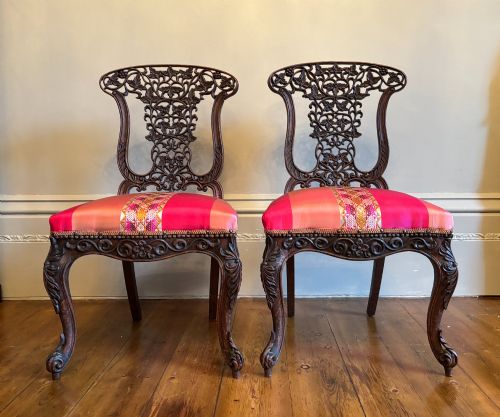
Workshops utilised dense tropical timbers such as padauk, ebony, rosewood, and teak, which allowed artisans to execute extraordinarily deep and crisp relief carving without splintering. These heavy hardwoods provided the structural integrity needed for intricate openwork backs and heavily detailed frames.
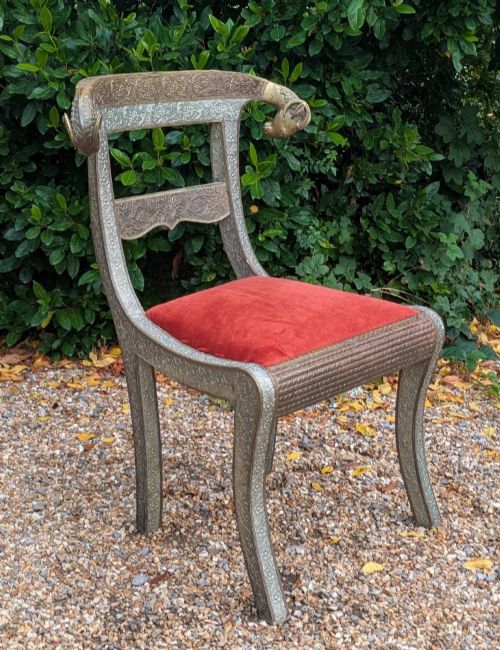
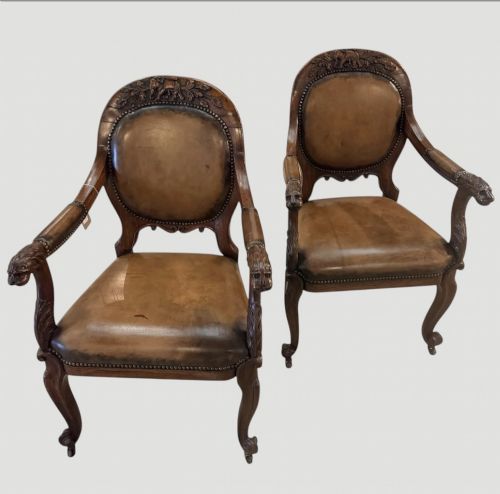
Surfaces frequently display elaborate hand-carving depicting floral motifs, geometric patterns, scrolls, and occasional figural elements like rams heads. Artisans combined traditional mortise and tenon joinery with regional decorative techniques, occasionally incorporating bone inlay or gilded finishes.
One recorded harpist chair ensures that musicians could perform seated whilst surrounded by dense Burmese padauk carvings.
Assessing Quality and Execution
The distinction between standard production and top-tier examples lies entirely in the depth, crispness, and ambition of the carving. Superior pieces exhibit deeply undercut relief where foliage and figures detach cleanly from the background, whereas lesser examples rely on shallow, machine-like surface incisions.
Timber selection and structural coherence further divide the range, with select pieces utilising solid ebony, richly figured padauk, or dense rosewood. The integration between the imported European chair silhouette and the indigenous decorative vocabulary determines the overall success of the piece.
The Anglo Indian Side Chairs Glossary
- Padauk
- A heavy, durable tropical hardwood with a reddish-brown hue that darkens with age. It was a favoured medium for nineteenth-century workshops in South Asia due to its stability under intricate carving tools.
- Cane
- Woven rattan peel utilised for chair seats and back panels. It provided cool, flexible seating suited to warmer climates.
- Coromandel Coast
- A historical designation for the southeastern coast of India. Pieces originating from this region frequently feature dense ebony carving.
- Savonarola chair
- A folding chair constructed from multiple intersecting curved wooden slats, inspired by Renaissance Italian designs but reinterpreted by South Asian makers.
- Gilt wood
- Timber treated with a thin layer of gold leaf. This finish appears on specific nineteenth-century bedroom and salon seating.
Anglo Indian Side Chairs: Frequently Asked Questions
What periods do these chairs date from?
The listings span from the seventeenth century through the Victorian era into the early twentieth century, with the majority originating in the nineteenth century.
Styles range from early solid ebony forms to later Moorish Revival and Burmese folding variants, reflecting shifting colonial tastes and local export production.
How were these chairs used historically?
These chairs served in colonial households, administrative offices, and grand residences both in South Asia and Britain.
Specific forms functioned as library seating, dining suites, hall chairs, and low veranda furniture designed for relaxation in warmer climates.
How do I distinguish regional styles?
Ceylonese pieces frequently utilise satinwood or ebony with distinct Dutch-influenced structural lines, while Burmese examples display deeply recessed figural carving.
Padauk and rosewood dominate Anglo-Indian productions, often pairing British Regency chair frames with intricate Indian botanical motifs.
Can I use these chairs in modern dining rooms?
Many survive in pairs or larger sets, making them suitable for around a dining table or as singular accent pieces in a hallway.
Their robust hardwood construction supports daily use, though original cane seats may require careful handling or protective cushions.