





Anglo Indian Ottoman
An anglo indian ottoman brings layered warmth and intricate carving into a room, combining British scale with Eastern craftsmanship.
Anglo Indian Ottoman
When you search for an anglo indian ottoman, you encounter low seating and footstools that bridge distinct design traditions. These pieces often serve double duty as coffee tables or window seats within domestic spaces.
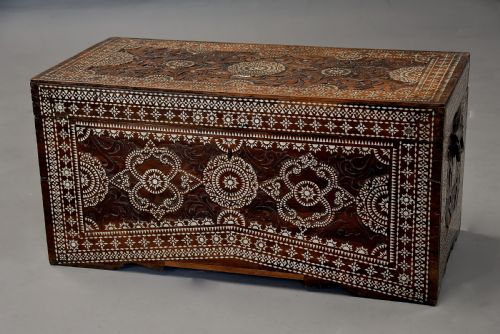
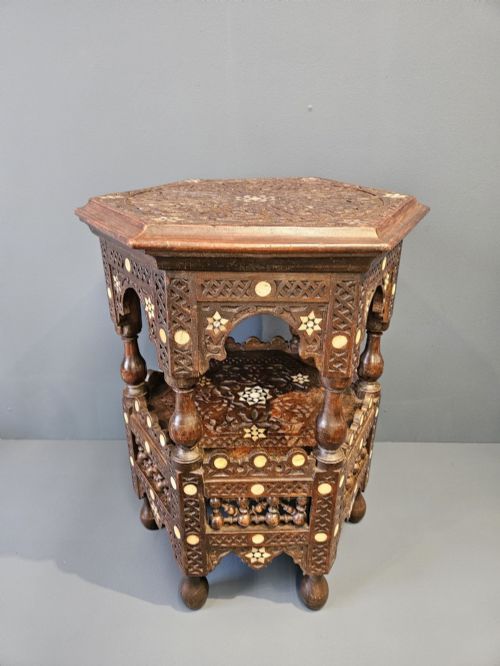
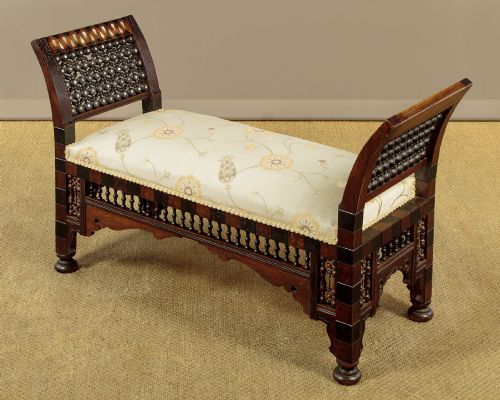
The versions most commonly met on this page date from the nineteenth century up through nineteen twenty. They encompass forms ranging from carved stools and footstools to low trunks and window seats.
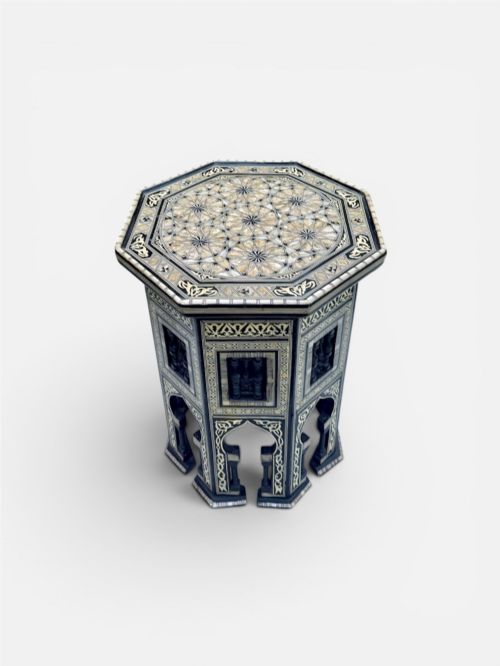
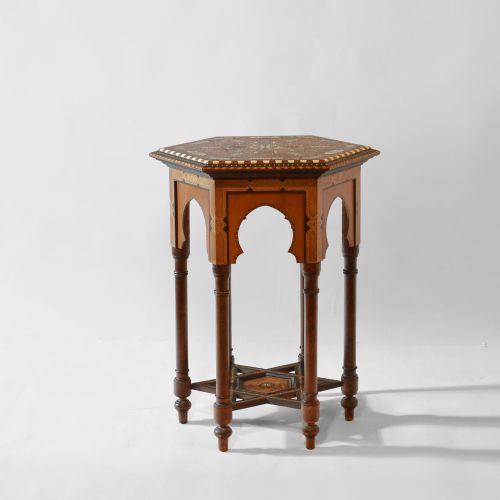
Makers drew upon Moorish Revival, Kashmiri, and Syrian influences alongside Anglo-Indian traditions. This stylistic overlap creates distinct seating options with rich surface ornament.
Construction and Materials
Craftsmen shaped dense timbers including rosewood, walnut, teak, and general hardwoods into solid frames. These sturdy structures provided stable foundations for detailed surface work.
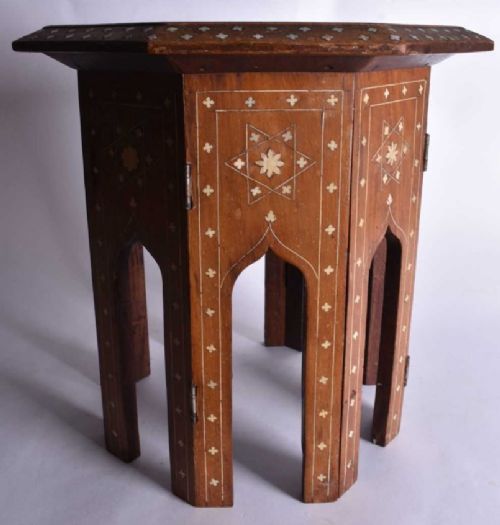
Artisans applied intricate surface decoration using bone, mother of pearl, and abalone inlay. They also utilised deep hand carving across the wooden elements to achieve geometric and floral patterns.
Judging Quality
The standard of a piece rests upon the crispness of the hand carving and the precision of the inlay work. Finer examples display tightly fitted bone or mother of pearl segments secured firmly within the timber.
Structural integrity also separates standard items from superior works. Solid timber frames with minimal movement and well-preserved joints indicate careful workshop production.
The Anglo Indian Ottoman Glossary
- Inlay
- A technique where pieces of a contrasting material such as bone or mother of pearl are embedded into depressions within a wooden surface. This creates flat, ornate patterns across tables and seating.
- Moorish Revival
- An architectural and decorative style popular in the nineteenth century that reinterpreted traditional Islamic design elements. It frequently appears on furniture featuring horseshoe arches and geometric latticework.
- Octagonal
- Having eight sides. This geometric form is common in the tops of side tables and occasional stands found within these traditions.
- Teak
- A durable tropical hardwood known for its dense grain and resistance to wear. Artisans utilised it for structural frames and carved components that required long-term stability.
Anglo Indian Ottoman: Frequently Asked Questions
How do I use an ottoman?
These low pieces function effectively as footstools, window seats, or occasional coffee tables in a living space. Their sturdy build supports daily sitting and resting of feet.
Keep them away from direct heat sources to protect the wooden structure and the delicate inlay work from drying out.
What woods were used?
Workshop makers utilised dense timbers such as rosewood, walnut, teak, and general hardwoods. These materials provided the necessary strength for intricate hand carving.
Darker woods often served as a rich background for contrasting bone and mother of pearl decoration.
How do I clean inlay?
Dust the surface gently with a soft, dry cloth to prevent dirt from settling into the crevices around the bone or pearl segments. Avoid using harsh liquid cleaners or polishes that might loosen the adhesives.
Professional conservation care is recommended if individual inlay pieces begin to lift or loosen from the timber base.
Are these pieces stable?
Nineteenth and early twentieth-century examples feature solid hardwood frames designed for practical household use. Regular seating puts weight onto joints that benefit from periodic checks.
Placing felt pads beneath the feet helps protect both the furniture base and delicate flooring materials.