





Anglo Indian Carved Sofa
An anglo indian carved sofa brings dense colonial craftsmanship and exotic timber into a room with striking presence.
Anglo Indian Carved Sofa
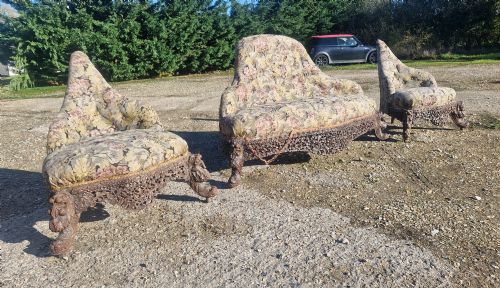
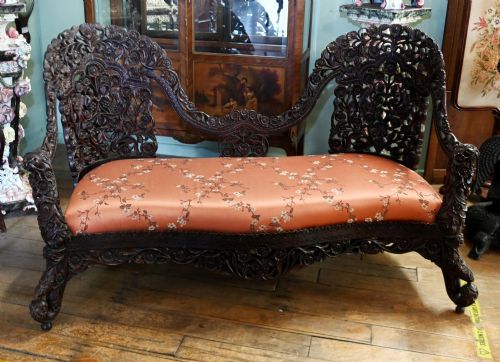
An anglo indian carved sofa represents a distinctive fusion of British colonial furniture forms and traditional Indian or Burmese craftsmanship. These seating pieces emerge predominantly from the nineteenth century, including specific dates such as 1890, 1860, and the Victorian era, alongside eighteenth-century examples.
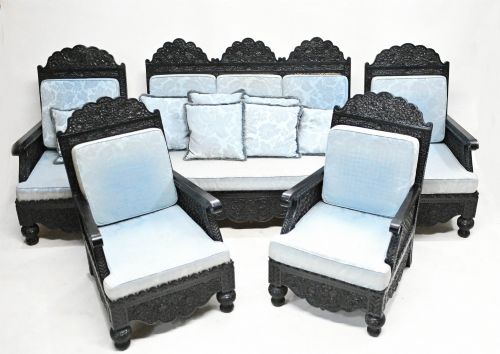
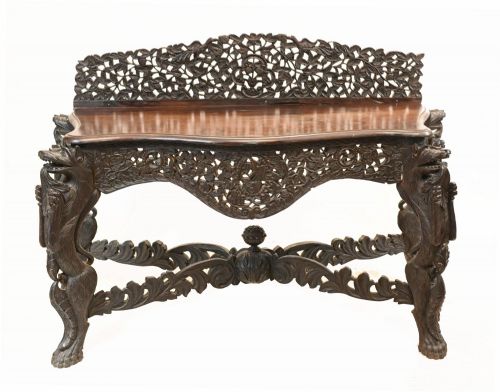
The listings show these pieces appearing as sofas, settees, daybeds, and benches, often accompanied by related seating suites and occasional tables. Buyers most frequently encounter nineteenth-century interpretations that combine European settees or daybed frames with intricate indigenous carving traditions.
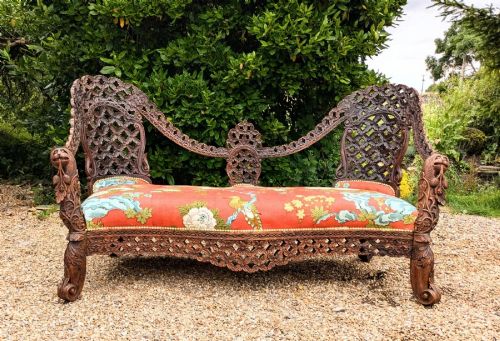
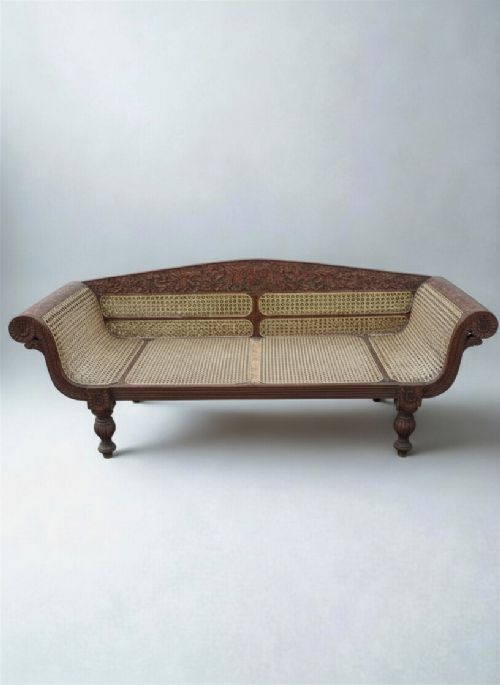
Originating across regions like Bombay and Ceylon, these items reflect the stylistic crossover of Anglo-Indian and Anglo-Burmese colonial design. The forms range from scroll-back benches to caned daybeds and heavily carved settees.
Materials and construction methods
Makers utilised dense exotic timbers native to the region, predominantly padauk wood, teak, rosewood, ebony, and general hardwood. These heavy woods provided the stable structural foundation necessary for deeply undercut and elaborate relief carving.
Many examples incorporate cane seating panels alongside traditional upholstery and fabric elements. The combination of turned woodwork, woven cane, and dense hardwood typifies the construction recorded across the colonial workshops.
Anglo Indian Carved Sofa Retail Price Guide 2026
Typical asking prices for anglo indian carved sofa among the pieces listed under this phrase on Sellingantiques today, from the lower quarter to the upper quarter. They describe what is for sale here now, not the wider market.
Listings feature items dated across the nineteenth century, including specific years like 1860, 1890, and Victorian-era examples.
Evaluating the craftsmanship
The distinction between tiers of quality rests upon the crispness, depth, and continuity of the hand carving across the hardwood frame. Superior pieces display deeply undercut foliage and figures that maintain sharp definition without softening.
Timber selection and grain figure also dictate the standard of the piece, with richly figured rosewood or padauk elevating the overall execution. Furthermore, the structural integrity of the joints and the preservation of original cane panels influence the standing of the furniture.
The Anglo Indian Carved Sofa Glossary
- Padauk wood
- A dense, heavy tropical hardwood prized for its reddish-brown colour and durability. It provides a stable ground for intricate carving.
- Cane
- Woven rattan material used for seating panels and backs. It offers lightweight flexibility within a heavy hardwood frame.
- Scroll back
- A seating design featuring an outward-curving top rail. This contour references European Regency and Victorian upholstery styles.
- Colonial
- Pertaining to the period of British rule in India and Burma. Furniture from this era synthesises European forms with local carving labour.
- Daybed
- An elongated seating form designed for reclining. It bridges the function of a chair and a bed in warm climates.
Anglo Indian Carved Sofa: Frequently Asked Questions
Where were these sofas made?
These pieces were produced in workshops across the Indian subcontinent and Burma during the period of British colonial influence. Local artisans combined European furniture forms with traditional indigenous carving styles.
The production centres included regions such as Bombay and Ceylon, resulting in distinct regional variations in timber choice and decorative motifs.
How do I care for padauk wood?
Padauk wood requires minimal moisture and should be kept away from direct heat sources to prevent the timber from splitting. Regular dusting with a dry, soft cloth maintains the natural finish.
Avoid using heavy silicone polishes, as they can build up on the dense grain and dull the appearance of the carved details over time.
Are caned seats original?
Caned panels are a common feature on nineteenth-century daybeds and settees from this region. They provided cool ventilation suited to warm colonial climates.
Original cane work shows appropriate signs of age and tension wear, distinguishing it from modern replacement weaving.
How do I date an antique sofa?
Dating relies on examining the construction joints, timber species, and stylistic overlap between British furniture designs and local craftsmanship. Nineteenth-century examples often display Victorian proportions combined with colonial carving.
Documentation, regional attribution, and the specific tool marks left by the carvers further help establish the period.