


Anglo Indian Carved Sculpture
These pieces of anglo indian carved sculpture bring dense tropical timbers and narrative relief into a room with distinct colonial character.
Anglo Indian Carved Sculpture
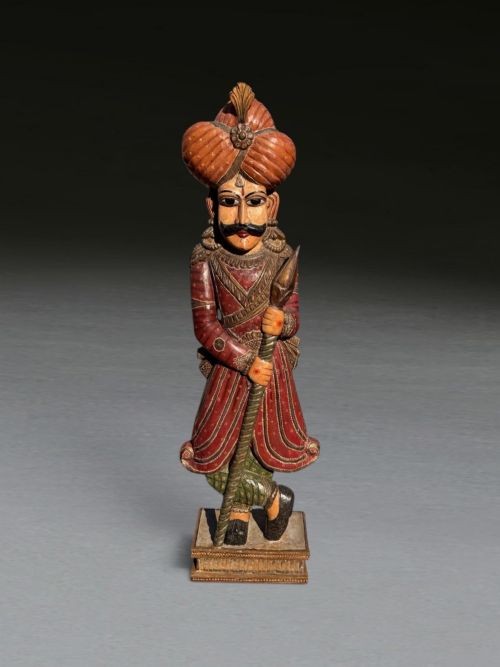
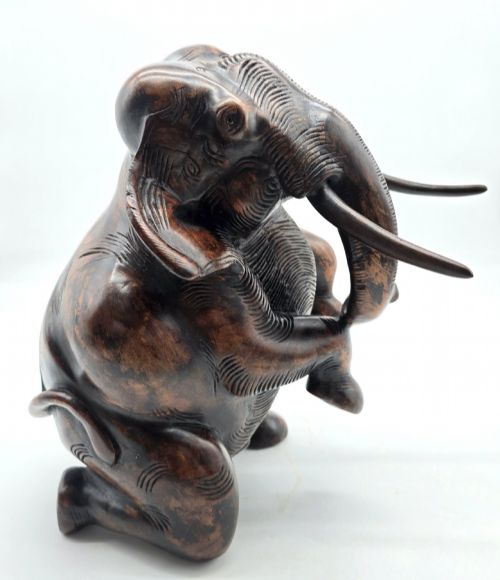
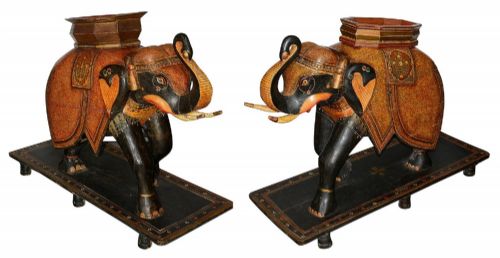
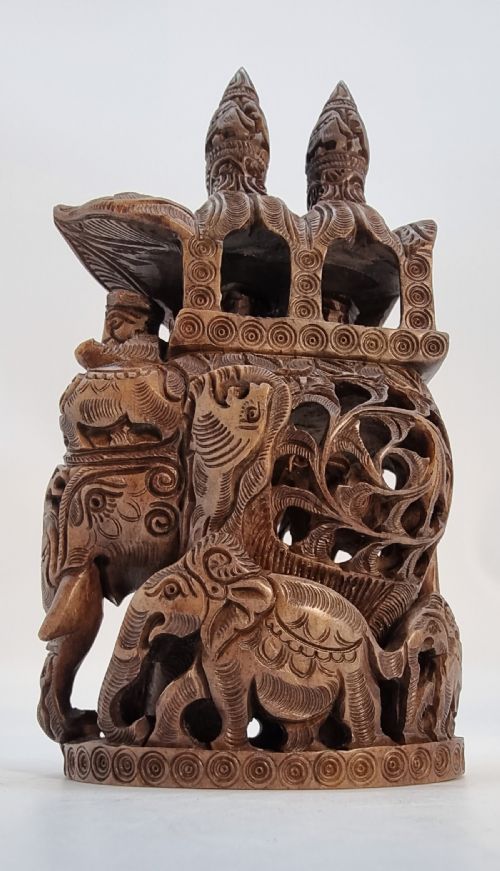
When you search for anglo indian carved sculpture, you enter a field defined by nineteenth-century intersection between British taste and local artisan traditions. The items appearing here range from life-size animal studies to deep-relief wall panels and architectural masks.
You are most likely to meet depictions of elephants, figures, and fauna shaped from dense timbers during the Victorian period and surrounding decades. These works bridge domestic ornamentation and historical record, reflecting colonial encounters through indigenous craftsmanship.
The forms span freestanding statuary, pairs of ceremonial animals, and framed wall carvings originating across the Indian subcontinent. Each object holds a physical weight and surface complexity distinct from European carving of the same eras.
Materials and construction
The makers relied on dense hardwoods such as teak and ebony, alongside soapstone, staghorn, and bone. These materials allowed for extreme detail in deep relief work without compromising structural integrity.
Surfaces frequently show applied pigment, gesso, or lacquer to enhance natural grain or simulate specific finishes. Hand tools carved every contour, creating visible chisel marks and varied textural depths across panels and figures.
Listings feature items spanning the eighteenth, nineteenth, and early twentieth centuries, constructed from teak, ebony, soapstone, and staghorn.
Evaluating the work
Depth of carving and clarity of detail separate standard decorative pieces from superior examples. Master carvers achieved anatomical precision in animals and intricate layering in wall panels that lesser workshops missed.
The choice of raw material dictates the baseline of quality. Heavy, stable hardwoods and unblemished soapstone indicate superior selection by the original maker compared to softer, more prone timbers.
The Anglo Indian Carved Sculpture Glossary
- Hardwood
- Dense timber derived from broad-leaved trees, providing the primary structural medium for these sculptures. These woods resisted warping and permitted minute carving.
- Gesso
- A plaster-like mixture applied to wood surfaces as a base for paint or gilding. It smoothed the substrate before final decoration.
- Lacquer
- A clear or coloured varnish applied in thin coats to seal and protect wooden surfaces. It yields a hard, durable sheen.
- Treen
- Small handmade wooden objects produced for domestic or decorative use. The term encompasses architectural fragments and small carved items.
- Soapstone
- A soft, talc-based metamorphic rock utilised for smooth figurative studies. Its composition allows for fine-grained surface detailing.
Anglo Indian Carved Sculpture: Frequently Asked Questions
What periods do these sculptures cover?
The listings span from the mid-eighteenth century through to the early twentieth century, with a concentration in the Victorian era and the Raj period.
Specific dates on items range from seventeen-fifty to nineteen-twenty, encompassing various regional workshops under colonial influence.
How were these pieces used originally?
Many functioned as interior display objects for British officials and merchants residing in India, or for export back to Britain.
Wall panels and masks served architectural or decorative interior roles, while animal studies adorned libraries and drawing rooms.
Which woods appear most often?
Teak and ebony dominate the material record among the hardwood sculptures and animal figures.
Softer mediums like soapstone and bone appear in specific figurative studies and smaller decorative items.
How do I care for carved wood?
Keep pieces away from direct heat sources and rapid humidity fluctuations to prevent timber splitting.
Dust gently with a dry, soft brush and avoid liquid polishes that might degrade applied lacquer or pigment.