
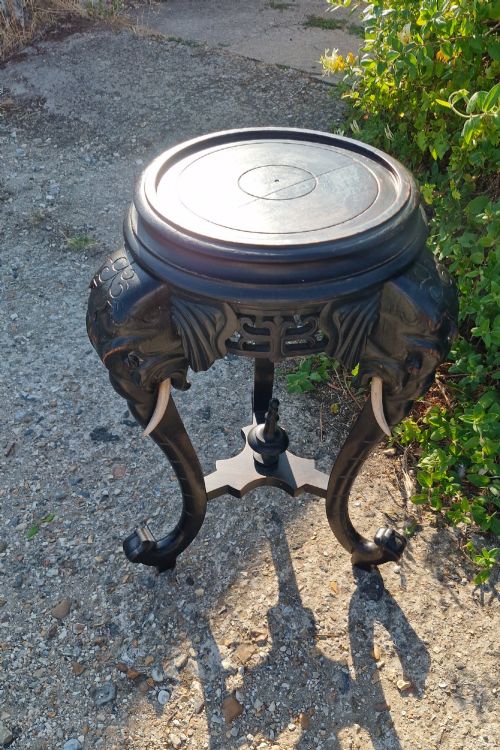
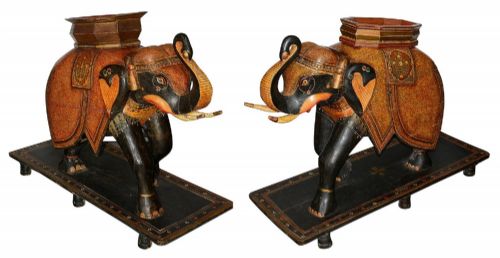


Anglo Indian Elephant Stands
Anglo Indian elephant stands combine colonial craftsmanship with striking animal forms, bringing carved exotic timber and detailed ornamentation into a room.
Anglo Indian Elephant Stands
Anglo Indian elephant stands are decorative occasional tables and plant supports featuring carved elephant figures as structural elements or decorative supports. These pieces emerge primarily from the nineteenth century, including Victorian colonial and Edwardian periods.
The most common formats found here are octagonal, hexagonal, or circular side tables where carved elephant heads and tusks support the top. Alongside tables, related forms include plant stands, pedestals, and occasionally bookends or folio stands incorporating similar motifs.
Originating largely from regions such as the Bombay Presidency, Kashmir, and Ceylon, these stands reflect distinct regional woodworking traditions. Makers utilised local timbers to create functional furniture infused with narrative animal sculpture.
Materials and construction
Construction relies heavily on dense tropical hardwoods such as teak and solid rosewood, chosen for their ability to hold intricate, deep relief carving. Artisans also employed painted wood, lacquer, and specific regional timbers like Ceylonese specimen wood.
Decoration is often enhanced through contrasting materials, notably bone inlay and painted wooden tusks. Metal elements such as brass appear on certain decorative accessories and bookends associated with the style.
One cheerful Victorian table comes equipped with painted wooden tusks ready to greet visitors.
Judging quality in carved furniture
The choice and grain of the timber also indicate standard, with dense solid rosewood or intricate Hoshiarpur bone inlay representing high levels of artisan skill. Structural stability and the proportional balance between the animal base and the table top further separate standard items from superior pieces.
The Anglo Indian Elephant Stands Glossary
- Hoshiarpur
- A town in Punjab renowned for intricate inlaid woodwork, particularly geometric patterns created using bone or brass set into dark timber. Such work appears on occasional tables and tripods.
- Specimen wood
- Furniture constructed from a multitude of different native timbers arranged to showcase varied natural colours and grains. This technique was particularly favored in Ceylonese workshops.
- Occasional table
- A small, light table designed for specific, intermittent use around a room, such as beside a chair or holding a lamp. In this context, it frequently takes an octagonal or circular form supported by carved animals.
- Tripod table
- A small table supported by three legs or a three-way pedestal base, providing stability on uneven floors. Many elephant stands utilise a three-legged structural arrangement.
Anglo Indian Elephant Stands: Frequently Asked Questions
How were elephant tables used?
Historically, they served as functional occasional tables for lamps, decorative objects, or holding small items in a Victorian drawing room. Their distinct animal forms also made them conversation pieces.
Today, they function similarly as side tables or plant stands, adding character and texture to traditional and eclectic interiors.
What woods are typically used?
The pieces on this page are predominantly made from dense tropical hardwoods, including solid rosewood and teak. Artisans selected these durable materials for their ability to take deep, intricate carving.
Some examples also incorporate painted wood, lacquer, or specialised regional specimen woods alongside contrasting bone inlay.
How can I date an elephant stand?
Dating relies on stylistic clues, construction methods, and materials associated with periods like the late Victorian era or the early twentieth century. Regional attributions, such as Bombay Presidency or Ceylonese origin, also help establish a timeframe.
Examining the wear on the timber and the style of the carving provides further evidence of age and origin.
How do I care for carved teak furniture?
Keep carved wooden furniture away from direct heat sources and strong sunlight to prevent the timber from drying out or splitting. Dust the deep relief carvings regularly with a soft brush.
Applying occasional appropriate furniture wax helps nourish the hardwood and preserve the finish without masking the detail.