



Indian Carved Elephant
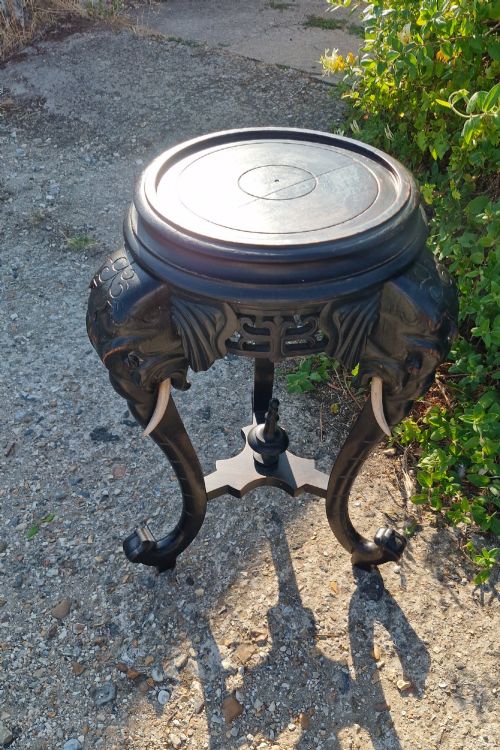
When you search for an indian carved elephant, you encounter an array of nineteenth-century occasional tables, bookends, and animal studies crafted in rosewood, teak, and ebony.
Indian Carved Elephant
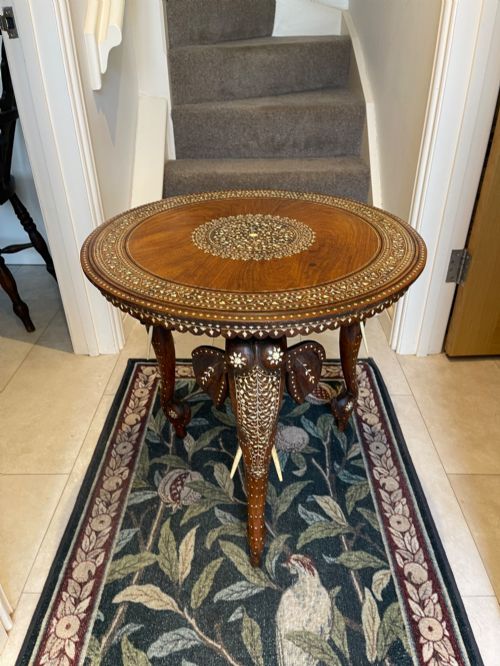
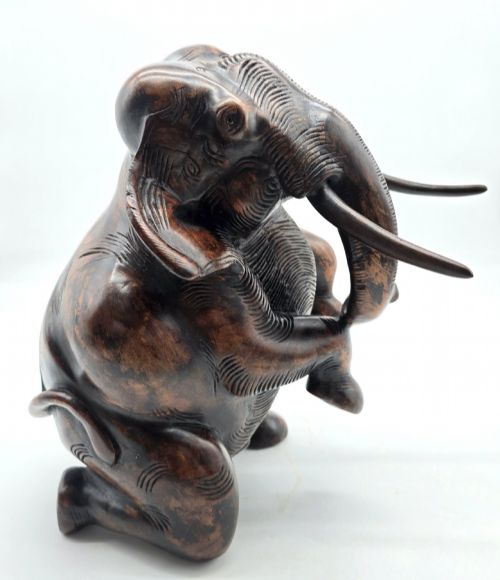
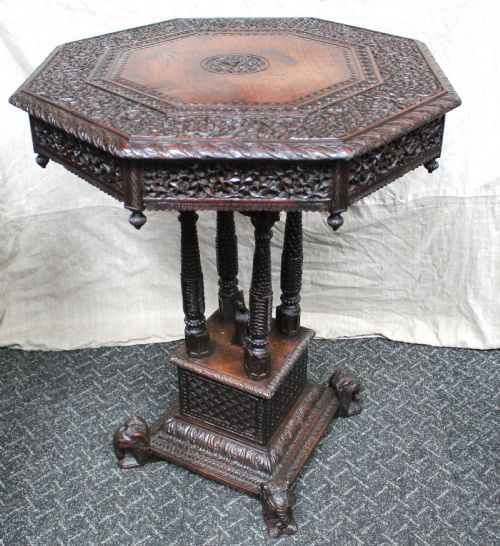
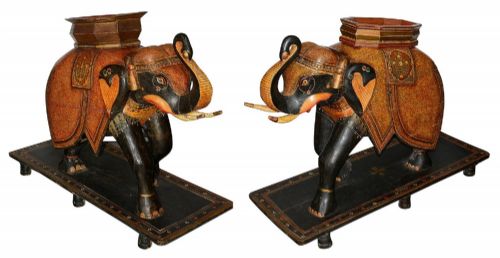
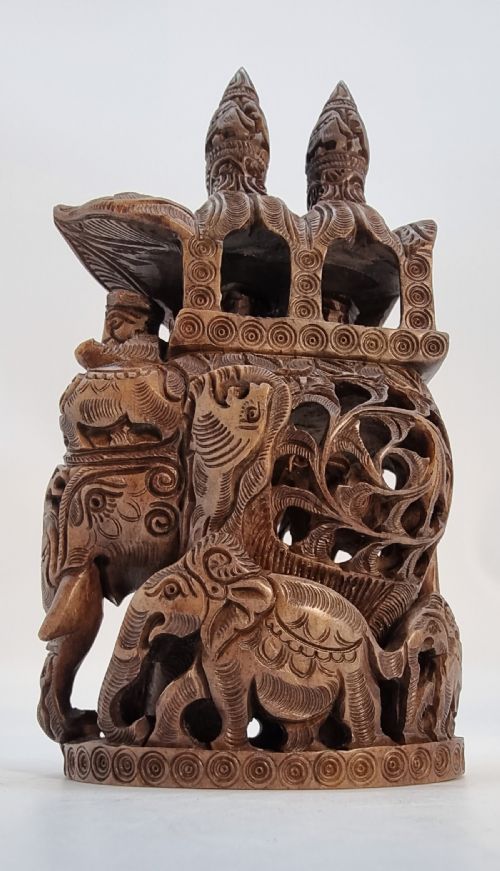
An indian carved elephant search reveals domestic objects and sculptures produced during the Victorian and Raj periods. The most frequent forms include occasional tables supported by elephant trunk legs, alongside freestanding animal studies and bookends.
Makers working within the Anglo-Indian and Burmese traditions utilised dense tropical timbers to shape these pieces. Tables often feature octagonal or circular tops resting upon detailed animal figures.
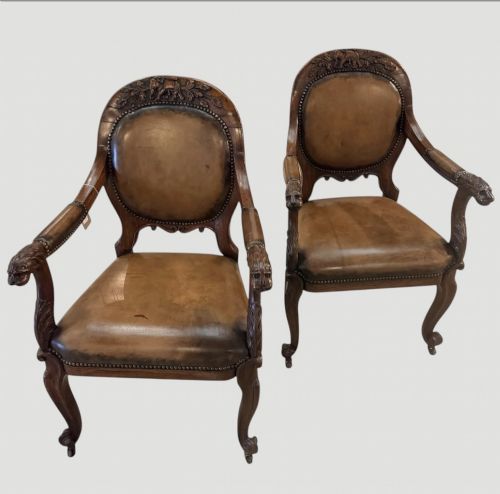
The selection ranges from small desk accessories to large library chairs and side tables. These items reflect colonial craftsmanship intended for British and international markets.
How they were made
Artisans worked with dense timbers such as teak, rosewood, ebony, and hardwood to achieve deep relief carving. Structural elements like table tops and chair frames relied on traditional joinery combined with heavy regional carving.
Secondary materials such as bone, brass, and lacquer provided contrast on inlay work and tusks. Selected pieces combined carved hardwood with painted wooden tusks or bone inlay details.
Listings include items spanning the Victorian era, eighteen seventies, eighteen eighties, eighteen nineties, nineteen tens, and nineteen twenties.
What varies in quality
The depth and definition of the carving separate ordinary production from superior examples. Master carvers achieved distinct facial expressions, skin folds, and anatomical proportions on the elephant figures.
The choice of timber heavily influences the character of each piece. Finely grained solid rosewood and ebony carry crisp details better than softer woods or painted substitutes.
The Indian Carved Elephant Glossary
- Anglo-Indian
- A design style produced during the British colonial period in India, combining British furniture forms with indigenous hand-carving techniques.
- Hoshiarpur
- A North Indian centre known for intricate inlaid woodwork using materials such as bone and brass set into dark timber.
- Bombay Presidency
- A major administrative region of British India associated with distinctive heavily carved teak and rosewood tables.
- Raj period
- The era of direct British crown rule in India, spanning from eighteen fifty-eight to nineteen forty-seven.
- Coromandel
- A dense, heavy tropical hardwood valued by nineteenth-century cabinet makers for its rich dark colour and durability.
Indian Carved Elephant: Frequently Asked Questions
How do I date an antique elephant table?
Dating relies on examining the timber, construction methods, and stylistic markers recorded across nineteenth and early twentieth-century pieces. Raj period and late Victorian items frequently exhibit deep relief carving and specific regional traits from centres like Bombay.
Matching the object type to documented periods helps narrow down the decade of production. Documentation of past examples provides clear benchmarks for comparison.
Where were these carved tables originally used?
They served as decorative occasional furniture within British colonial homes and metropolitan drawing rooms during the nineteenth century. Their exotic motifs made them popular pieces for displaying lamps or holding books in libraries and parlours.
Today they function as practical side tables or accent pieces in contemporary living spaces.
Are the tusks on these carvings always made of ivory?
While historical items sometimes utilised ivory, many surviving pieces feature tusks carved from wood or bone. Workshop practices varied according to local materials and the specific period of manufacture.
Substitutes such as painted wood appear frequently across nineteenth-century tables and animal studies.