

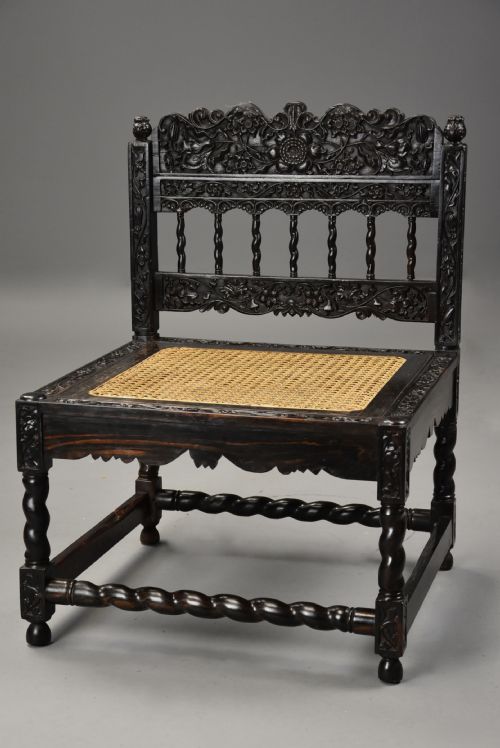


Anglo Indian Carved Chair
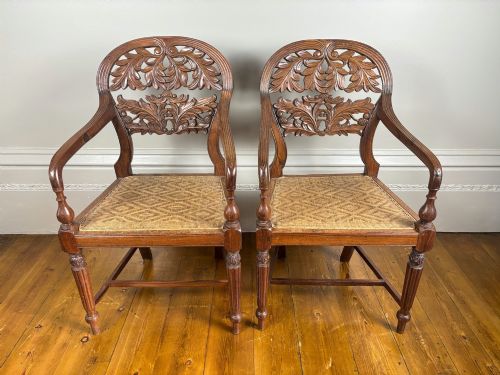
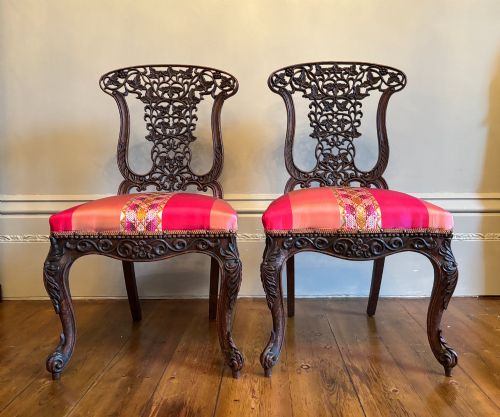
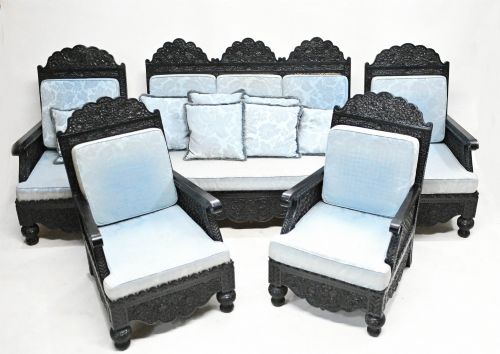
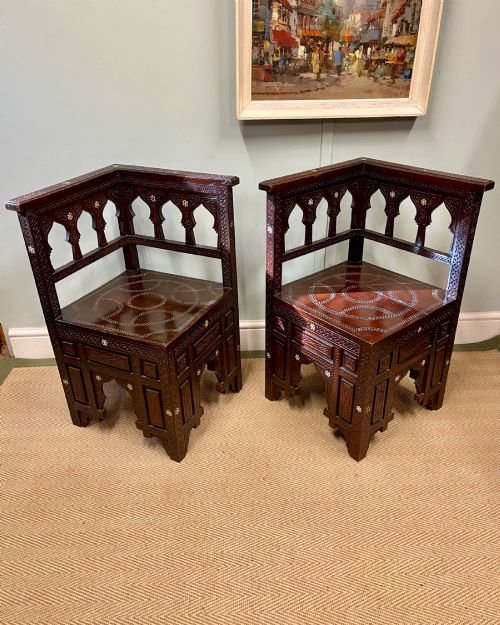
These heavy, dense timber seats bring dense floral work and colonial history into a room.
Anglo Indian Carved Chair
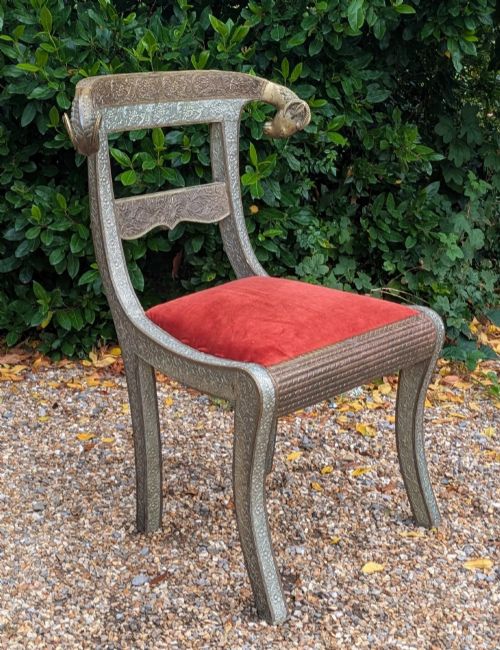
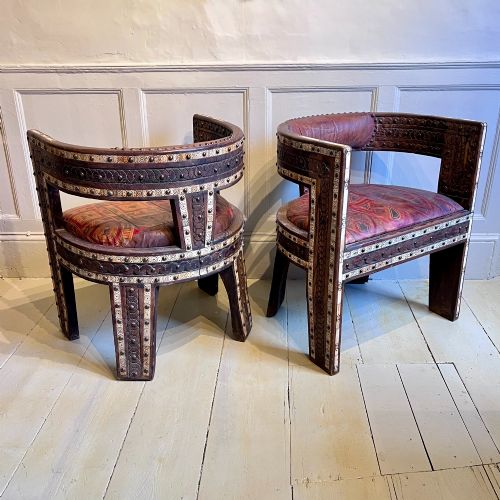
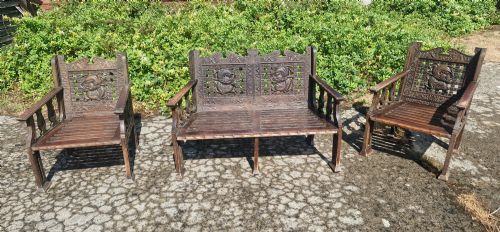
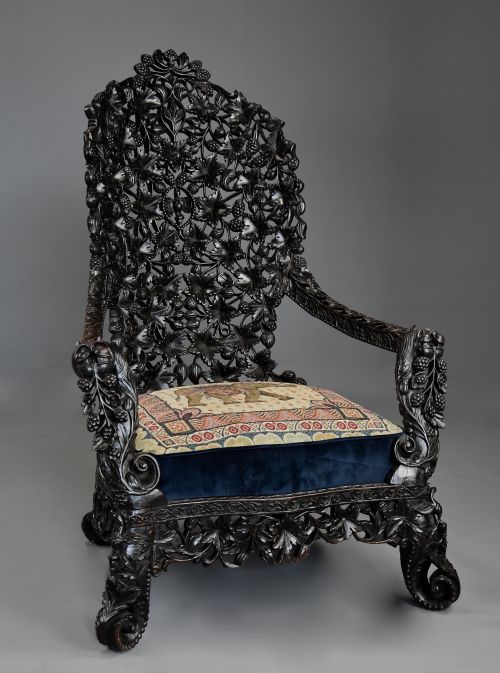
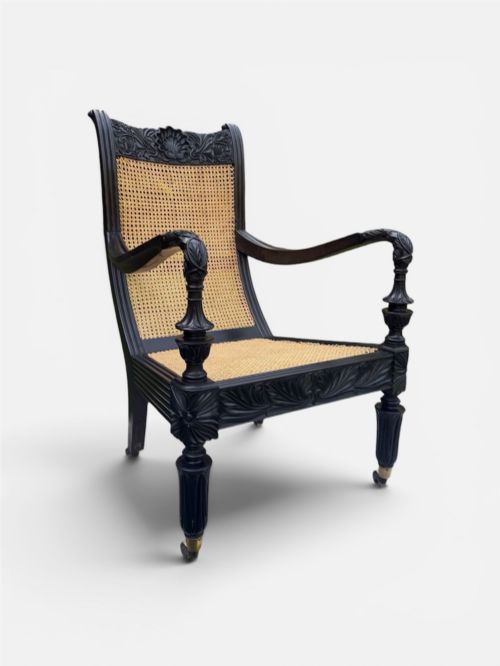
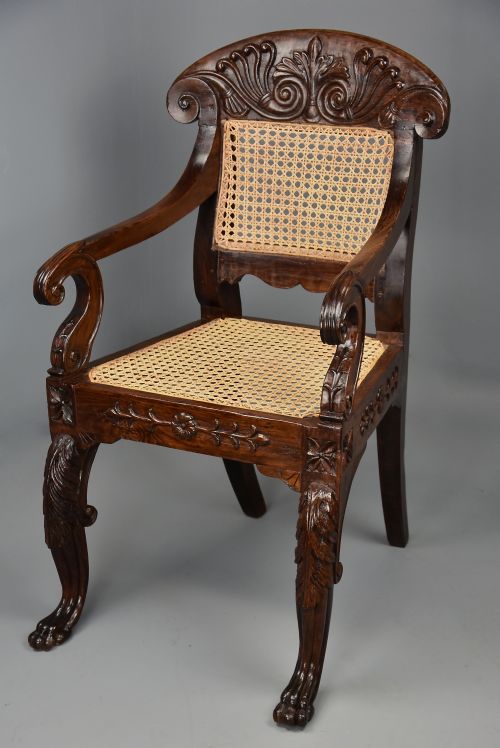
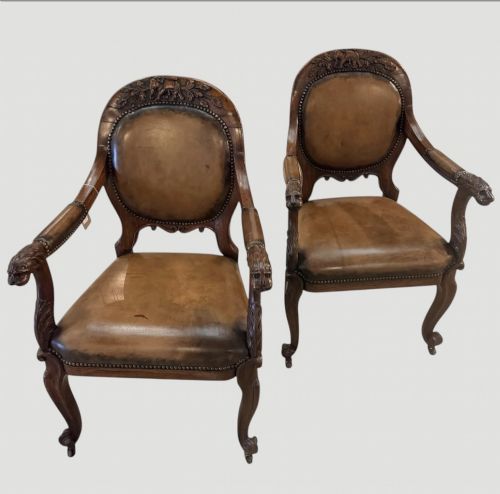
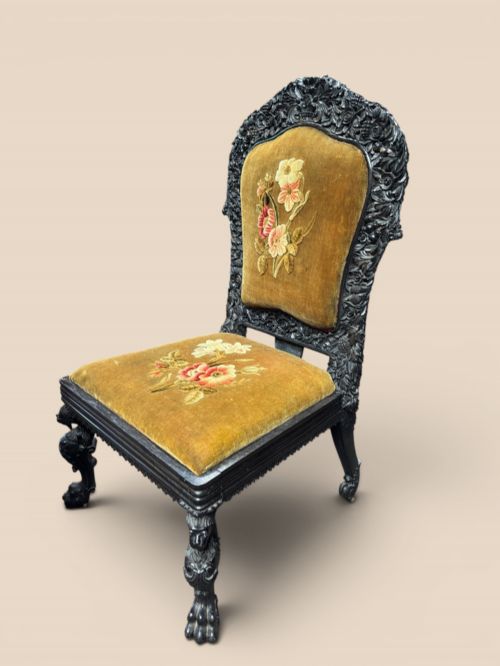
An anglo indian carved chair combines British seating forms with traditional South Asian and Burmese ornamentation. The pieces seen here span the nineteenth century and the Victorian era, taking the form of side chairs, armchairs, music chairs, accent chairs, thrones, and library chairs.
Most examples originate from regions such as Bombay, Ceylon, and Burma, utilising regional timbers carved with intricate floral and scroll details. They range from low chairs and veranda seats to grander bergere library chairs with reclining backs.
Materials and construction
Cabinetmakers worked with dense imported hardwoods including padouk, teak, ebony, mahogany, rosewood, walnut, and hardwood. These timbers provided the heavy stability required for deep, profuse hand carving.
Frames incorporated brass fittings and were often paired with upholstery in velvet, thread, or needlepoint.
Anglo Indian Carved Chair Retail Price Guide 2026
Typical asking prices for anglo indian carved chair among the pieces listed under this phrase on Sellingantiques today, from the lower quarter to the upper quarter. They describe what is for sale here now, not the wider market.
Listings feature nineteenth-century and Victorian pieces constructed from teak, ebony, padouk, and rosewood.
Craftsmanship and depth
The distinction between standard output and the finest examples lies in the crispness and depth of the hand carving. Pieces with deeply undercut foliage and fully realised floral motifs demonstrate superior artisanal control over dense woods like ebony and padouk.
Proportion and structural integrity also separate everyday seating from exceptional library chairs and thrones. Heavier timber frames with well-preserved joinery and original upholstery materials maintain their form and presence over time.
The Anglo Indian Carved Chair Glossary
- Padouk
- A heavy, durable tropical timber with a reddish hue used in nineteenth-century colonial furniture. It takes fine detail well.
- Bergere
- An enclosed armchair with a cane or upholstered back and sides. In colonial contexts, these often feature reclining mechanisms.
- Ceylonese
- Pertaining to Ceylon, known for distinct ebony and teak seating featuring elaborate local carving traditions.
- Needlepoint
- A type of canvas work embroidery used for upholstery on Victorian and colonial seats.
Anglo Indian Carved Chair: Frequently Asked Questions
What is an anglo indian carved chair?
These are nineteenth-century seats made in South Asia and Burma for colonial and export markets, combining British chair designs with dense local carving.
They use regional hardwoods and feature profuse floral decoration across backs, arms, and rails.
How do I care for padouk and teak?
Keep these dense tropical timbers away from direct heat sources and sudden humidity changes to prevent movement in the wood.
Dust regularly with a dry cloth and occasionally feed the surface with appropriate natural wax.
Where were these chairs made?
Workshop production centred in various regions under British influence, including Bombay, Ceylon, and Burma.
Local artisans adapted European furniture forms to showcase native carving skills and indigenous hardwoods.
How can I tell nineteenth century pieces apart?
Examine the choice of timber, such as ebony, teak, or padouk, alongside the style of the floral and scroll decoration.
Nineteenth-century examples show hand tool marks and construction methods consistent with colonial workshop production.