

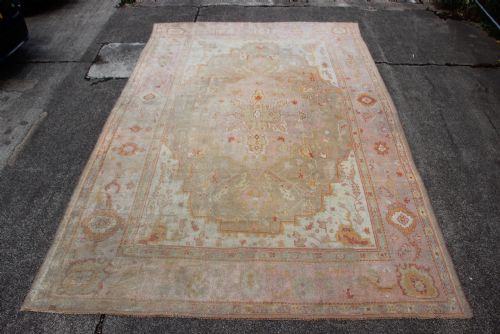


Anatolian Floral Rug
An anatolian floral rug brings rich Ottoman heritage into a room, offering warm dyes and traditional patterns.
Anatolian Floral Rug
When someone searches for an anatolian floral rug, they encounter hand-knotted floor coverings originating from Turkey across various periods from the mid eighteenth century to the early twentieth century. These pieces encompass specific regional weaving centres such as Oushak, Kirsehir, Ghiordes, Kayseri, Sivas, Isparta, and Monastir.
The buyer most frequently meets large carpets and smaller rugs displaying classic medallion designs or repeat floral patterns. These textiles serve both functional floor covering roles and decorative focal points within traditional and modern interiors.
Examples range from grand nineteenth century reception carpets down to compact prayer rugs measuring under two metres. The historical span covers distinct aesthetic phases including Ottoman court styles and provincial village interpretations.
How they were made
Weavers constructed these textiles primarily using wool foundations and pile, occasionally incorporating cotton, silk, art silk, mercerised cotton, and angora wool. Artisans tied individual knots by hand onto vertical looms to build durable surfaces.
Dyes derived from natural sources imparted deep red grounds and pastel colours that mellow with age. Fine weave techniques allowed intricate Sivas and Kayseri designs to achieve high detail alongside coarser provincial rugs.
Anatolian Floral Rug Retail Price Guide 2026
Typical asking prices for anatolian floral rug among the pieces listed under this phrase on Sellingantiques today, from the lower quarter to the upper quarter. They describe what is for sale here now, not the wider market.
Materials recorded across current pieces include traditional wool and cotton alongside specialised fibres like angora wool and mercerised cotton.
What varies in quality
Quality depends heavily on the density of the knotting and the precision of the woven regional design. Finer weaves found in Sivas and Kayseri pieces separate intricate artistic execution from simpler provincial work.
The grade of materials also dictates the handle and durability, with angora wool and silk imparting different lustres compared to standard wool. Preservation of the original pile and borders determines the overall integrity of each piece.
The Anatolian Floral Rug Glossary
- Oushak
- A renowned weaving centre in western Turkey known for large-scale carpets with subdued pastel tones. These pieces often feature grand floral medallions.
- Prayer rug
- A small format rug featuring a mihrab or niche design used historically for daily Islamic prayers. Ghiordes and Monastir are notable sources for this form.
- Medallion design
- A central ornamental motif dominating the field of the rug. Classic examples balance this central element with surrounding floral corners and borders.
- Art silk
- A synthetic substitute or mercerised cotton used to imitate genuine silk pile. Kayseri rugs frequently utilise this material for enhanced sheen.
- Angora wool
- A soft fibre sourced from Angora goats utilised in specific nineteenth century Turkish carpets. It provides a distinct texture and tactile warmth.
Anatolian Floral Rug: Frequently Asked Questions
How do I clean an old Turkish rug?
Vacuum gently without using beater bars to remove surface dirt and dust.
Professional specialist washing remains essential for deep cleaning to protect delicate natural dyes.
Can I place these rugs in high traffic areas?
Sturdy wool carpets handle moderate foot traffic well in living rooms and studies.
Delicate silk or fine weave Kayseri pieces suit low traffic spaces or display as wall hangings.
What is the difference between an Oushak and a Sivas carpet?
Oushak carpets typically display larger scale floral motifs with soft pastel colour palettes.
Sivas rugs generally exhibit finer weaves and tighter geometric or classical medallion designs.
How do I identify a prayer rug?
Prayer rugs feature a distinct pointed arch or mihrab design at one end representing a doorway.
They appear in smaller dimensions suited for kneeling during prayer rather than covering large floors.