






Amethyst Cluster Dress Ring
An amethyst cluster dress ring brings rich purple stones to the hand, offering a striking focal point built to catch every eye.
Amethyst Cluster Dress Ring
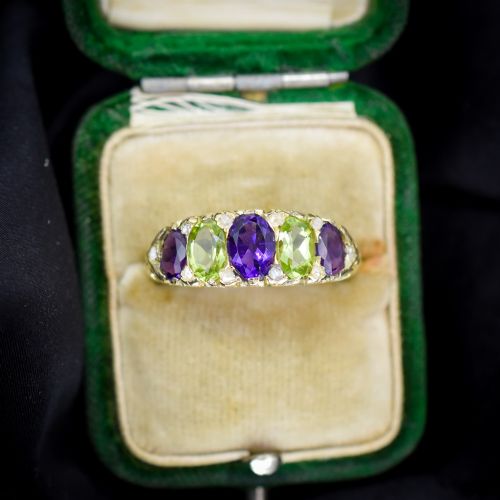
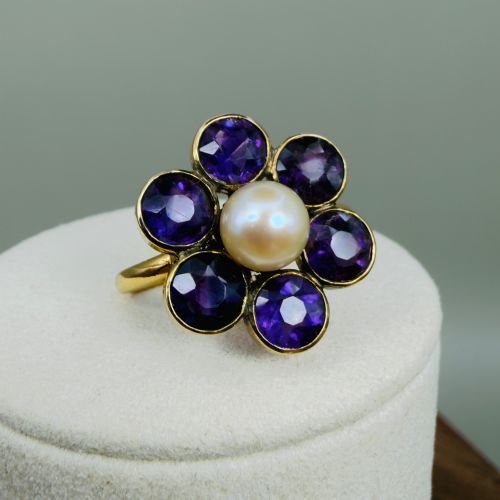
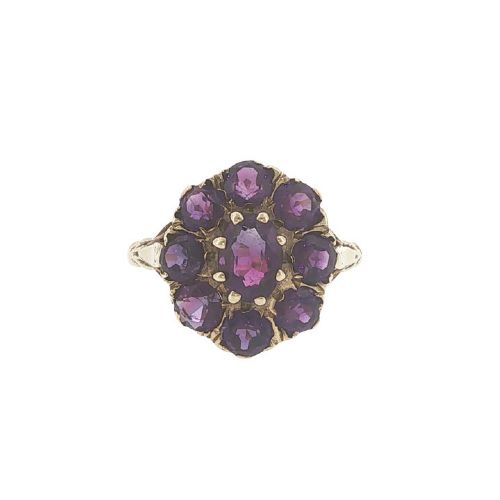
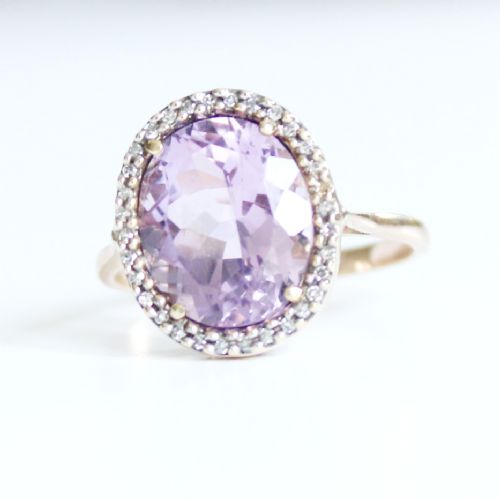
An amethyst cluster dress ring centres on a prominent purple quartz surrounded by smaller gems like diamonds, pearls, or emeralds. You will encounter these striking pieces across periods from Georgian and Victorian times through Edwardian designs into mid-century and later vintage eras.
Materials and construction
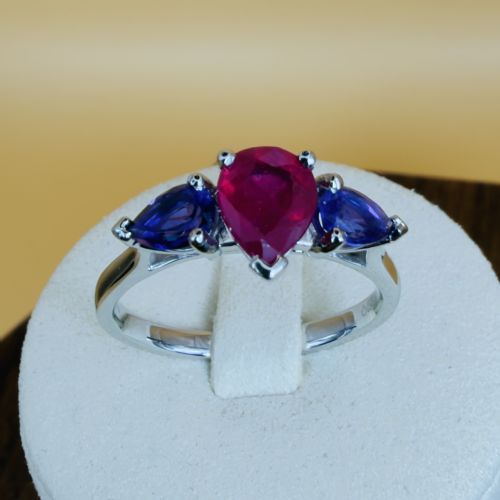
Metals vary from yellow and rose 19th-century gold to later 18ct white gold, platinum, and standard 9ct gold alloy. Jewellers secured the stones by hand, mounting large central amethysts alongside supporting diamond, pearl, or ruby accents.
Settings range from traditional closed-back Georgian foils to open-backed Edwardian and Art Deco mountings that allow light to pass through the quartz. Hallmarks stamped into the shanks often record the assay office, city, and precise year of creation.
Listings feature periods spanning Georgian, Victorian, Edwardian, Art Deco, and 1970s styles set in platinum, silver, and various grades of gold.
Distinguishing quality across examples
The saturation and clarity of the central amethyst dictate much of the visual impact, alongside the matching quality of any surrounding diamonds or pearls. Deeper, more even violet hues command greater presence on the hand compared to paler or heavily included stones.
Structural integrity and the crispness of the surrounding metalwork define the craftsmanship of each ring. Heavier gold weights, platinum settings, and well-preserved claw or halo arrangements separate everyday items from finer examples.
The Amethyst Cluster Dress Ring Glossary
- Cluster ring
- A ring featuring a prominent central gemstone surrounded by a halo of smaller stones. This layout maximises visual impact and sparkle on the hand.
- Halo
- An arrangement of smaller gems encircling a larger central stone. It frames the main amethyst and enhances its perceived scale.
- Collet
- A raised metal collar or band that holds a gemstone in place. This secure mounting style appears frequently in earlier Georgian and Victorian designs.
- Claw setting
- Individual metal prongs that grip a gemstone to let light enter from the sides. It remains a standard method for securing prominent dress ring stones.
- Assay mark
- An official stamp verifying the purity of the precious metal. These small impressions help date British-hallmarked gold and platinum pieces.
Amethyst Cluster Dress Ring: Frequently Asked Questions
How do I care for my ring?
Amethyst is a moderately hard quartz that responds well to gentle cleaning with warm soapy water and a soft brush. Avoid harsh chemical dips, ultrasonic cleaners, and sudden temperature changes to protect the stone and any delicate pearls.
Store the ring in an individual lined box or pouch away from harder gemstones like diamonds that might scratch the surface. Regular checks by a jeweller will ensure the claw settings and surrounding halo remain secure.
Can I wear an amethyst cluster daily?
These rings make wonderful daily accessories provided you treat them with reasonable care. Gems like pearls require extra attention around water and cosmetics, while gold and platinum shanks stand up well to routine wear.
Consider removing the ring during heavy manual tasks, gardening, or sports to prevent knocks to the central amethyst or the smaller surrounding stones.
How do I tell Victorian from Edwardian pieces?
Victorian rings often utilise warmer 18ct or 15ct yellow and rose gold with substantial mounts and deep amethyst tones. Pearls frequently accompany the central stone in these nineteenth-century cluster designs.
Edwardian pieces tend to introduce lighter platinum settings, finer millegrain detailing, and airier openwork frames that reflect a shift toward delicate elegance following the turn of the century.
What is a REGARD ring?
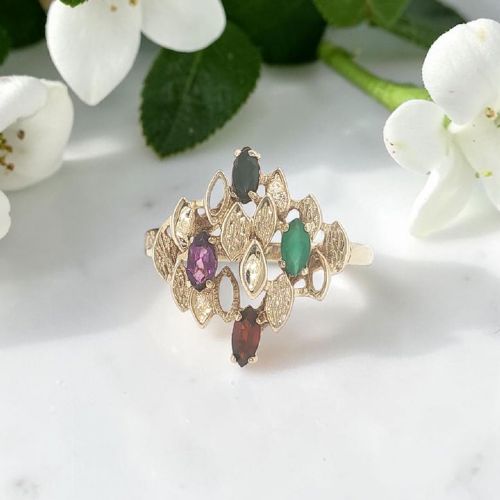
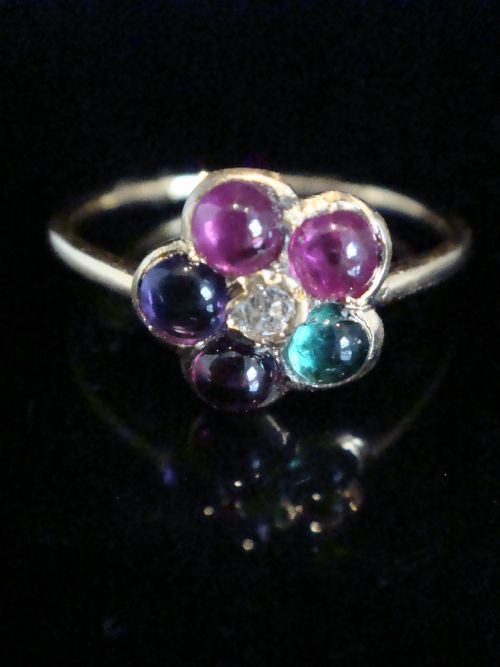
A REGARD ring is a sentimental Victorian jewel that spells out the word through the first letter of each gemstone: Ruby, Emerald, Garnet, Amethyst, Ruby, and Diamond. These pieces carry secret romantic meanings intended by the giver.
They appear occasionally within cluster layouts, combining colourful stones into a single meaningful arrangement that reflects nineteenth-century sentimental traditions.