


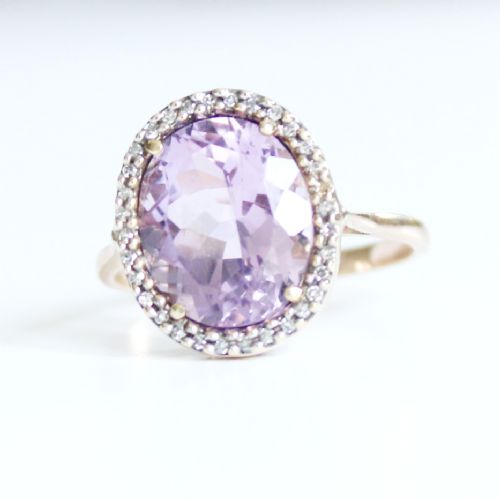


Purple Stone Cluster Ring
A purple stone cluster ring brings deep violet sparkle to the hand, drawing the eye with gathered gems.
Purple Stone Cluster Ring
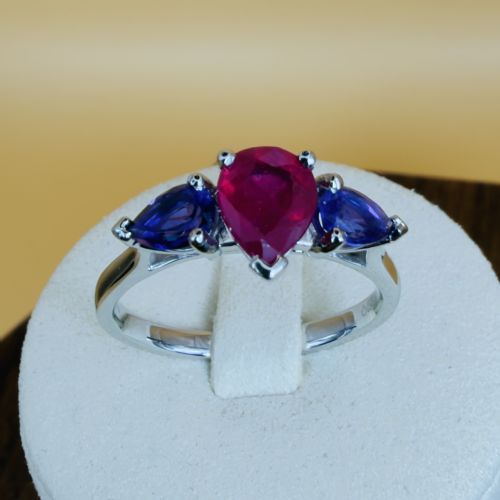
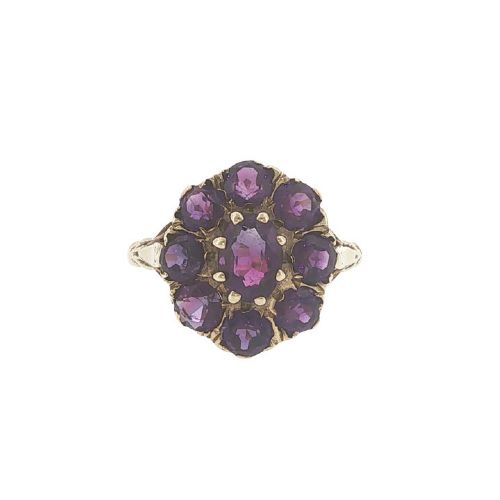
A purple stone cluster ring groups amethysts, glass, or corundum around a central focal point, often encircled by smaller diamonds, pearls, or supplementary gems. These pieces span Victorian, Edwardian, Art Deco, and mid-century eras, reflecting changing tastes in gemstone arrangements.
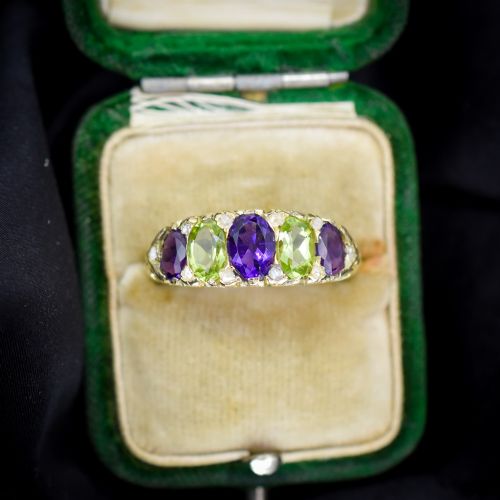
The most common examples on this page utilise amethysts set in yellow or white gold, alongside distinctive halo configurations and five stone layouts. Buyers will find both antique mourning pieces with purple glass and vibrant mid-century dress rings.
Victorian and Edwardian iterations frequently incorporate delicate gold work or symbolic pearl accents, while later twentieth-century examples lean towards bolder cocktail proportions. Each piece offers a tangible link to past jewellery design through its specific mounting and stone cut.
Materials and construction
Goldsmiths constructed these rings using nine-carat and eighteen-carat gold, occasionally employing platinum or silver settings to enhance the brilliance of surrounding diamonds. Amethysts serve as the primary purple stone, complemented by pearls, peridots, and purple glass.
Settings range from traditional claw mounts that secure larger amethysts to flush halo designs where smaller stones tightly border the centre. Jewelers balanced structural durability with the need to let light pass through the transparent purple minerals.
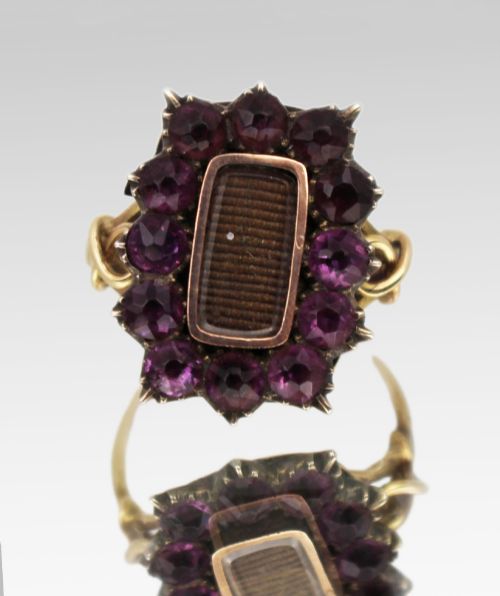
Some Victorian mourning rings hide locks of braided human hair beneath purple glass, keeping memories literally close to the skin.
Assessing quality and craftsmanship
Quality reveals itself in the depth of colour and clarity of the purple stones, alongside the precision of the surrounding diamond or pearl cluster work. Finer examples display well-matched gemstone hues and secure, even settings that protect the girdle of each stone.
The weight and integrity of the gold or platinum shank also separate modest pieces from finer dress rings. Artisanal skill appears in the delicate balance of the cluster head and the clean execution of shoulders leading down to the band.
The Purple Stone Cluster Ring Glossary
- Cluster ring
- A ring featuring a central gemstone surrounded by a group of smaller stones. This layout maximises visual impact and light reflection.
- Halo ring
- A setting style where a central gemstone is encircled by a ring of smaller accent stones, typically diamonds or pearls. It creates a luminous frame around the main gem.
- Mourning ring
- A memorial piece of jewellery containing hair, glass, or jet, created to remember a deceased person. Victorian examples often used purple glass to simulate deeper stones.
- Suffragette
- A style of jewellery incorporating amethyst, peridot, and diamond to represent the colours of the Women's Social and Political Union. These pieces date predominantly from the early twentieth century.
- Dress ring
- A decorative ring worn primarily for social occasions rather than daily wear. They often feature prominent gemstones and bold cluster designs.
Purple Stone Cluster Ring: Frequently Asked Questions
How do I clean my amethyst ring safely?
Amethyst is a durable quartz but benefits from gentle care to preserve the metal setting and surrounding stones. Use warm soapy water and a soft brush to remove everyday debris from beneath the cluster.
Avoid harsh chemical cleaners or ultrasonic machines, especially if the piece contains pearls, glass, or foil-backed elements from earlier periods.
Can I wear an antique cluster ring daily?
Wearing an antique ring every day depends heavily on its age, claw wear, and overall structural sturdiness. Edwardian and Victorian settings can be delicate and may require occasional reinforcement by a jeweller.
Mid-century and later twentieth-century rings often offer robust mountings better suited to frequent wear. Regular inspections of the prongs will prevent stone loss.
How do I tell Victorian from Edwardian pieces?
Victorian rings often display heavier gold work, closed-back settings in older pieces, and sentimental motifs like hair compartments or mourning glass. They span a wide range of stylistic revivals.
Edwardian jewellery shifts towards lighter platinum and yellow gold mountings, incorporating delicate millegrain edges and bright diamond halos suited to lighter garments.