



London Hallmarked Ring
When you search for a london hallmarked ring, you uncover decades of goldsmithing stamped with the leopard's head and assay symbols that trace provenance directly to the capital.
London Hallmarked Ring
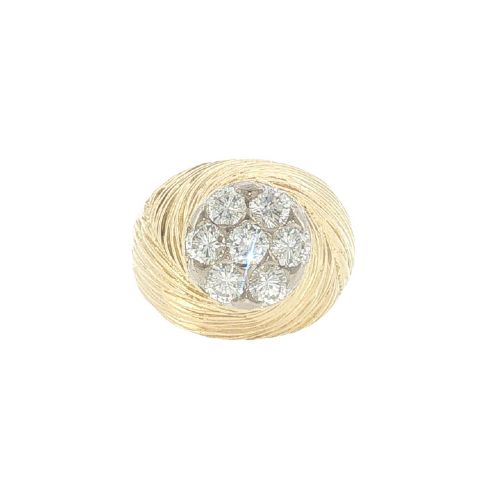
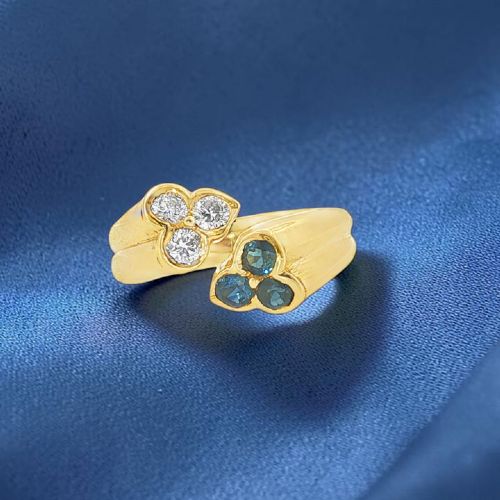
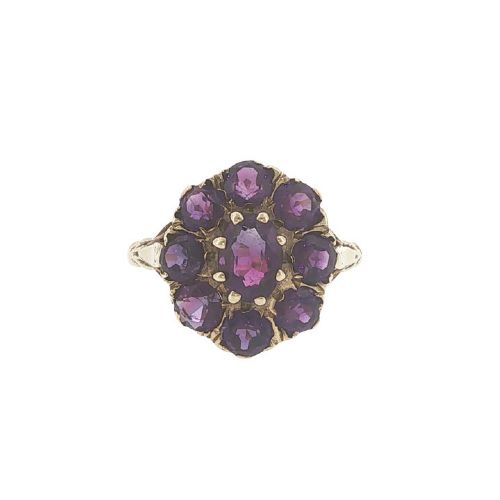
A london hallmarked ring spans styles from Victorian multi-stone arrangements to mid-century modernist clusters, carrying official assay office marks that confirm precious metal purity and date of assay. Buyers meet yellow gold bands, diamond-set clusters, and serpent motifs originating from workshops operating across the capital.
The selection ranges from late nineteenth-century Etruscan revival and gypsy settings to 1970s vintage cluster and band designs. These pieces document changing aesthetic preferences through recognisable gold purities and gemstone combinations.
Materials and construction methods
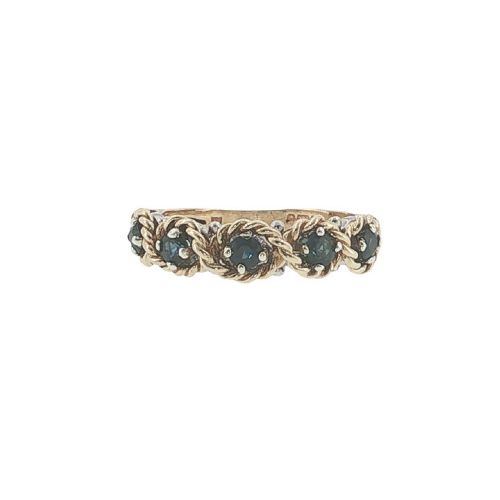
Goldsmiths shaped these items primarily from 18ct and 22ct yellow gold, alongside 9ct gold and sterling silver, setting old cut diamonds, sapphires, rubies, and garnets into the metalwork. Gemstones are secured using claw, flush, and cluster settings that highlight the natural fire of old mine and rose-cut stones.
Assay office workers applied punch marks directly to the interior of the metal bands, recording standard marks, date letters, and city symbols to certify the alloy composition.
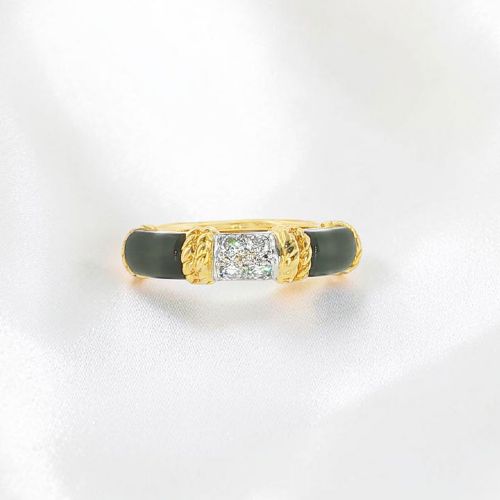
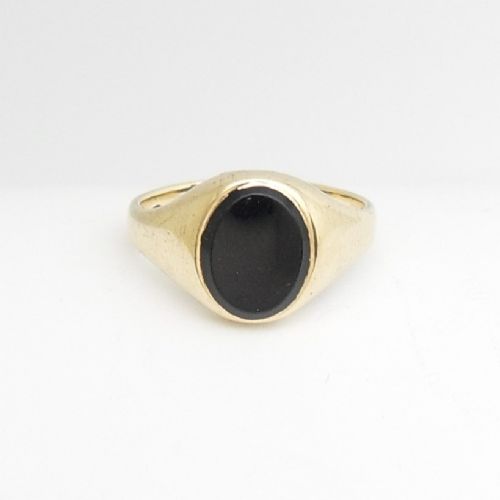
Listings feature 18ct gold, 22ct gold, 9ct yellow gold, and sterling silver set with diamonds, sapphires, rubies, garnets, and black onyx across Victorian, Edwardian, and mid-century periods.
Distinctions in construction and wear
The standard of a piece rests on the crispness of the stamped assay marks and the structural integrity of the metal band around the shank. Heavier weight profiles and intact gemstone settings indicate superior original manufacture.
Subtleties in hand-carved detailing, such as the scale work on serpent bands or the symmetry of cluster stone arrangements, separate standard production from exceptional goldsmith work.
Kutchinsky·Robert Pringle And Sons·Tiffany And Co
The London Hallmarked Ring Glossary
- Hallmark
- An official stamp applied by an assay office to indicate the purity of a precious metal, the maker, and the year of testing. These marks provide a reliable anchor for dating British jewellery.
- Old Cut Diamond
- A vintage diamond cut characterised by a smaller table, higher crown, and open culet, fashioned before modern brilliant-cutting techniques were standardised. These stones exhibit a distinctive chunky light return under candle or ambient light.
- Gypsy Ring
- A ring style where gemstones are flush-set directly into a thick, tapered band of solid gold. This design became popular in the Victorian period for daily wear.
- Serpent Ring
- A ring formed in the shape of a coiled snake, often incorporating gemstone eyes and engraved body scales. Victorians associated these motifs with eternity and wisdom.
- Cluster Ring
- A jewellery arrangement featuring a central gemstone surrounded by a border of smaller stones. This format maximises visual presence on the finger.
London Hallmarked Ring: Frequently Asked Questions
What do the marks inside the band mean?
Assay stamps indicate the metal purity, the specific office that tested the item, and a date letter corresponding to the year of manufacture. Together these punches verify authenticity.
Additional maker marks identify the workshop responsible for the physical construction of the jewellery.
How do I care for antique gold rings?
Clean precious metal and durable gemstones using warm soapy water and a soft brush, avoiding harsh chemical dips that damage soft organic materials.
Store pieces individually in padded compartments to prevent stones from scratching adjacent metal surfaces.
Are old cut diamonds different from modern ones?
Older diamond cuts are shaped by hand with larger facets, producing a softer, warmer sparkle compared to mathematically precise modern cuts.
This historic cutting style gives each stone an individual character unique to its period of creation.
Can these rings be resized safely?
Most solid gold bands can be adjusted by a skilled jeweller, though patterned bands and heavily set cluster designs require careful handling to preserve the shank integrity.
Resizing should be planned carefully to avoid disturbing adjacent hallmarks stamped near the inner back of the band.