



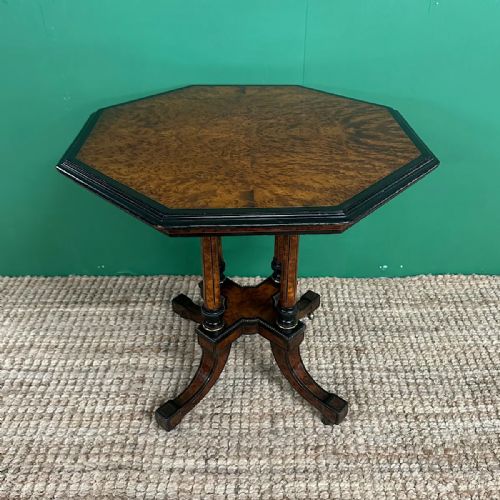

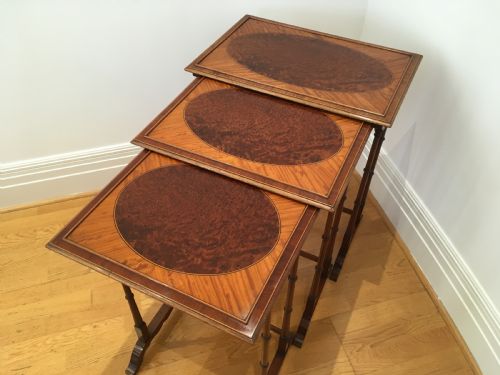

Amboyna Wood Side Table
An amboyna wood side table brings a rich, intricate burl grain to a room, offering both a compact surface and a striking piece of furniture.
Amboyna Wood Side Table
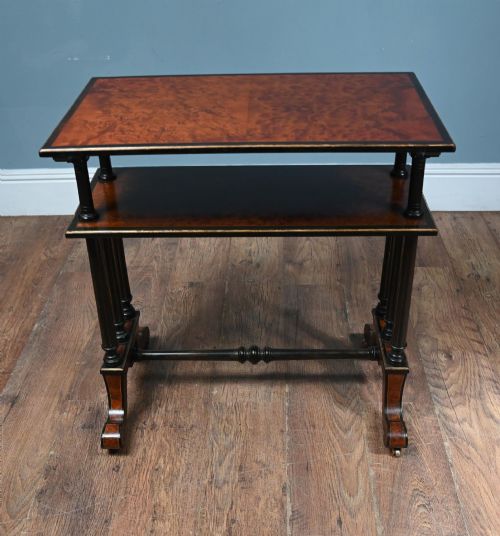
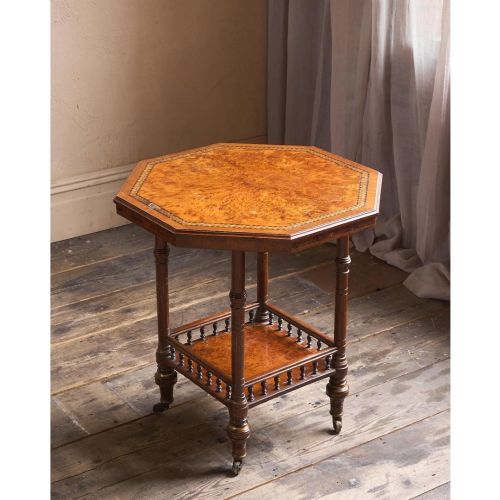
An amboyna wood side table is a compact surface built to display objects or sit beside seating. You will most frequently encounter nineteenth century Victorian examples alongside occasional tables and altar tables.
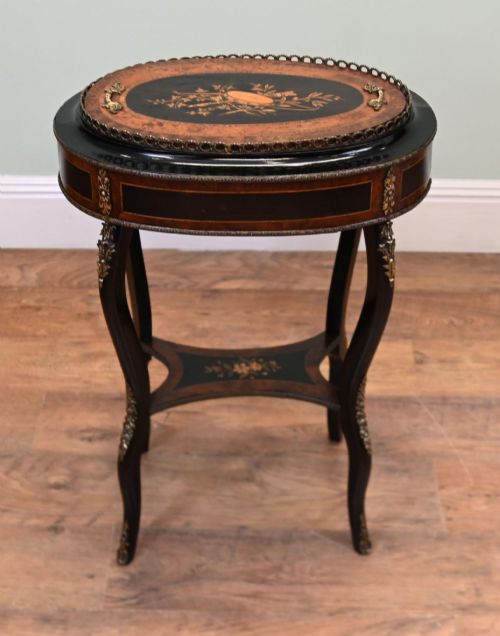
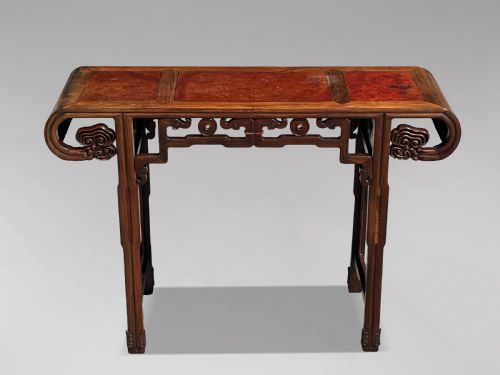
The selection ranges from British pieces to Chinese hongmu forms and French Napoleon III designs. Makers such as Gillows appear alongside occasional, centre, and tripod wine tables.
How they were made
Cabinet makers applied amboyna veneer over solid timber foundations to showcase the mottled, circular patterns of the burl. Workshops combined this timber with brass mounts, ebonised wood, and parcel gilt highlights.
Asian joinery utilised dense woods like hongmu for altar tables, whilst European makers favored walnut, rosewood, and kingwood as secondary timbers. Giltwood accents and carved tripod bases completed the more decorative specimens.
Amboyna Wood Side Table Retail Price Guide 2026
Typical asking prices for amboyna wood side table among the pieces listed under this phrase on Sellingantiques today, from the lower quarter to the upper quarter. They describe what is for sale here now, not the wider market.
Listings feature pieces spanning the Regency, Victorian, and Edwardian periods, alongside Chinese Qing dynasty examples.
What varies in quality
Quality rests upon the selection and matching of the amboyna veneer across the top. Finer examples display a dense, even burl pattern with minimal disruption across the surface joints.
Construction methods and secondary details set pieces apart. Master workshops provided crisp carving, solid brass fittings, and precise parquetry that cheaper cabinet work omitted.
Gillows
The Amboyna Wood Side Table Glossary
- Amboyna veneer
- A thin slice of wood cut from the burl of the narra tree. It yields a rich, spotted grain pattern highly prized by nineteenth century cabinet makers.
- Ebonised wood
- Timber treated with a dark finish to imitate ebony. This technique provided stark contrast against lighter amboyna veneer.
- Parcel gilt
- Wood decorated with partial gold leaf application. It highlights carved mouldings and turning on Victorian and Regency frames.
- Hongmu
- A traditional Chinese hardwood used for fine furniture. It often forms the structure of antique altar tables.
Amboyna Wood Side Table: Frequently Asked Questions
Where should I place a side table?
These tables suit a hallway, beside a drawing room sofa, or against a quiet wall as a lamp table. Their compact proportions allow them to fit easily into smaller spaces without dominating the room.
Keep them away from direct sunlight and sudden temperature changes to protect the delicate veneer and polish.
How do I clean the wood surface?
Dust the table regularly with a soft, dry cloth to prevent grit from scratching the polished finish. Avoid using modern silicone sprays or household detergents.
Apply a traditional beeswax sparingly once or twice a year to nourish the timber and maintain a gentle, natural sheen.
How do I identify the Victorian pieces?
Victorian examples often feature rich amboyna veneers combined with ebonised details, walnut, or parcel gilt accents. They frequently take the form of occasional tables, dumb waiters, or tripod wine tables.
Look at the construction methods underneath and inside the drawers to confirm nineteenth century manufacturing techniques.
What is an altar table?
An altar table is a traditional Chinese form characterised by elongated proportions and raised ends. When constructed with hongmu and amboyna panels, these tables serve as striking decorative console surfaces in contemporary interiors.
Their sturdy frame and distinct silhouette set them apart from standard European occasional furniture.