


Amboyna and Ebonised Credenza
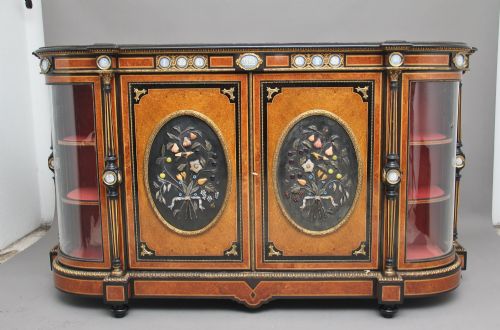
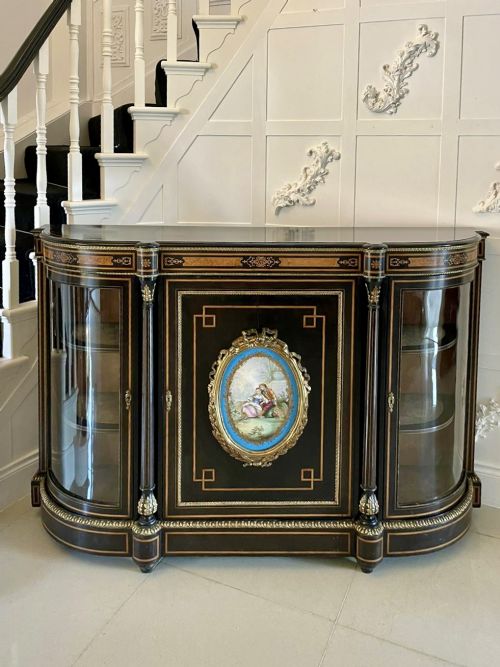
An amboyna and ebonised credenza brings striking contrast and rich cabinet-making into a room through figured exotic wood and dark polished timber.
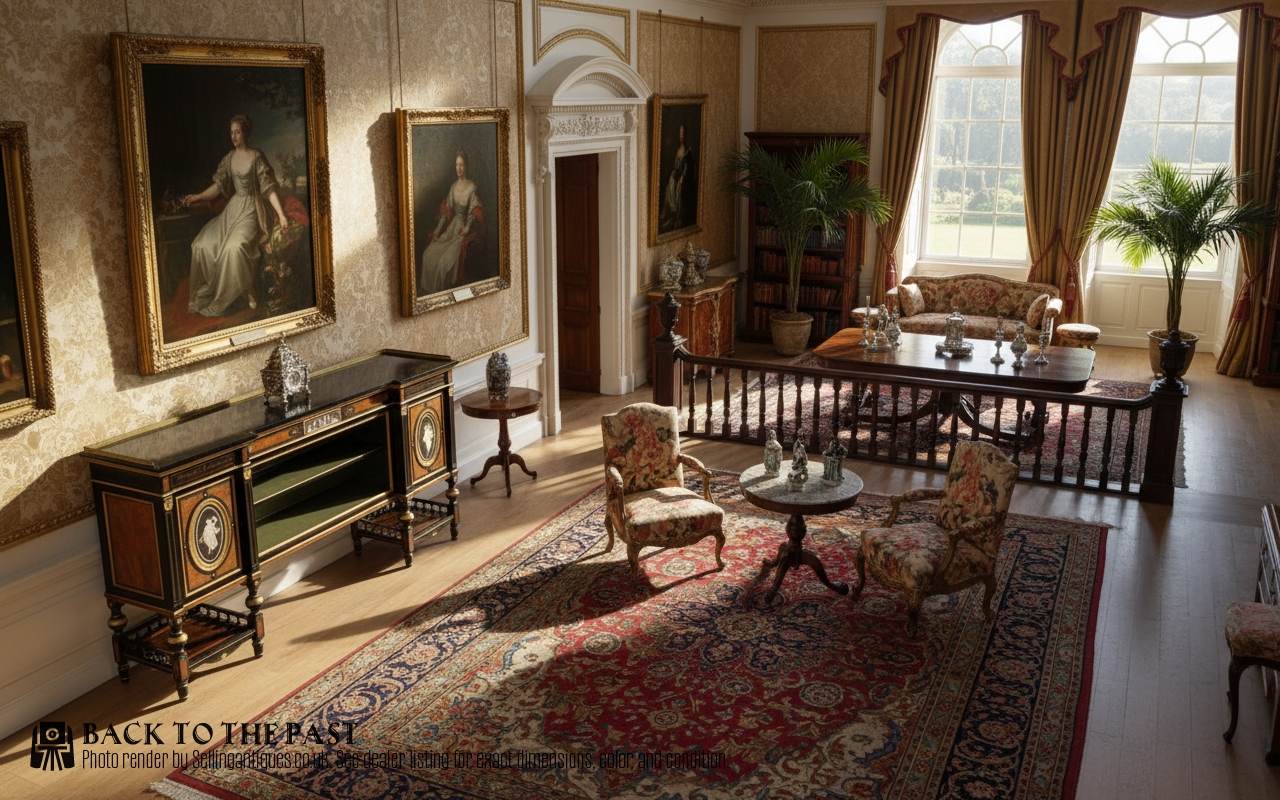
Amboyna and Ebonised Credenza
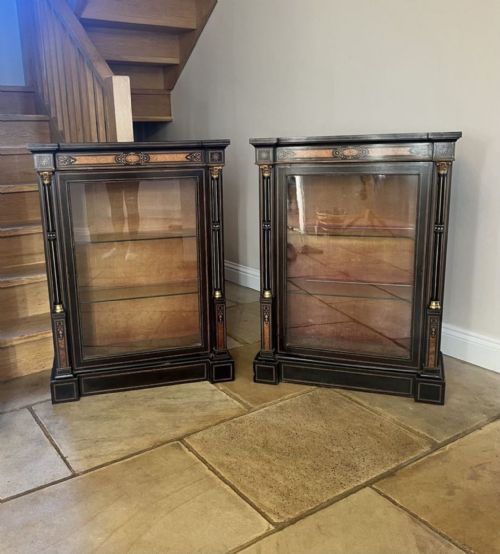
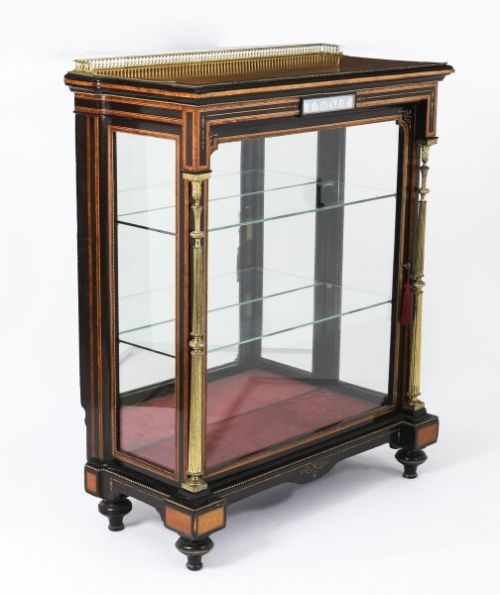
An amboyna and ebonised credenza is a low, substantial cabinet designed for display and storage, emerging primarily during the Victorian era and the mid-nineteenth century. These pieces serve as focal points in drawing rooms, offering surface space and glazed or mirrored enclosures for precious objects.
The versions most commonly met on this page span Victorian and Napoleon III aesthetics, often taking breakfront forms with flanking side cabinets. Makers of the period combined these architectural silhouettes with intricate marquetry and contrasting timber borders.
Origins stretch across English workshops and French ateliers, uniting domestic craftsmanship with continental influences. The fundamental form remains consistent: a low cabinet resting on a plinth base, designed to anchor a wall with dark ebonised surfaces and warm amboyna panels.
How they were made
Cabinet-makers constructed the carcase from solid timbers before applying fine veneers of amboyna over carefully prepared surfaces. This figured wood, prized for its mottled grain, was laid as a veneer rather than used solid due to its scarcity.
The dark contrasting elements rely on ebonised wood, achieved by staining or painting timber to imitate true ebony. Ormolu mounts, brass stringing and porcelain plaques were then integrated into the facade to punctuate the dark and light wood tones.
Glass panels were fitted into framed doors to create display spaces for ceramics and curiosities. Joinery techniques of the nineteenth century ensured these complex multi-timber constructions remained stable over time.
The archive includes French and English origins, spanning styles from the Aesthetic Movement to Napoleon III revivals.
What varies in quality
The depth and movement of the amboyna grain set exceptional examples apart from simpler pieces. Top-tier cabinets display tightly clustered eyes and rich colour variation across the veneered surfaces.
The precision of the ebonised finish and the crispness of the inlaid brass or wood marquetry indicate the skill of the workshop. Secondary woods and the weight of the cast ormolu mounts further separate standard production from master craftsmanship.
Proportion and structural integrity define the architectural success of a credenza. Refined mouldings, well-fitted doors and balanced breakfront configurations separate ambitious commissions from routine furniture.
Lamb of Manchester
The Amboyna and Ebonised Credenza Glossary
- Ebonised
- Timber treated to resemble ebony through dark staining or finishing. This technique provides the stark, uniform dark contrast characteristic of Victorian and Aesthetic movement furniture.
- Credenza
- A low cabinet or sideboard designed for storage and display. Nineteenth-century variants frequently feature glazed central doors and curved or breakfront profiles.
- Ormolu
- Gilt bronze mounts applied to furniture for decorative enrichment. These cast metal details highlight corners, pilasters and friezes.
- Marquetry
- The art of applying pieces of veneer to a structure to form decorative patterns. Craftsmen utilised contrasting woods to create floral or geometric designs across the cabinet doors.
Amboyna and Ebonised Credenza: Frequently Asked Questions
What is an amboyna and ebonised credenza?
An amboyna and ebonised credenza is a nineteenth-century low cabinet featuring dark ebonised wood contrasted with warm, figured amboyna veneer. These pieces were built primarily during the Victorian period for formal reception rooms.
They combine display space behind glass doors with solid timber construction, often embellished with ormolu mounts and delicate inlay.
How were these cabinets used originally?
In Victorian homes, these cabinets functioned as both serving surfaces and display units for prized ceramics, glass and ornaments. The enclosed cupboards held linens, books or collection pieces.
Their low profile ensured they sat beneath large wall mirrors or paintings without obstructing sightlines in the room.
How do I identify a Victorian piece?
Victorian examples typically exhibit characteristic nineteenth-century construction methods, including hand-cut dovetails and specific timber combinations like burr walnut, ebonised wood and amboyna. Stylistic cues draw from French Napoleon III design and the English Aesthetic movement.
Hardware, lock mechanisms and internal linings also point directly to mid-nineteenth-century manufacturing standards.
How do I care for amboyna veneer?
Amboyna veneer requires stable environmental conditions away from direct sunlight and strong heat sources to prevent the wood from drying out. Dust the surface gently with a dry, soft cloth.
Avoid chemical polishes and excess moisture, applying a suitable wax only when the timber appears dry to maintain its natural lustre.
Where should I place a credenza?
A credenza suits large, open walls in living rooms, dining rooms or wide hallways where its decorative front can be fully appreciated. Ensure the floor is level so the long carcase and doors remain properly aligned.
Keep the piece away from radiators and damp exterior walls to protect the delicate nineteenth-century veneers.