
Albert Chain with T Bar
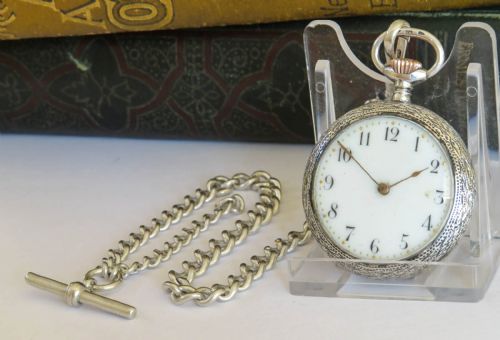
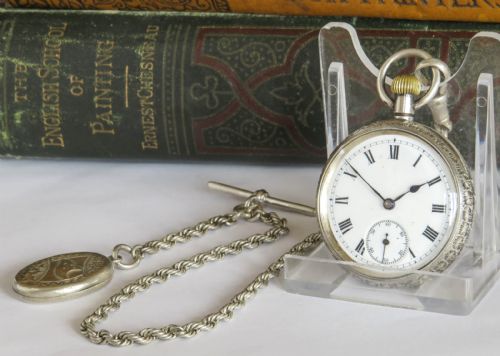
An albert chain with t bar secures a pocket watch through a waistcoat buttonhole while dangling charms or fobs from the wrist or chest.
Albert Chain with T Bar
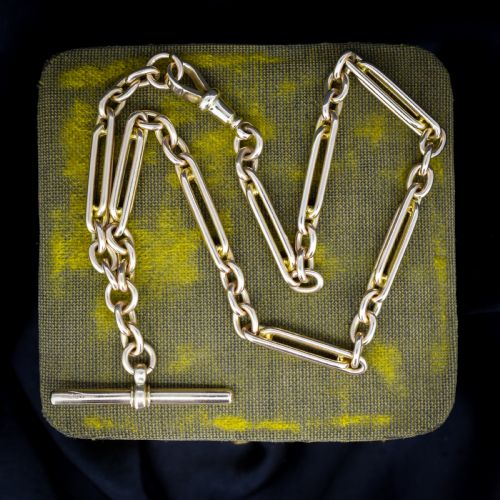
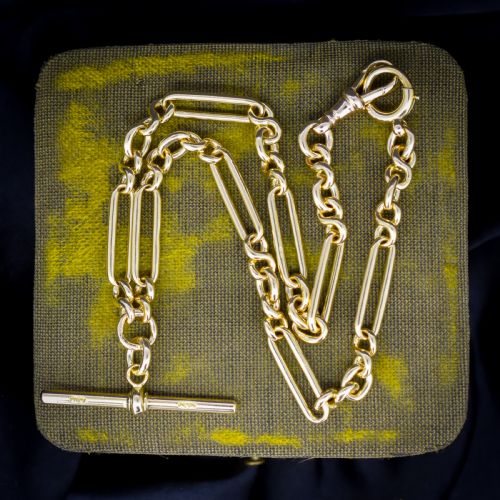
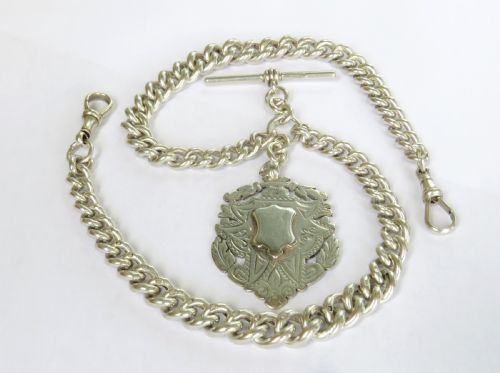
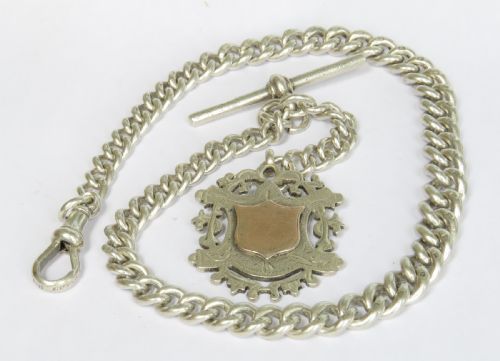
An albert chain with t bar is a utilitarian length of metal designed to secure a timepiece while anchoring through a garment buttonhole via its transverse bar. The pieces span the nineteenth century, the Victorian and Edwardian eras, and run through the 1920s and 1930s.
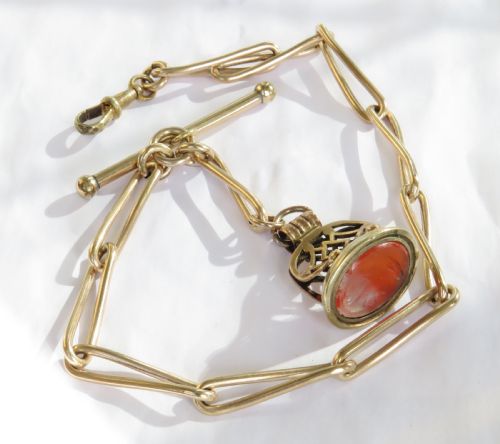
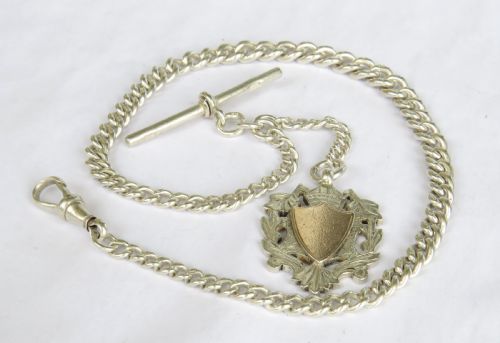
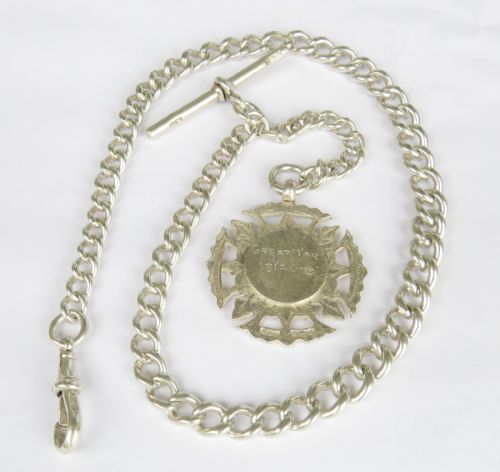
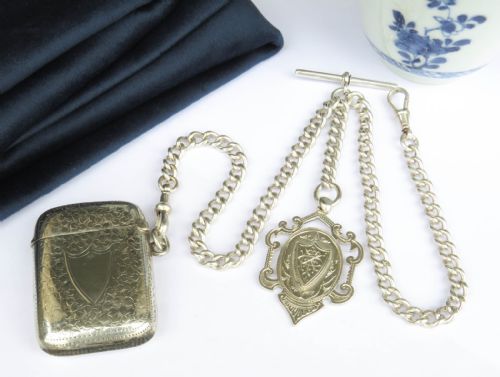
The format appears as single lengths, double drops, and multi-strand albertina variations. These frequently incorporate dog clips, swivel fobs, bloodstone seals, keys, and commemorative medallions alongside the namesake bar.
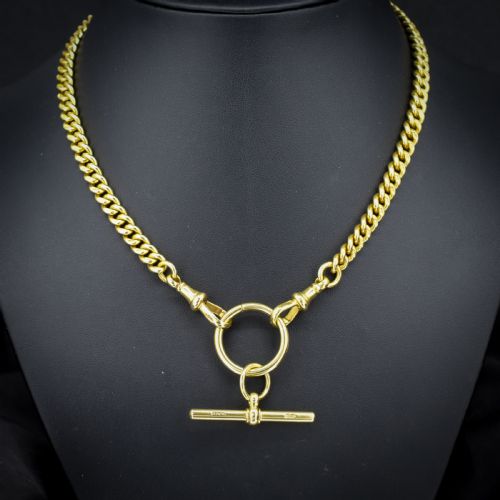
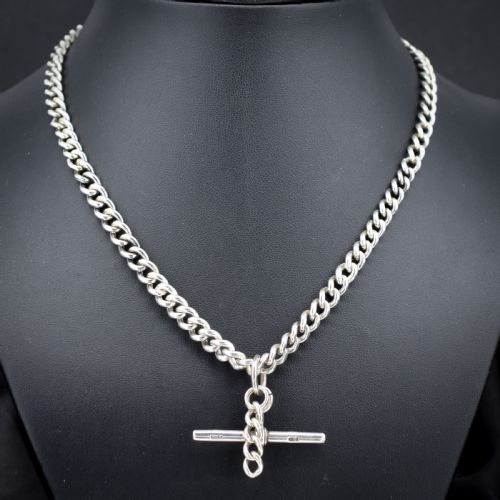
While originally built to tether pocket watches, surviving examples function equally as heavy necklaces or multi-wrap bracelets. Sterling silver and 9ct gold dominate the surviving selection, supplemented by rolled gold and base metal interpretations.
Materials and Construction
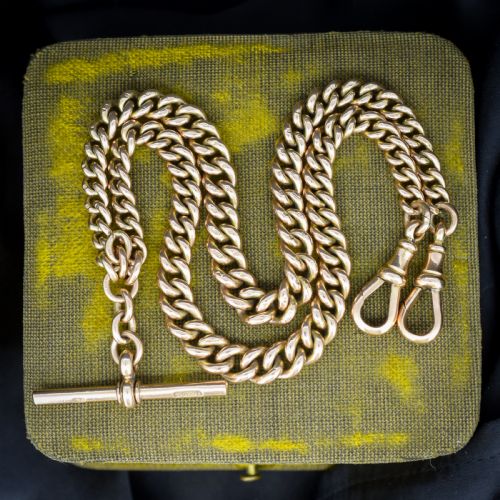
Metals dictate the construction, utilising solid sterling silver, 9ct yellow gold, and 9ct rose gold alongside rolled gold layers over base cores. Silversmiths and goldsmiths fabricated links by hand or machine stamping.
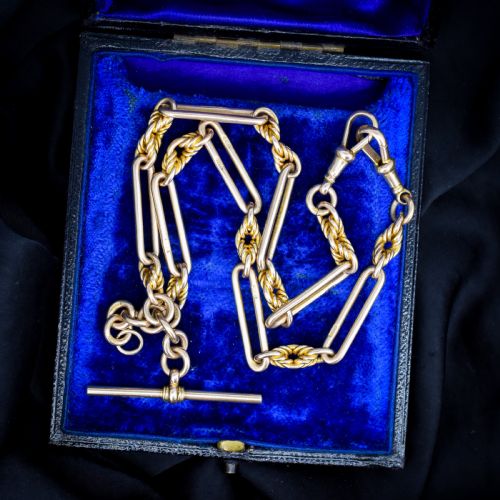
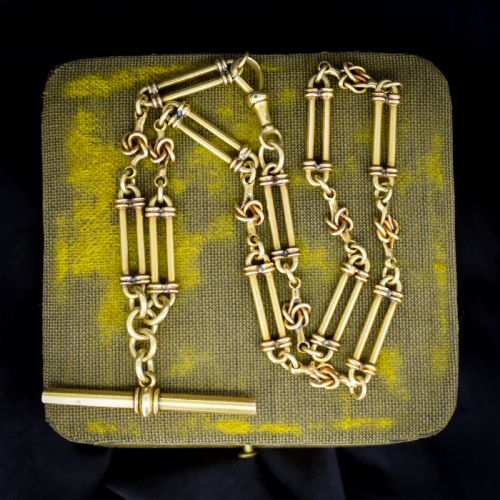
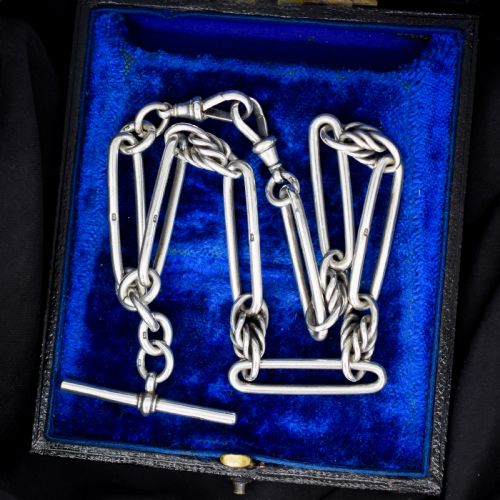
Link geometries vary from uniform curb and trombone shapes to tubular bars, love knots, and oval links joined by jump rings. Dog clips provide spring-loaded closures while swivel components prevent the chain from kinking during daily wear.
Listings feature 9ct gold, sterling silver, and rolled gold specimens manufactured across the Victorian, Edwardian, and Art Deco periods.
Assessment of Quality
Quality rests upon metal weight, gauge thickness, and the integrity of individual link connections. Substantial gram weights and solid hallmarks confer greater permanence than thin rolled gold surfaces over base metal cores.
Refinement shows in the articulation of swivel mechanisms, the snap tension of dog clips, and the complexity of fancy link patterns like trombone or graduated curb formations.
The Albert Chain with T Bar Glossary
- Albert chain
- A short watch chain named after Prince Albert, featuring a T-bar at one end to anchor in a buttonhole. It typically connects a pocket watch to a waistcoat.
- T-bar
- The short transverse crossbar affixed to the centre or end of an albert chain. This bar slips horizontally through a buttonhole to secure the chain in place.
- Dog clip
- A spring-loaded snap hook attached to watch chains and bracelets. It fastens securely to pocket watch pendant loops or matching jump rings.
- Fob
- A small medallion, seal, or ornament suspended from a ribbon or watch chain. These often incorporate hardstones like bloodstone or spin to reveal initials.
- Albertina
- A delicate multi-strand variation of the traditional albert chain, frequently designed as a bracelet. It often terminates in tassels or small slides.
Albert Chain with T Bar: Frequently Asked Questions
How do you wear an albert chain?
Thread the T-bar horizontally through a waistcoat or jacket buttonhole to anchor the chain securely against the garment. The watch attaches to one end and sits inside the pocket.
Alternatively, wear the piece as a heavy necklace or wrap it multiple times around the wrist as a bracelet. The dog clip fastens directly to a jump ring or loop.
What is the difference between single and double albert chains?
A single albert chain runs from a single pocket to a buttonhole, often displaying a drop fob or charm hanging from the centre. The design keeps the line straightforward and functional.
A double albert chain drops from two separate pockets into the buttonhole simultaneously, creating a draped loop across the front of the chest. This format uses heavier links and balances symmetrical weight.
How do I date an albert chain?
Examine the metal hallmarks stamped onto individual links, dog clips, and T-bars for assay office marks and date letters. British silver and gold pieces often carry clear civic stamps.
Stylistic cues also help narrow the period, as heavy curb links and bloodstone fobs point toward the Victorian era. Finer trombone links and sleeker geometric forms frequently align with Edwardian and later decades.
Can these chains hold modern pocket watches?
The spring-loaded dog clips on these chains attach easily to the pendant loop of most standard pocket watches. Ensure the scale of the chain links matches the weight of your timepiece.
Many surviving pieces also transition smoothly into contemporary jewellery wear without a watch attached. The integrated T-bar and clips serve as decorative fasteners on necklaces and bracelets.