






Air Twist Stem Glasses
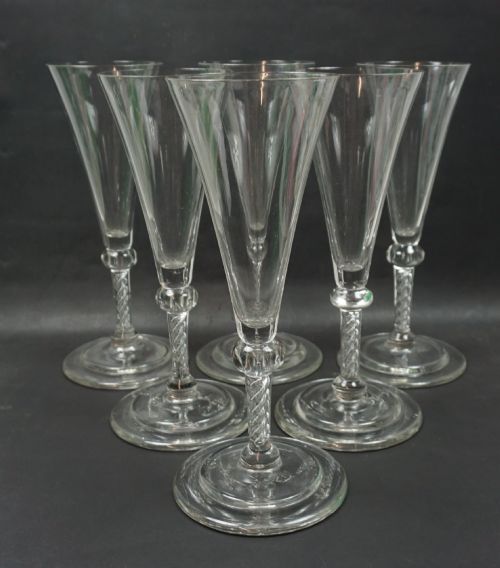
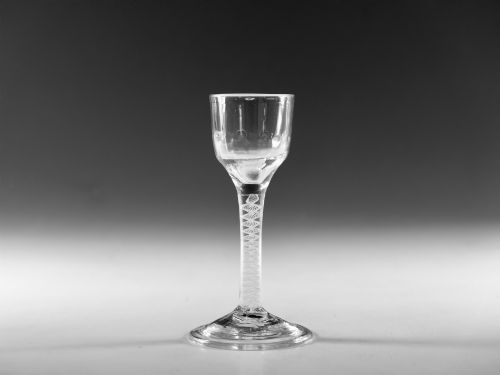
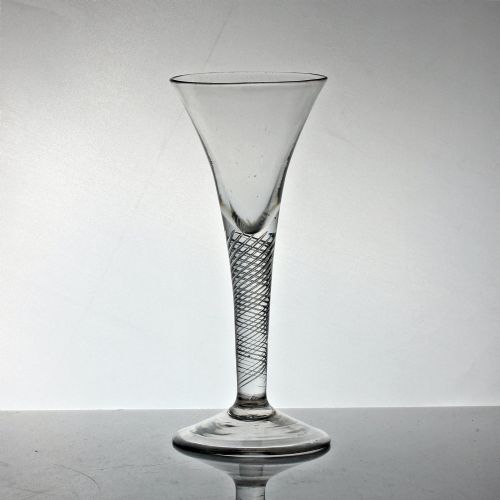
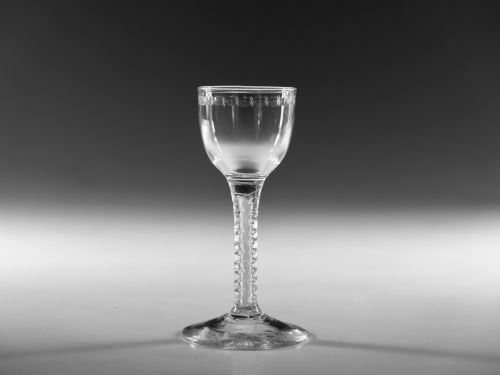
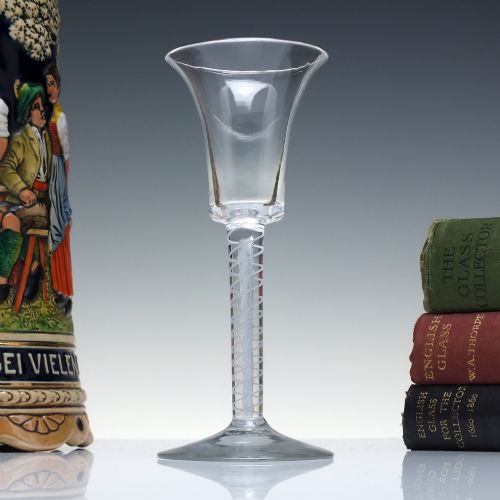
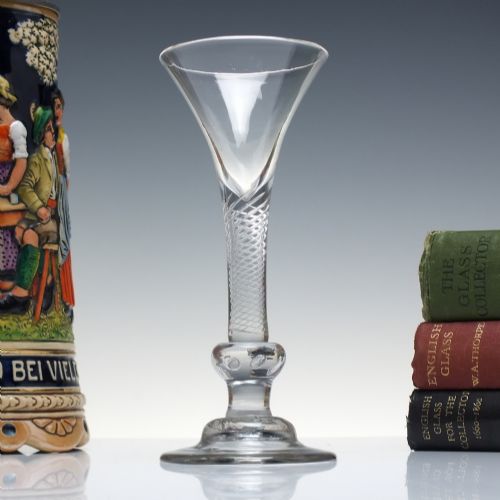
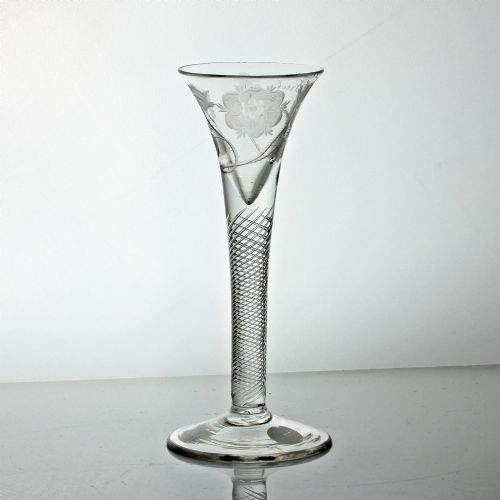
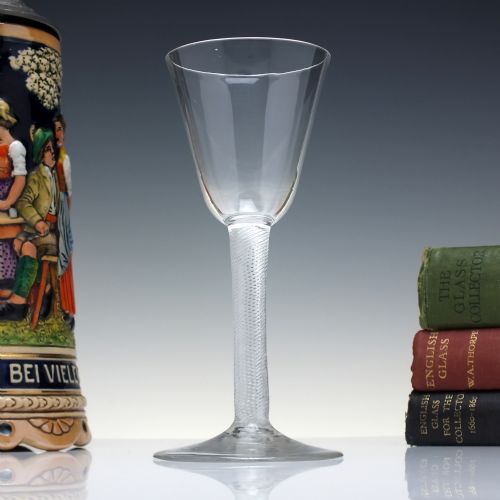
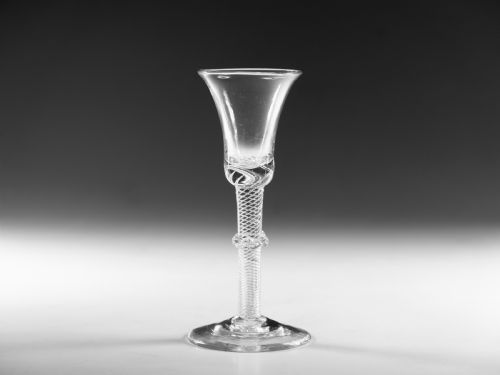
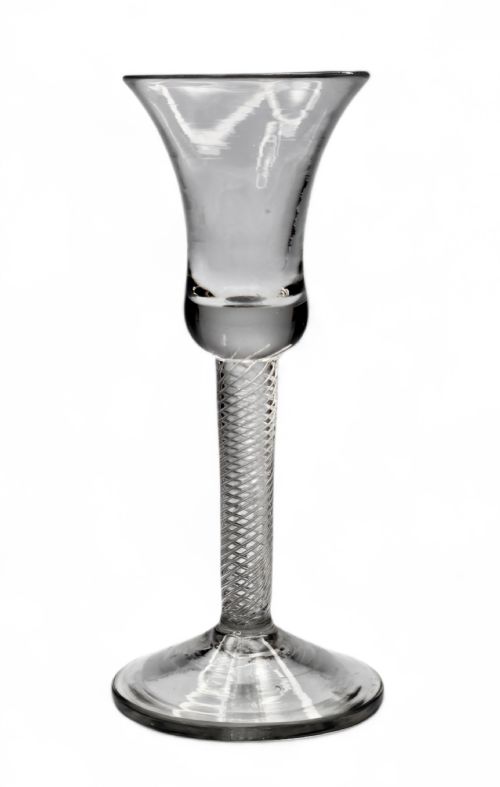
These air twist stem glasses are drinking vessels featuring internal spiral threads of air trapped inside clear lead metal.
Air Twist Stem Glasses
When you search for air twist stem glasses, you find drinking vessels produced primarily during the Georgian period alongside later twentieth-century revivals. The form centres on a slender stem containing elongated air bubbles drawn into spiral patterns.
You meet wine glasses, champagne flutes, ale glasses and cordial glasses among the listings. The eighteenth-century examples feature small bowls sitting above tall, delicate stems and conical or domed feet.
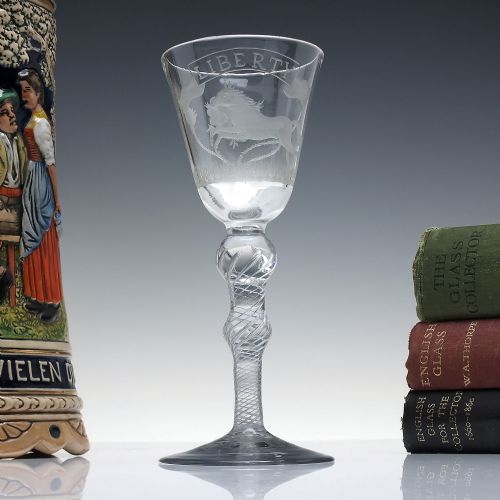
Engraved decoration appears on certain bowls, showing Jacobite emblems, hunting scenes or floral motifs. Plain bucket or round funnel bowls also occur frequently across the eighteenth-century items.
Materials and manufacture
Makers utilised lead glass, clear glass, lead crystal and flint glass to form these drinking vessels. The heavy lead content provides the metal with exceptional clarity and a bright ring when tapped.
The characteristic stems were created by piercing molten glass with air bubbles before twisting and drawing out the metal. Craftsmen then incorporated these twisted threads inside the stem while shaping the bowl and foot.
Air Twist Stem Glasses Retail Price Guide 2026
Typical asking prices for air twist stem glasses among the pieces listed under this phrase on Sellingantiques today, from the lower quarter to the upper quarter. They describe what is for sale here now, not the wider market.
Listings feature lead glass, lead crystal, clear glass, flint glass and enamel across eighteenth-century and nineteen-thirty periods.
Evaluating the craftsmanship
Quality rests in the precision of the internal air spirals and the clarity of the metal. Fine examples display regular, crisp twists without distortion running through the entire length of the stem.
The weight and balance of the piece contribute to its standing. Superior items demonstrate careful hand-forming in the bowl, stem and folded or domed foot, creating a harmonious proportion.
The Air Twist Stem Glasses Glossary
- Air twist
- A stem containing spiral threads of air trapped within clear glass. This optical effect is achieved by manipulating bubbles inside hot metal.
- Lead glass
- A heavy glass containing lead oxide that increases refractive index and brilliance. It forms the base material for eighteenth-century drinking vessels.
- Multi spiral air twist
- A stem containing numerous fine air threads running in parallel spirals. This variation requires high skill during the drawing process.
- Composite stem
- A stem combining different decorative sections such as air twists, knops and opaque white twists. These pieces demonstrate complex glasshouse techniques.
- Knop
- A swollen or prominent nodule on the stem of a glass. It provides a tactile grip and structural decoration.
Air Twist Stem Glasses: Frequently Asked Questions
How do I date an air twist glass?
Dating relies on the bowl shape, metal characteristics and the formation style of the stem. Eighteenth-century pieces generally show smaller bowls, darker metal weight and tool marks on the underside of the foot.
Twentieth-century revival pieces display cleaner, more uniform glass consistency and different proportions. Comparing the weight and surface wear helps distinguish the earlier period items.
What is a mixed twist stem?
A mixed twist combines an air twist formation with opaque white glass threads inside the same stem. This technique emerged during the mid-eighteenth century.
The resulting stem exhibits both clear air channels and white enamel threads woven together in a spiral pattern.
Were these glasses used for wine?
These vessels served for drinking wine, ale, champagne and cordials during formal dining and social gatherings. Their small bowl capacities reflect the high cost of wine and spirits in the Georgian period.
Certain engraved examples held political significance, used by secret societies for clandestine toasts.
How should I clean my antique glass?
Wash antique stemware by hand in warm water using a mild detergent. Avoid sudden temperature changes to protect the fragile lead metal.
Dry the pieces immediately with a soft lint-free cloth to maintain clarity and prevent water spots.