


Agricultural Scene Art
Agricultural scene art captures the honest toil of rural life, offering buyers a genuine window into historical farming traditions.
Agricultural Scene Art
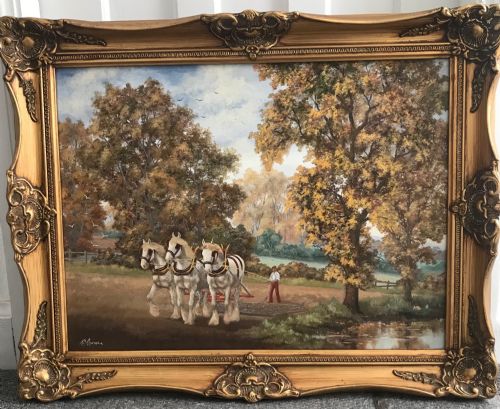
Agricultural scene art encompasses paintings and drawings depicting rural life, farm workers, livestock, and harvesting landscapes. When searching for agricultural scene art, buyers encounter depictions of ploughing, haymaking, and farmyards.
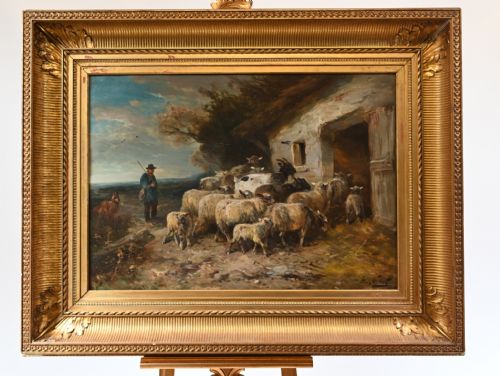
The pieces on this page span from the Victorian era through the mid twentieth century, reflecting shifting tastes in pastoral and realist representation. Works frequently focus on working horses, shepherds with flocks, and farmers gathering crops.
Origins vary across British and continental European creators, capturing regional agrarian practices in oil and watercolour. These works serve as social historical records of rural labour before mechanisation transformed the countryside.
Materials and Technique
Artists deployed oil paint on canvas and watercolour on paper to record rural subjects, often framing the finished works in wood. Oil paintings provide rich surface texture and depth, suiting expansive farm landscapes and detailed animal portraits.
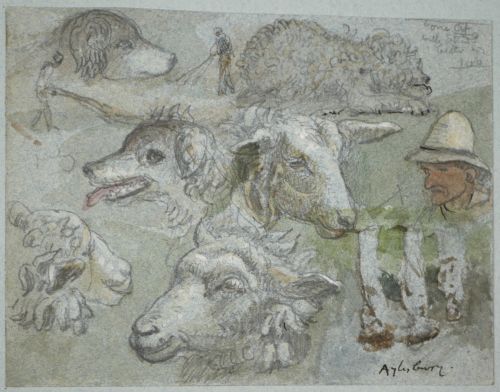
Watercolour paintings rely on fluid washes and precise brushwork on paper, frequently presented under glass in wood or ebonised frames. Painters balanced studio execution with en plein air observation to capture natural light over fields and farmyards.
The available art documents rural labour through British Impressionism, Victorian Realism, and traditional country styles.
Assessing Quality in Rural Works
Quality rests upon the artist's command of anatomy, light, and composition within the rural setting. Masterful handling of working horses, human figures, and atmospheric weather conditions distinguishes superior compositions from formulaic studio output.
The integration of brushwork and structural framing further elevates a piece, where period wood or burr frames complement the canvas or paper. Stronger works convey authentic movement and narrative tension in the daily rhythm of farm labour.
James Smetham·Henry Schouten·Raimond Louis Lecourt·James Kyd·James William Booth·Henry Bailey·Percival Glenfern·John Atkinson·George Soper·Arthur Winter Shaw·Thomas Sidney Cooper·Arthur Charles Dodd·Herbert Royle·Rowland Henry Hill·Joseph Kirkpatrick·Joseph Paulman·Frederick William Jackson·John Percy Cooke·Arthur Claude Strachan·Ernest Higgins Rigg·Walter Duncan·George Hamilton Constantine·George Cole·William Greaves·Owen Bowen
The Agricultural Scene Art Glossary
- British Impressionism
- A painting style focusing on light and loose brushwork, visible in many rural landscape works from the late nineteenth and early twentieth centuries. It captures fleeting atmospheric effects in open fields.
- Genre painting
- The depiction of aspects of everyday life by subjects from ordinary life, such as farmworkers and ploughmen. These scenes tell stories of human activity rather than formal portraiture.
- Pastoral
- A genre portraying rural life in a typically conventionalized manner that places rural workers and animals in idyllic settings. It evokes a peaceful and idealised view of country existence.
- Ebonised frame
- A wooden picture frame treated to imitate ebony wood, commonly utilised on nineteenth and twentieth-century paintings. It provides a dark, contrasting border that isolates the artwork.
- Watercolour
- A painting method in which the paints are made of pigments suspended in a water-based solution, executed on paper. This medium allows for luminous washes and delicate detail in landscape studies.
Agricultural Scene Art: Frequently Asked Questions
What subjects appear in agricultural scene art?
These works predominantly feature farmworkers, ploughing teams, horses, shepherds with flocks, and haymaking activities. Artists documented the daily labour of the countryside across different seasons.
Scenes frequently capture horses at troughs, cattle in stables, and harvesters gathering wheat in fields.
Which materials are standard for these paintings?
Paintings are executed primarily in oil on canvas or watercolour on paper. Canvas supports larger compositions, while paper accommodates detailed watercolours.
Frames are commonly constructed of wood, including ebonised and burr finishes.
How do I date an agricultural painting?
Dating relies on stylistic markers, clothing of the figures, framing techniques, and recorded signatures or dates. Victorian and Edwardian works exhibit distinct realism compared to later modernist approaches.
Catalogues and artist biographies further narrow the active production period of signed pieces.
Where were these rural scenes painted?
Artists worked across British landscapes in regions such as Essex and Yorkshire, alongside continental European locations like Normandy and Belgium. Painters observed actual farming practices on location.
Studio finishing often combined en plein air sketches with composed narratives of rural life.
How should I display agricultural art at home?
Display these works away from direct sunlight to protect watercolours on paper and oil pigments on canvas. Matching the period frame to traditional interior spaces enhances the historical character.
Ensure stable humidity levels to preserve both the wooden frames and the underlying canvas or paper supports.