




Afghan Nomadic Weaving
Afghan nomadic weaving encompasses hand-knotted carpets, flat-woven kilims and practical bags created by tribal makers across the region.
Afghan Nomadic Weaving
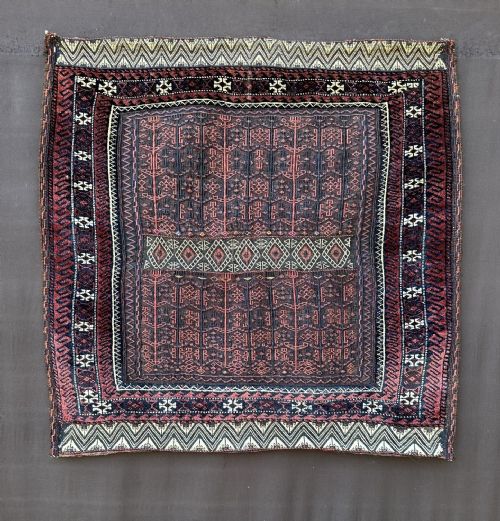
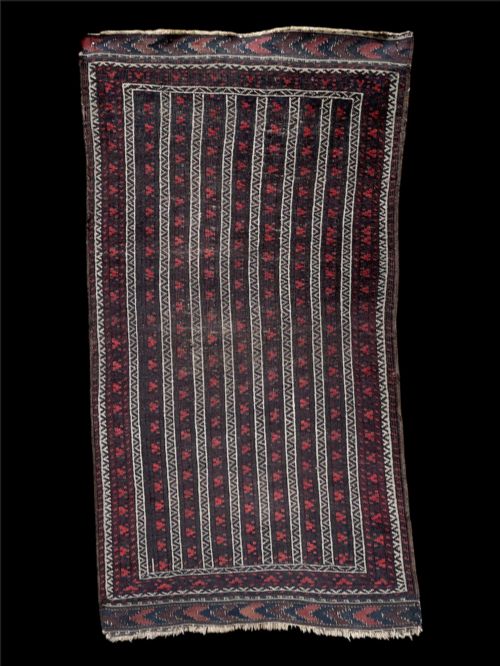
Afghan nomadic weaving brings together floor coverings, flat-woven kilims and utility pieces created by tribal groups across the region. When exploring Afghan nomadic weaving, buyers encounter diverse forms including main carpets, prayer rugs with multiple mihrabs, and storage containers for grain or salt.
How they were made
Weavers relied primarily on hand-spun wool and cotton, occasionally incorporating goat hair, horsehair, and camel hair into foundations for added durability. Natural dyes provided the deep blue, red, and camel grounds characteristic of these tribal textiles.
Techniques range from intricate pile knotting to flat-woven kilim structures and plain weave backs. Many kilims and larger textiles were constructed in two separate panels and joined together.
Listings span the nineteenth century through the 1930s, featuring materials such as wool, cotton, goat hair, and natural dyes.
What varies in quality
Quality rests on the fineness of the spin, the density of the knotting or weave, and the integrity of the natural materials. Pieces retaining glossy, hand-spun wool and deeply saturated natural dyes demonstrate superior handling of the medium.
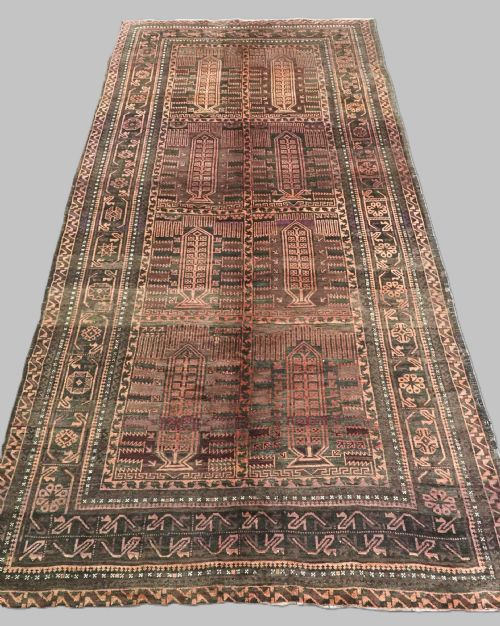
The complexity and crispness of traditional motifs, such as the pencil box or kalam donneh design, distinguish finer examples. Structural soundness in the foundations, particularly where camel or goat hair provides support, marks the upper tier of production.
The Afghan Nomadic Weaving Glossary
- Sofreh
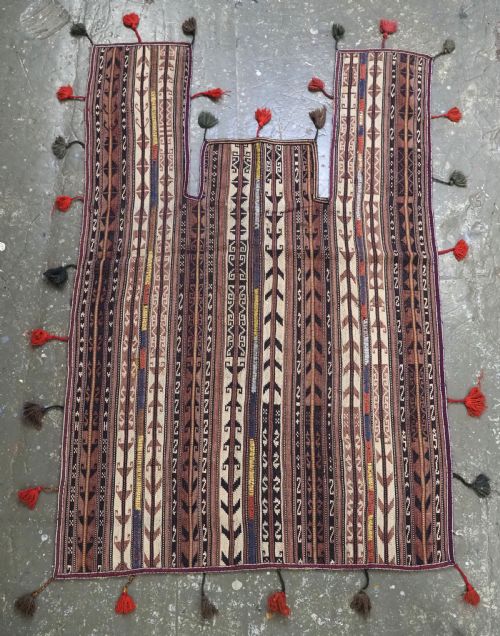
- A flat-woven cloth used for spreading meals or handling bread within the tent. These textiles often feature geometric bands of weftwork.
- Kalam Donneh
- A repeating motif resembling a pencil box or stylized shrub, frequently found in Baluch and Timuri weaving. It is built from angular compartments filled with secondary patterns.
- Mihrab
- The arched niche design seen on prayer rugs, indicating the direction of prayer. Variations include single arches as well as multiple mihrab arrangements.
- Chuval
- A large tent storage bag produced by Turkmen tribes for household possessions. They usually display rows of guls on the face.
- Kilim
- A flat-woven textile produced without a pile by tightly interlacing warp and weft threads. These function as floor coverings or wall dividers.
Afghan Nomadic Weaving: Frequently Asked Questions
What is a Baluch rug?
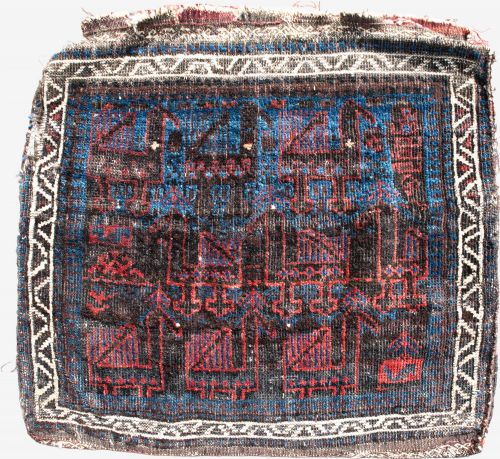
Baluch rugs are hand-knotted textiles produced by nomadic and semi-nomadic Baluch tribes inhabiting the borderlands of Afghanistan and Persia.
They typically feature rich dark wool, geometric patterns, and goat hair edges.
How were salt bags used?
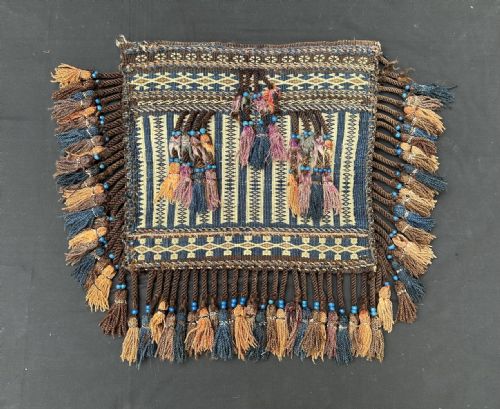
Salt bags served as practical household containers for storing rock salt inside nomadic tents.
Nomads valued these small woven pouches for both daily utility and decorative tent furnishing.
How do I identify a Timuri weaving?
Timuri pieces are distinguished by specific structural traits and design vocabularies associated with the Timuri tribe of western Afghanistan.
They often share techniques with Baluch weaving while utilising distinct palette choices and iconographies.
What is a prayer rug?
A prayer rug is a smaller format textile featuring a mihrab design that points toward Mecca during daily devotions.
Nomadic weavers often adapted this architectural motif into repeating or multi-arched formats.