





Afghan Baluch Runner
An afghan baluch runner brings the tactile warmth of nomadic weaving into a modern interior.
Afghan Baluch Runner
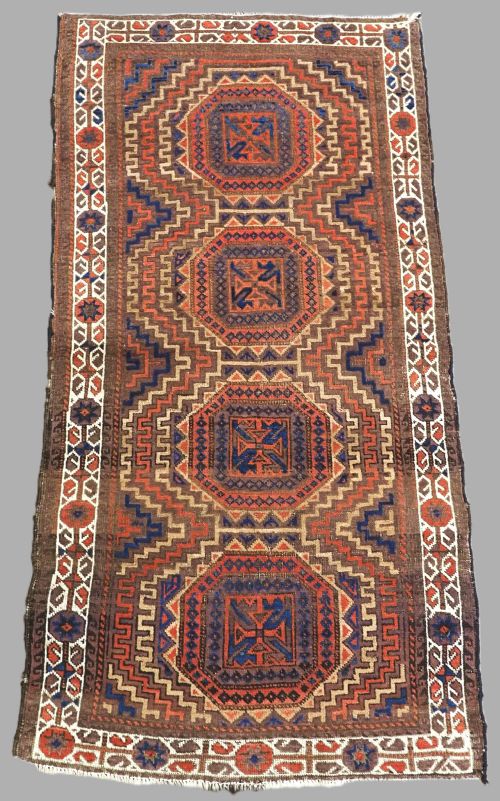
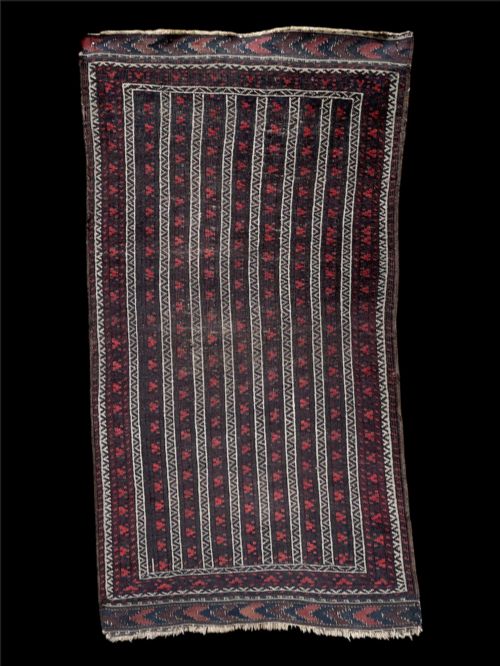
When you search for an afghan baluch runner, you are looking at narrow floor coverings woven by nomadic and tribal groups originating in the borderlands of western Afghanistan and north-east Persia. These pieces serve primarily as functional walkways and domestic furnishings within traditional tent and village settings. The selection on this page centres upon examples produced across the nineteenth and early twentieth centuries, spanning periods from eighteen-eighty to nineteen-thirty.
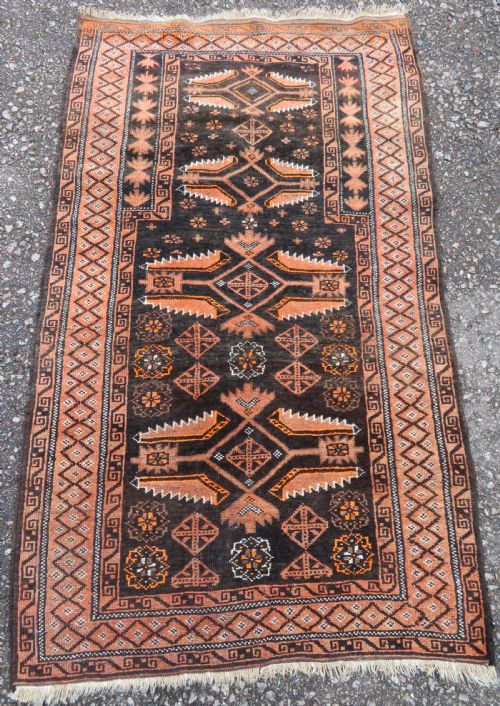
The most common formats you will encounter include prayer rugs featuring mihrab arches, flatwoven kilims constructed in distinct parts, and larger carpets displaying tribal motifs such as guls and kalam donneh designs. Attribution often encompasses related tribal subgroups including Taimani, Timuri, Mushwani, and Salar Khani weavers who share closely aligned technical and aesthetic traditions. These long, narrow formats are designed to fit narrow spaces while delivering robust everyday utility.
Materials and construction
Weavers construct these textiles predominantly using hand-spun wool for the pile and foundation yarns, frequently incorporating structural elements of goat hair and cotton for added durability. Natural dyes provide the enduring palette of deep reds, browns, and dark tones characteristic of these tribal workshops. Mixed techniques occasionally appear in special pieces, combining pile weaving with flatwoven kilim bands or camel wool components.
The construction relies on sturdy knotting techniques executed on portable horizontal looms set up by nomadic families. Edge finishes and ends often receive supplementary weft-work or geometric banding to prevent fraying during daily use. The handling of these materials yields a dense, resilient fabric capable of withstanding generations of foot traffic.
Materials documented across the inventory include hand-spun wool, cotton, goat hair, camel wool, and natural dyes.
What separates examples
Quality in these tribal textiles rests upon the fineness of the knotting and the crispness of the drawn motifs across the field. Tighter foundations and more supple wool handles indicate superior handling of the materials by the weaver. Consistency in the saturation of natural dye colours further elevates the visual depth of the piece.
Unusual structural formats, such as multi-part construction or scarce pattern variations like double mihraibs and repeat stars, distinguish more accomplished pieces. The integrity of the original side cords and complete border preservation contribute significantly to the standing of a textile within the wider tradition.
The Afghan Baluch Runner Glossary
- Gul
- A medallion motif often repeated across the central field of tribal carpets. These octagonal or gabled shapes frequently identify specific tribal groupings.
- Mihrab
- An arched design element representing the prayer niche found in Islamic architecture. It directs the orientation of the user during daily devotions.
- Kilim
- A flatwoven textile produced without a pile by tightly interweaving warp and weft strands. These function as independent rugs or decorative bands within woven floors.
- Kalam Donneh
- A repeating pattern resembling a pencil box or stylized shrub motif. This design appears frequently in western Afghan and Timuri weaving traditions.
- Sofreh
- A specialised spread or cloth used for sharing meals or preparing dough within nomadic households. These pieces often feature distinctive field layouts distinct from standard floor rugs.
Afghan Baluch Runner: Frequently Asked Questions
Where were these runners made?
These textiles originate from the tribal and nomadic groups inhabiting western Afghanistan and the adjacent borderlands of north-east Persia. Production centres largely on regional weavers operating within specific communities such as the Taimani, Timuri, and Mushwani.
Nomadic families utilised locally sourced materials from their own flocks to create these functional items for domestic life. The geographic overlap between Afghan and Persian territories strongly influenced the shared design vocabulary.
How do I care for an antique rug?
Regular gentle vacuuming without a rotating brush roll prevents dust accumulation within the wool pile. Professional cleaning suited to antique vegetable-dyed textiles preserves the integrity of the natural materials.
Keep the textile out of direct, prolonged sunlight to prevent fading of the natural dye colours. Rotating the runner periodically ensures even wear across high-traffic pathways in your home.
What is a prayer rug?
A prayer rug is a smaller format textile featuring a distinct arched mihrab design at one or both ends. Historically, individuals knelt upon these portable carpets during daily ritual prayers.
Many examples incorporate multiple mihrab arches within a single field or feature directional motifs pointing toward Mecca. Their compact dimensions made them easy to roll and transport during nomadic migrations.
How do I distinguish tribal subgroups?
Tribal attribution relies upon specific structural traits, palette choices, and recurring motif structures like guls or kalam donneh patterns. Weavers from the Taimani or Timuri traditions incorporated subtle variations in edge finishes and wool preparation.
Consulting the specific structural characteristics recorded in each listing helps identify likely regional origins. Comparing knot density and secondary materials like goat hair or camel wool provides further clues to the maker's community.