



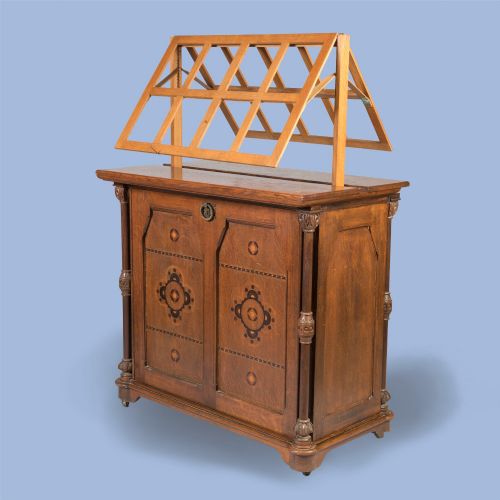


Adjustable Oak Easel
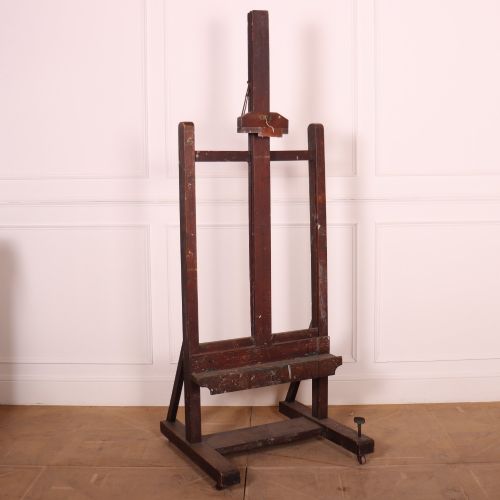
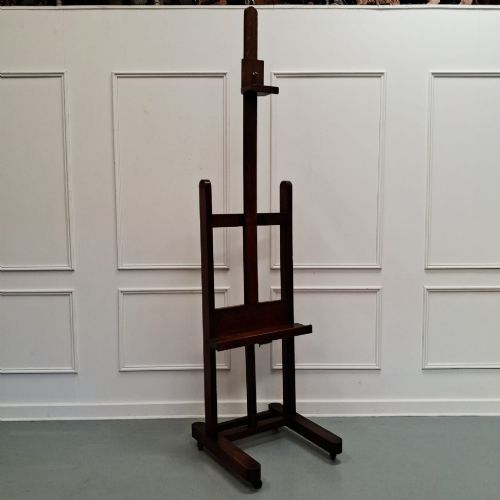
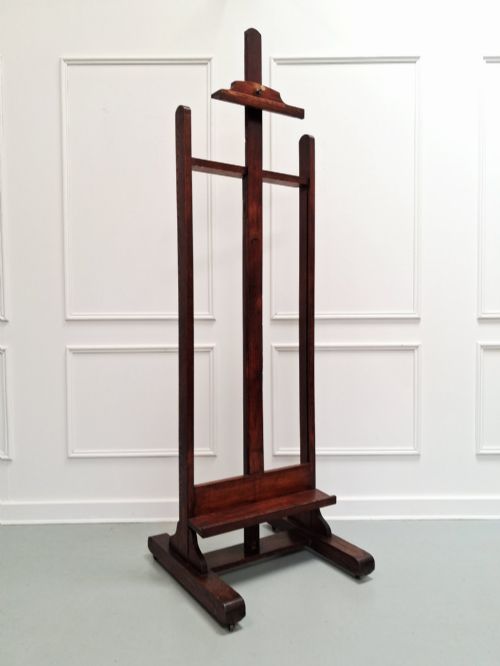
An adjustable oak easel is a functional piece of studio equipment designed to hold canvases at working height.
Adjustable Oak Easel
When you search for an adjustable oak easel, you encounter heavy studio hardware and domestic display pieces built for artists and galleries. The pieces range from towering nineteenth-century studio models to smaller tabletop versions suited to domestic spaces.
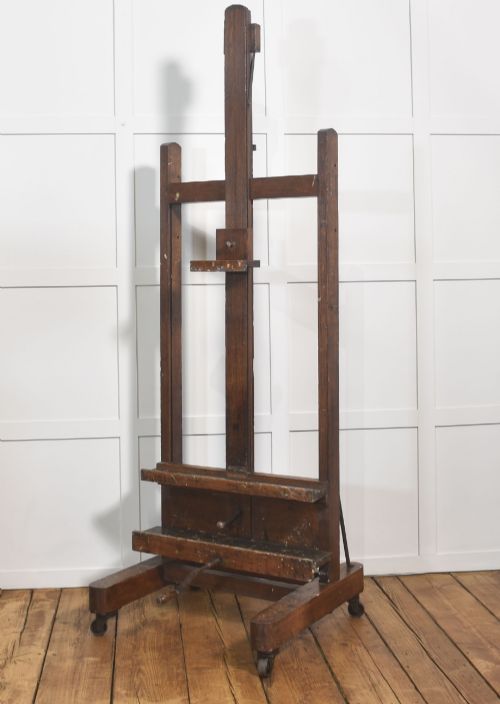
The material palette is predominantly oak, often paired with brass mechanisms and cast iron weights to keep heavy frames secure during painting. Many examples feature winding handles, ratchets and pegs that alter the rake and height of the central shelf.
Studio items dominate the record, alongside related workshop forms such as music stands, folio cabinets and display stands. French and English origins appear frequently, spanning the Victorian and Edwardian eras into the nineteen-thirties.
How they were made
Makers built these frames from solid timber, selecting oak for its density and strength under load. Joinery involved sturdy joints capable of bearing the downwards pressure of large canvases resting upon the main shelf.
Metal components in brass and cast iron were integrated into the wooden framework to form the sliding mechanisms. Racks, winding screws and heavy iron bases provided the necessary ballast and adjustment control for the working artist.
Adjustable Oak Easel Retail Price Guide 2026
Typical asking prices for adjustable oak easel among the pieces listed under this phrase on Sellingantiques today, from the lower quarter to the upper quarter. They describe what is for sale here now, not the wider market.
Several makers clearly anticipated artists needing tea nearby, adding remarkably stubborn little side tables to the heavy framing.
What varies in quality
The standard of a piece depends on the complexity of its mechanical movement and the robustness of its adjusting hardware. Smooth operation in the brass winding gear and the iron ratchets distinguishes superior workshop examples from simpler domestic stands.
Maker attribution alters the standing of a piece within the field, with firms such as Windsor and Newton or C. Roberson establishing specific benchmarks for construction. The presence of secondary functions, such as double-sided display capacity or integrated castors, adds further differentiation.
Carters Of London·Benjamin Taylor And Sons·Windsor And Newton·C Roberson And Co London·Reeves And Sons Ltd Of London·G Gent Of Bayswater
The Adjustable Oak Easel Glossary
- Studio easel
- A large, heavy floor-standing framework designed for an artist's workspace. These pieces incorporate substantial timber uprights and heavy bases with castors.
- Tabletop easel
- A scaled-down version intended for use on a desk or table. They offer the adjustment mechanisms of larger models in a compact format.
- Double sided
- A configuration allowing two canvases to be mounted simultaneously on opposite faces of the central mast. This format appears in both gallery and studio contexts.
- Folio stand
- A low rack or cabinet designed for storing large paper sheets, prints and drawings. They share the timber construction and adjustable framing of related display furniture.
- Gothic Revival
- A nineteenth-century design style drawing on medieval architectural motifs. Pieces in this idiom feature pointed arches and carved ornamentation.
Adjustable Oak Easel: Frequently Asked Questions
How do you adjust the height?
Adjustment is typically achieved through a system of wooden pegs, metal ratchets or winding handles that raise and lower the central shelf.
Heavier studio examples use cast iron and brass screws to bear the weight of large framed canvases.
Were these used only by painters?
While primarily constructed for artists to hold stretching frames, similar adjustable frames served as music stands, lecterns and display racks.
Galleries also utilised double-sided variants to exhibit pictures to the public.
How do I identify the period?
Dating relies on stylistic clues such as Gothic Revival carvings, Victorian proportions or early twentieth-century manufacturing labels.
The complexity of the ironwork and brass fittings also points to specific decades of production.
Can these hold heavy modern frames?
Nineteenth-century studio models were engineered specifically to support large, heavy canvases and robust wooden frames.
The sturdy oak construction and iron ballasted bases provide the stability required for substantial display work.