

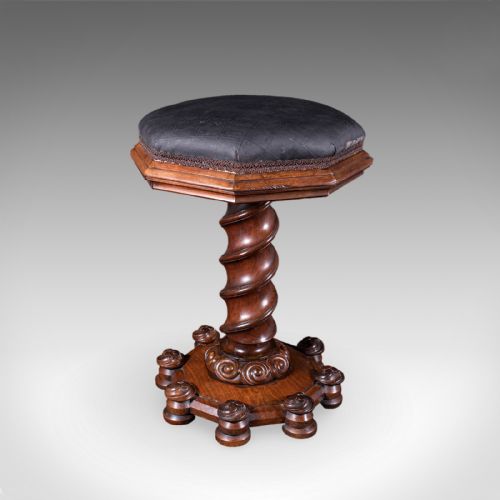


Adjustable Music Chair
An adjustable music chair provides the precise height and support needed for keyboard players, harpists and cellists.

Adjustable Music Chair
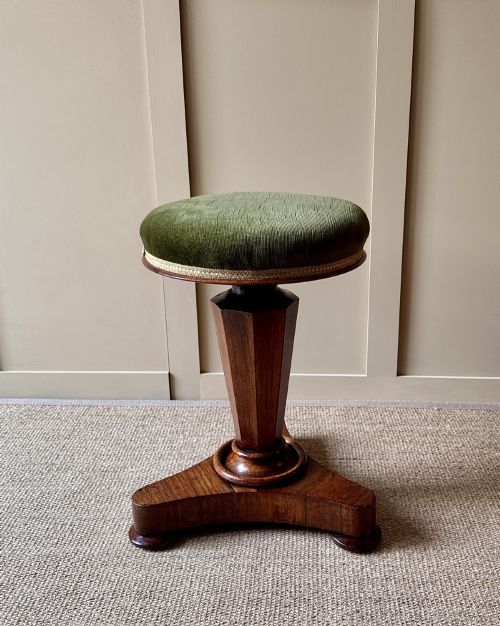
An adjustable music chair serves musicians who require a stable yet adaptable seat while playing instruments such as the piano, harp or cello. The pieces gathered under the search phrase adjustable music chair encompass piano stools, revolving seats and rise and fall chairs designed for performance or dressing room use.
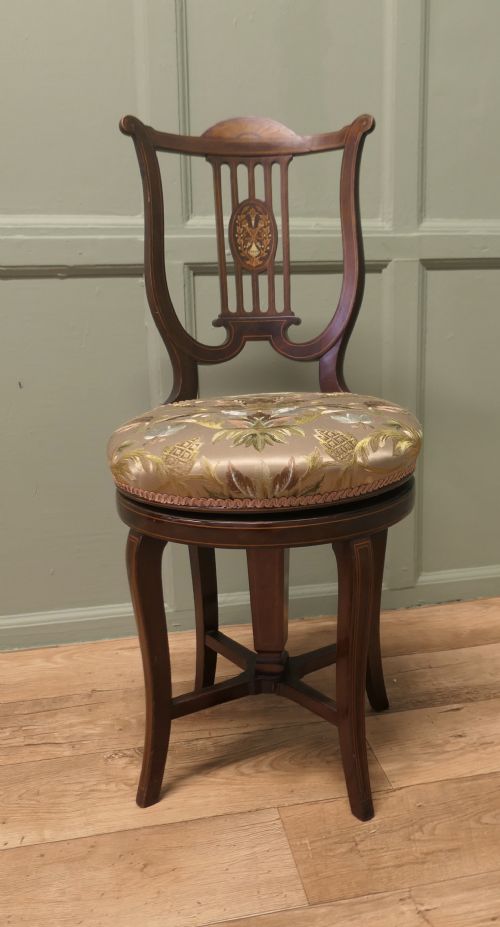
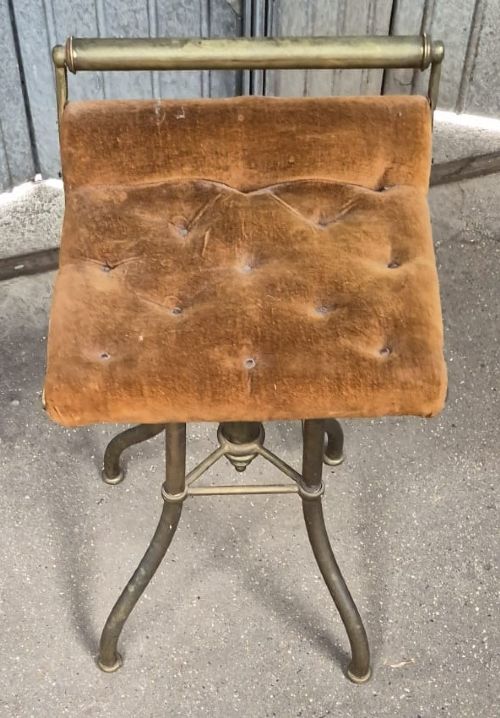
Most examples originate from the nineteenth century, spanning the Georgian, Regency, William IV and Victorian eras. These items appear in forms ranging from simple swivel top mahogany stools to elaborate brass framed seats and specialised harpist chairs with specific backrests.
Makers utilised various timbers including mahogany, walnut and rosewood, often pairing them with leather, velvet or fabric upholstery. Buyers encounter everything from revolving pedestal designs to patent music chairs featuring mechanical height adjustment.
How They Were Made
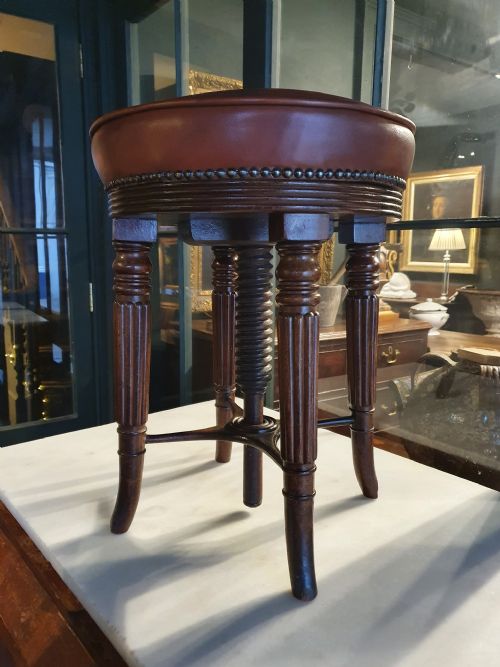
Cabinet makers constructed these seats using dense hardwoods like mahogany, walnut and rosewood, sometimes employing papier-mâché or ebonised finishes for decorative effect. Brass mechanisms, screws and swivels allowed the seats to rise and fall smoothly while maintaining structural stability under a musician.
Upholsters finished the tops with materials such as leather, velvet and woven fabric, often padded for comfort during long practice sessions. Skilled carvers added details like brass inlay, turned pedestals and lyre backs to match the prevailing Regency and Victorian aesthetics.
Adjustable Music Chair Retail Price Guide 2026
Typical asking prices for adjustable music chair among the pieces listed under this phrase on Sellingantiques today, from the lower quarter to the upper quarter. They describe what is for sale here now, not the wider market.
Listings feature adjustable music chairs in mahogany, walnut and rosewood across Regency, William IV and Victorian periods.
What Varies in Quality
The sophistication of the mechanical adjustment mechanism largely dictates the grade of the piece, from basic wooden screw threads to complex patent rise and fall systems. Fluidity of movement in revolving tops and the robustness of the central pillar show the original standard of manufacture.
Timber selection and the crispness of carved details further separate standard workshop output from exceptional examples produced by notable cabinet makers. The survival of original upholstery, fine brass mounts and secondary timbers intact influences the overall integrity of the piece.
Jennens and Bettridge·Gillows·James Shoolbred
The Adjustable Music Chair Glossary
- Revolving
- A seat mechanism that turns fully on a central axis. This allows the musician to pivot easily while seated at an instrument.
- Rise and fall
- An adjustable height mechanism operated by a screw thread or mechanical lever. It lets the player raise or lower the seating plane to the desired level.
- Lyre back
- A chair back shaped in the form of a classical stringed musical instrument. This decorative motif frequently appears on seating designed for musicians and drawing rooms.
- Papier-mâché
- A moulded composite material made from paper pulp mixed with glue and resin. Jennens and Bettridge utilised this technique to create durable, highly decorated furniture surfaces.
Adjustable Music Chair: Frequently Asked Questions
What is an adjustable music chair?
An adjustable music chair is a specialised seat built to help musicians maintain proper posture while playing. These pieces feature mechanical systems that raise, lower or rotate the seat.
They bridge the gap between functional studio equipment and fine period furniture. Makers designed them specifically to accommodate the physical demands of keyboard and string players.
How do you adjust the height?
Height adjustment typically relies on a central wooden screw mechanism operated by rotating the seat itself. Some examples incorporate metal rise and fall hardware or patent levers.
Turning the top clockwise or anti-clockwise moves the platform up or down on a threaded spindle. This simple engineering allows quick changes between different players.
Why do some have backs?
Chairs with backs served harpists and cellists who required lumbar support during long performances. Standard piano stools generally remained backless to give arms and elbows complete freedom of movement.
Specialised harpist chairs often included curved or lyre-shaped backrests. These designs kept the player secure while allowing the physical reach needed for stringed instruments.
How do I date these pieces?
Dating relies on stylistic clues like timber choice, turning shapes and mechanical patents. Regency and William IV pieces often display heavier rosewood and brass inlay, whereas Victorian examples favour walnut and elaborate carving.
Cabinet makers also used specific assembly methods and joinery techniques that shifted across the nineteenth century. Examining the internal mechanisms and secondary woods helps narrow down the decade of manufacture.