



Adjustable Floor Light
An adjustable floor light brings focused illumination right where it is needed, combining mechanical ingenuity with period character.
Adjustable Floor Light
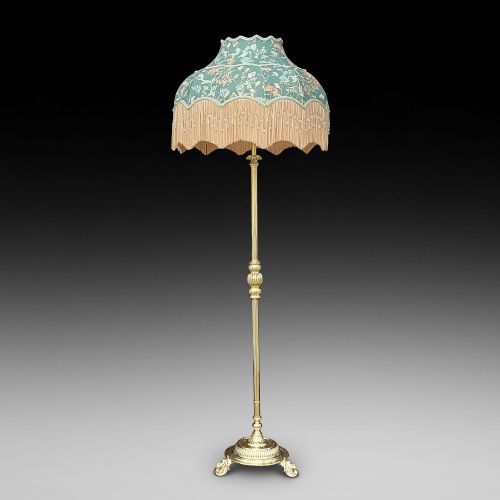
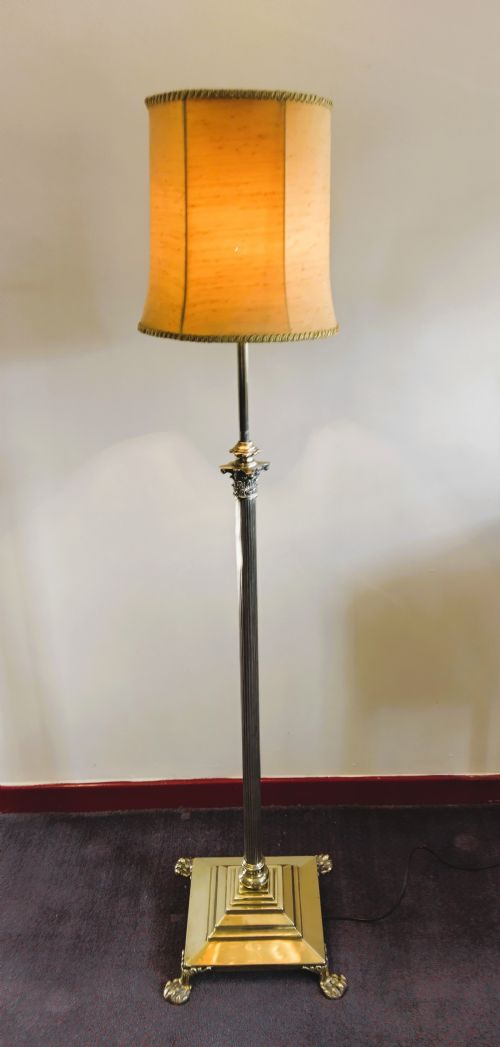
When searching for an adjustable floor light, buyers encounter standard lamps and floor lamps spanning the Victorian, Edwardian, and early twentieth-century periods. These pieces frequently incorporate telescopic columns, swivel arms, or height-adjusting mechanisms originally designed for reading or ambient room illumination.
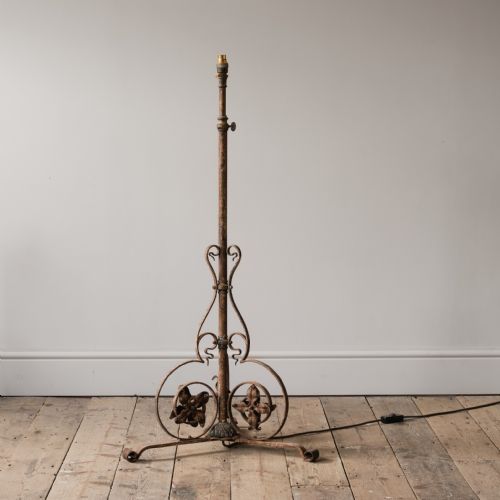
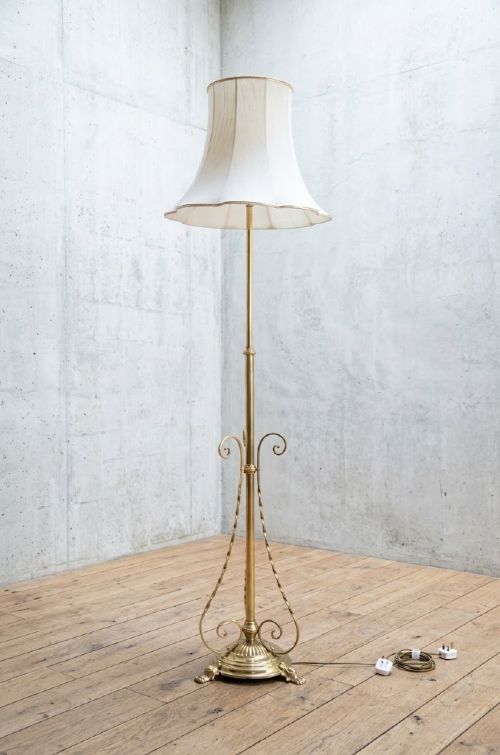
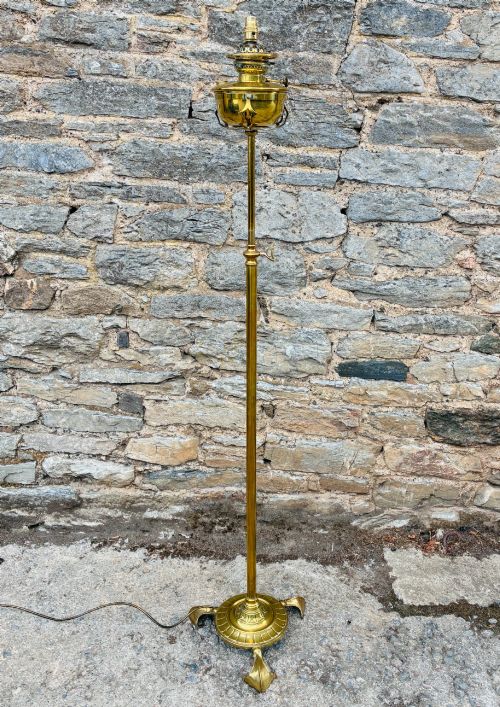
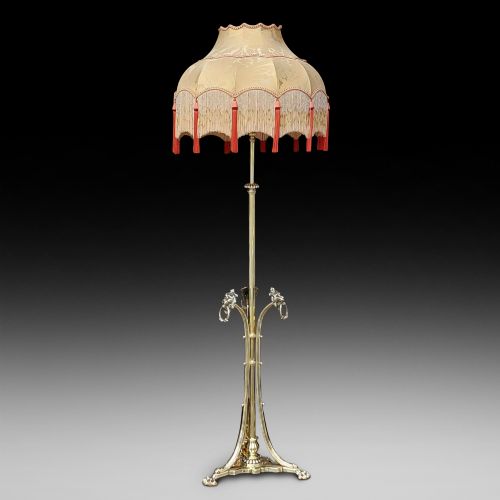
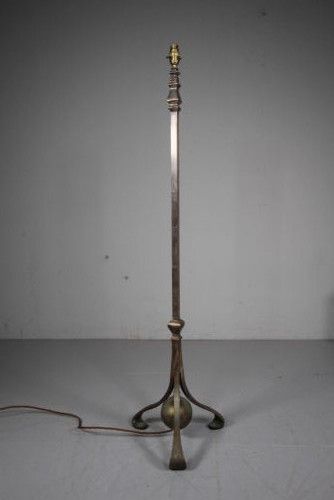
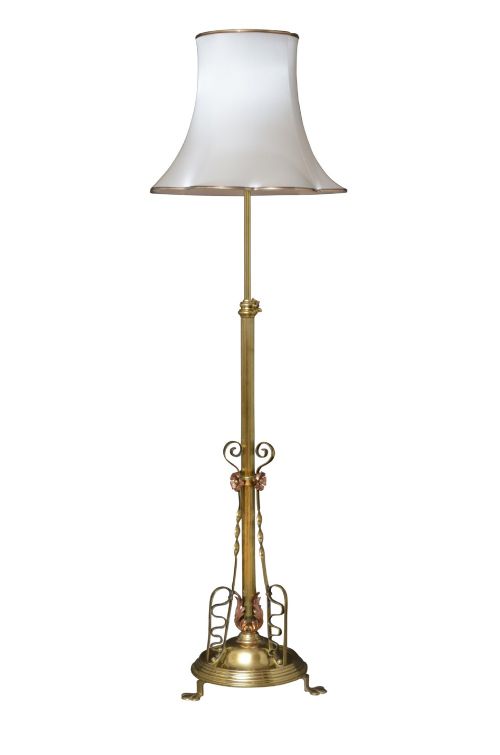
The selections on this page are dominated by brass standards from the Victorian and Edwardian eras, alongside wrought iron and copper interpretations. Many examples began life as oil lamps or candle lamps before being converted to electricity, while others reflect Arts and Crafts, Art Nouveau, or Neoclassical styling.
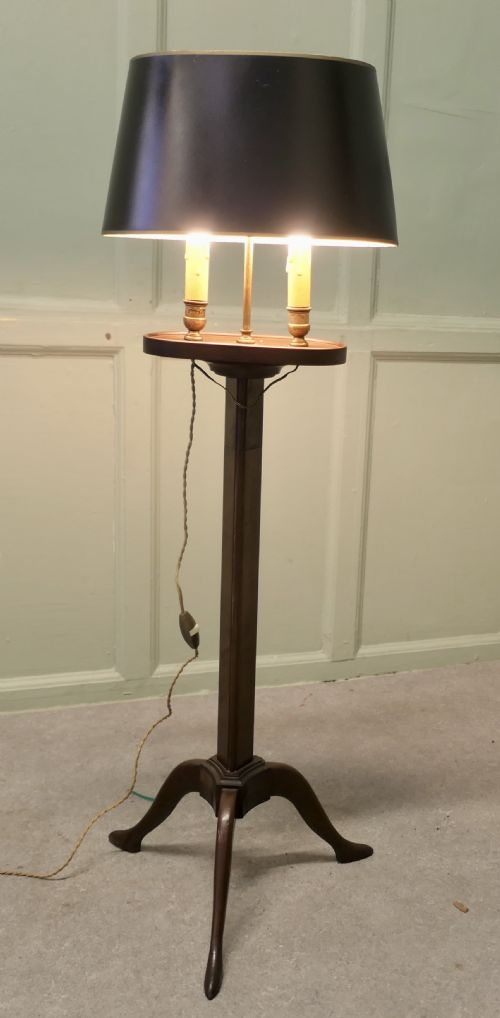
Alongside traditional British and European metalwork, the forms extend to specific regional variations such as Chinese lamp standards and oriental padauk wood extending pieces. Buyers will find heavy brass tripod bases, black columns, and occasional fabric or silk shades completing the setup.
Materials and construction methods
Construction relies heavily on heavy-gauge brass, wrought iron, and copper, shaped through casting, hammering, and turning. Telescopic inner shafts slide smoothly within outer brass or metal columns, secured by threaded keys or screw mechanisms that allow precise height regulation.
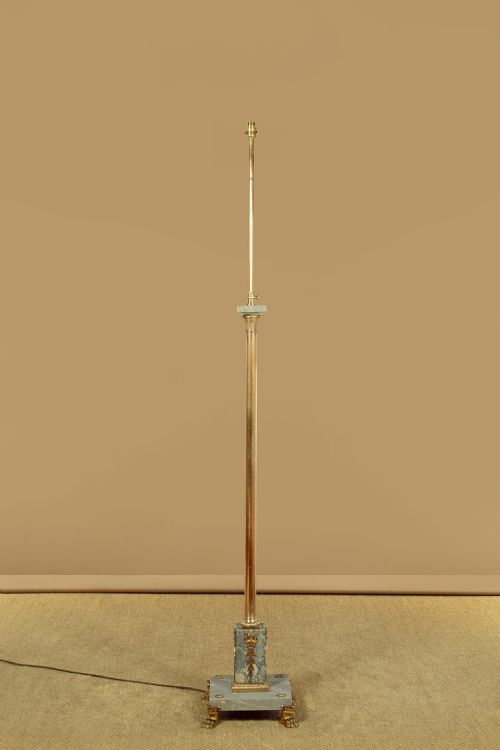
Bases are weighted with cast iron or fitted with marble and onyx to ensure stability when the arm is extended. Wiring additions in converted oil lamps integrate internal channels or surface cord runs, while decorative elements like cranberry glass and silver plating enrich the finished metal surface.
Listings for adjustable floor lights feature materials spanning brass, wrought iron, copper, marble, onyx, and silk across Victorian, Edwardian, and 1920s periods.
Evaluating build quality and mechanism
Quality in an adjustable floor light rests upon the precision of the mechanical adjustment and the rigidity of the upright standard. Superior pieces maintain a plumb vertical line without wobble even when fully extended, utilising substantial wall thicknesses in the brass tubing.
Finer examples display crisp casting detail in the Neoclassical or Art Nouveau enrichment, secure joints that hold position without slipping, and well-balanced weighted bases. Lesser pieces show loose tolerances in the telescopic action and lighter metal gauges that flex under lateral pressure.
The Adjustable Floor Light Glossary
- Telescopic
- A design utilising nested sliding tubes that allow the overall height of the standard lamp to be raised or lowered. This mechanism is central to adjusting the light source for different seating arrangements.
- Standard lamp
- A traditional British term for a floor-standing lamp designed to illuminate a room from a corner or beside a piece of furniture. These fixtures often feature heavy weighted bases to support tall vertical columns.
- Bouillotte lamp
- A traditional multi-light fixture featuring adjustable shades that slide up and down a central rod. Originally used on card tables, these pieces provide direct, glare-free illumination.
- Wrought iron
- Iron heated and hammered by a blacksmith into decorative and structural shapes. This material provides exceptional rigidity and a tactile, hand-worked finish on heavier floor standards.
- Oil lamp standard
- A tall floor fixture originally constructed to burn oil via a wick and burner assembly. Many survive today after being converted to electric operation while retaining their original reservoir fittings.
Adjustable Floor Light: Frequently Asked Questions
How do I adjust the height safely?
Most adjustable floor lights utilise a central thumb screw or key mechanism on the outer collar. Loosen this gently while supporting the upper section, slide it to the desired position, and retighten firmly.
Avoid forcing any telescopic joint that feels stiff, as older brass mechanisms can bind if pulled at an angle. A drop of light machine oil on the inner shaft will often ease the movement.
Can I use modern bulbs in converted oil lamps?
Converted oil lamps generally accept modern LED or standard screw-in bulbs, provided the lamp holder has been updated to current electrical standards. Check the interior fittings to ensure the wiring and lampholder match modern safety requirements.
Consult a qualified electrician to inspect older lampholders and wiring before regular use, particularly on pieces that retain antique switches or brass key sockets.
How do I date an antique floor lamp?
Dating relies on examining the construction methods, materials, and stylistic motifs present on the base and column. Victorian and Edwardian examples often display heavier brass castings, hand-cut threads, and specific patination associated with nineteenth-century metalwork.
Art Nouveau and Arts and Crafts pieces will show characteristic whiplash lines or hammered copper surfaces, while 1920s and 1930s designs introduce chrome finishes and simpler geometric forms.
Are heavy bases necessary for stability?
A heavy base is essential for safety, especially on adjustable floor lights with extending arms or heavy shades. The weight prevents the lamp from toppling when the centre of gravity shifts outward.
Look for cast iron weights concealed beneath the base or solid marble and onyx foundations that anchor the tall upright stem securely to the floor.