




Academic Portrait Study
An academic portrait study captures the rigorous draughtsmanship and tonal observation of formal art training across the nineteenth and early twentieth centuries.
Academic Portrait Study
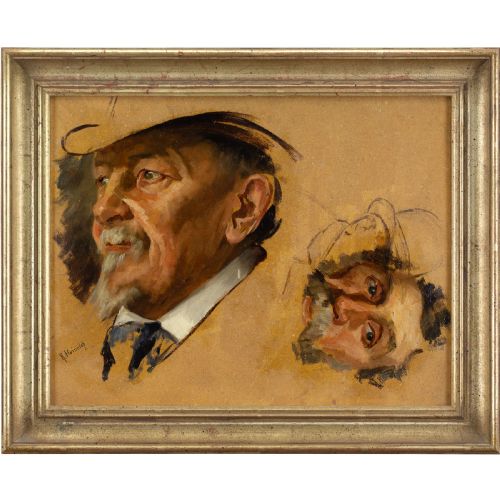
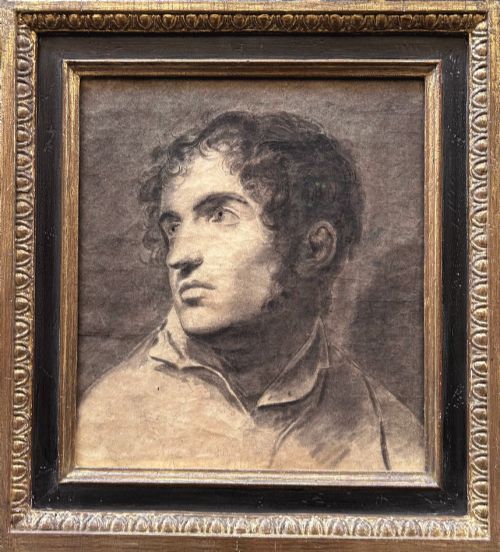
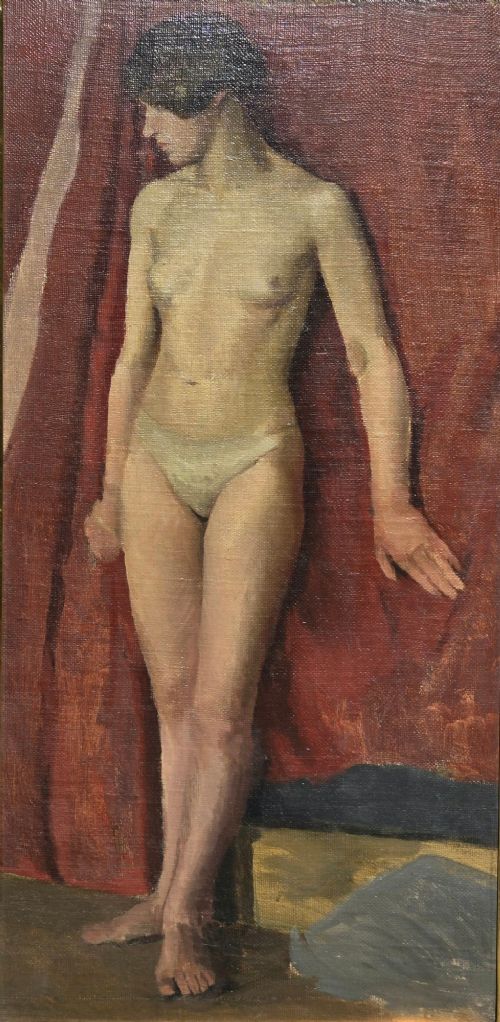
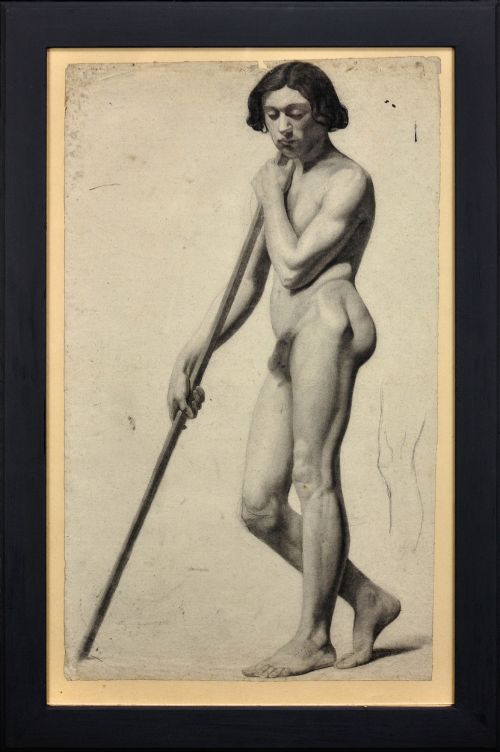
An academic portrait study represents the structured exercises and finished likenesses produced within formal art academies and studios. These works focus intently on human subjects, ranging from detailed facial characterisations to full figure and nude compositions created under strict observational conditions. Buyers encounter drawings and paintings that reflect traditional instruction methods from the nineteenth century through to the mid-twentieth century.
The selections available lean heavily toward works executed on paper and canvas, reflecting the foundational mediums utilised in academy training. Pieces span from graphite and charcoal drawings to oil paintings and en grisaille studies originating from British, French, and Belgian schools. Collectors find both anonymous student exercises and signed works by established Royal Academicians and continental artists.
Materials and Techniques
Artists executed these studies using graphite, charcoal, chalk, and sanguine on paper, building tone and form through precise shading and line work. Drawings frequently capture the texture of the paper support, relying on monochrome palettes to emphasise light, shadow, and anatomical precision.
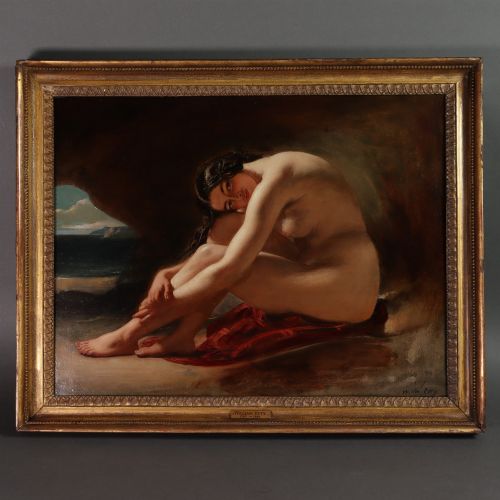
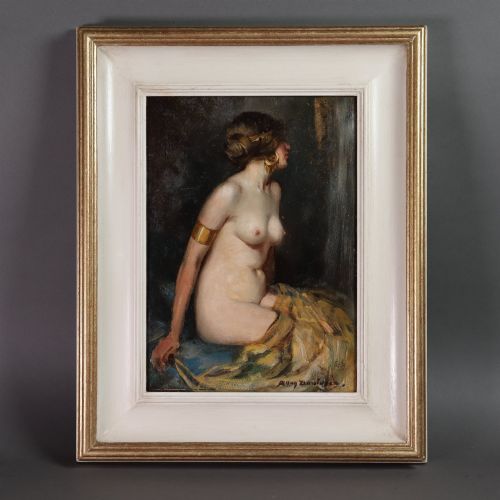
Painted works employ oil on canvas, oil on board, and oil on panel, applying pigment to render skin tones, drapery, and background depth. These oil studies often display the direct brushwork typical of studio models and life painting sessions.
Several subjects stare intently into the middle distance, seemingly lost in thought or listening very carefully to unseen studio gossip.
Assessing Quality in Studies
Quality rests upon the anatomical accuracy, confidence of line, and the artist's ability to render light and volume convincingly. Superior examples demonstrate a strong command of proportion and expression, distinguishing careful observation from formulaic execution.
The preservation of the medium, particularly the stability of charcoal and graphite on paper or the conservation of oil paint on canvas, influences the overall integrity of the piece.
Winifred Rymer·Augustus John·Henry Arthur Roberts·Alexandre-Louis Martin·William Etty·Allan Douglas Davidson·James Clark·Winifred Eugene Ballard·Reginald G. Eves·Robin Watt·Theobald Chartran·Ernest Borough Johnson·George Richmond·Cecil CP Lawson·Adrian Bury·Jean Jules Salmson
The Academic Portrait Study Glossary
- Academic Realism
- A style of painting and sculpture produced under the influence of European academies of art, adhering to strict standards of finish and classical proportions.
- En Grisaille
- A painting executed entirely in shades of grey or another single neutral colour, often used for preparatory studies or to imitate relief sculpture.
- Life Study
- An artwork depicting a live human model, created as a foundational exercise in anatomy, posture, and lighting within an art school or studio setting.
- Sanguine
- A type of red chalk used historically for sketching and drawing figures, prized for its warm earthy tone.
- Charcoal
- A dry drawing medium made from organic matter burnt in a oxygen-free enclosure, utilised for its deep blacks and ease of blending.
Academic Portrait Study: Frequently Asked Questions
What is an academic portrait study?
An academic portrait study is a rigorous drawing or painting created to explore human likeness, anatomy, and lighting under formal training methods.
These pieces served as foundational exercises for artists or as finished portraits produced within traditional art school environments.
How do charcoal and oil studies differ?
Charcoal drawings rely on dry monochrome media to emphasise line, contour, and tonal shading directly upon paper supports.
Oil paintings utilise pigmented mediums on canvas or board to capture colour, depth, and layered brushwork across the subject.
How should I frame a paper study?
Works on paper require conservation-grade mounting materials to prevent direct contact with glass and protect fragile media from atmospheric damage.
Framing should utilise UV-filtering glazing to safeguard charcoal, graphite, and chalk from fading over time.
How can I tell the period of a drawing?
Period identification relies on paper watermarks, framing styles, inscriptions, and the specific aesthetic conventions of schools from the nineteenth and early twentieth centuries.
Stylistic markers such as academic realism or Victorian romanticism provide further chronological context for dating individual works.