
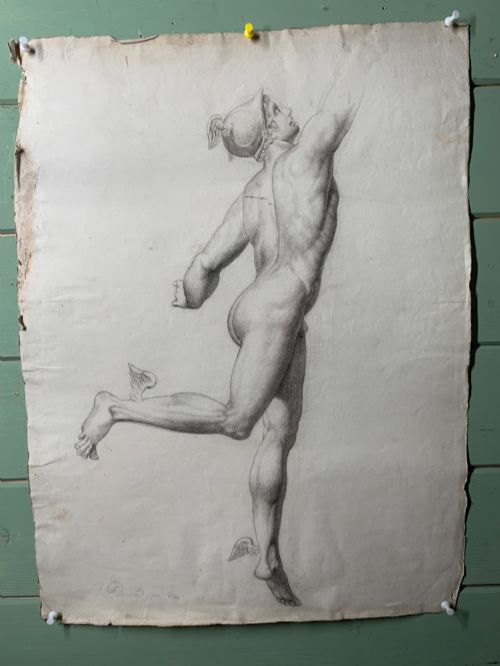
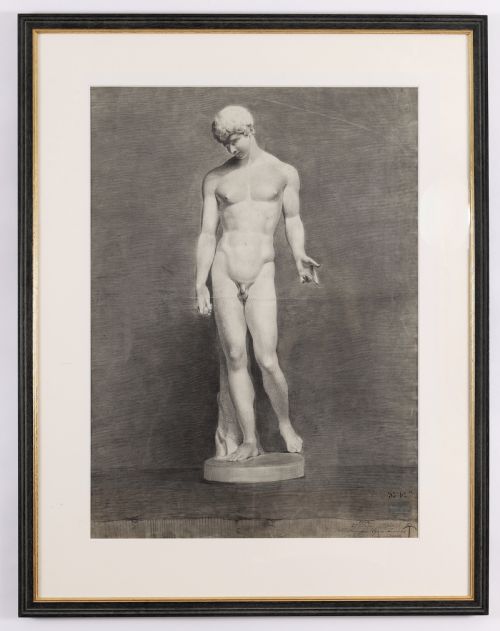

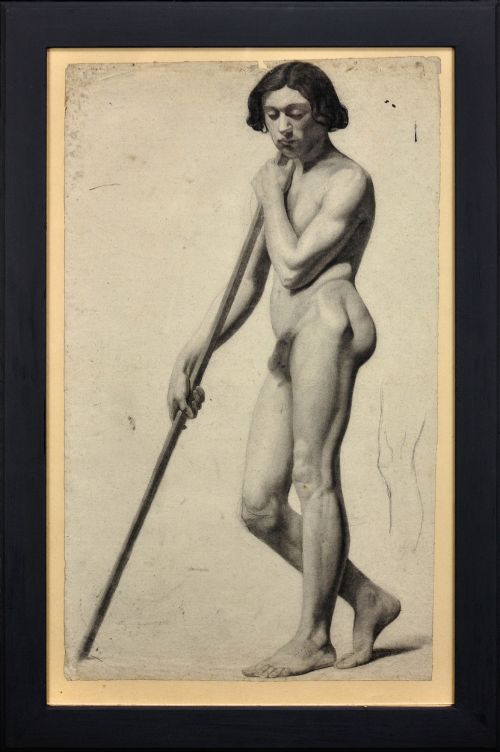


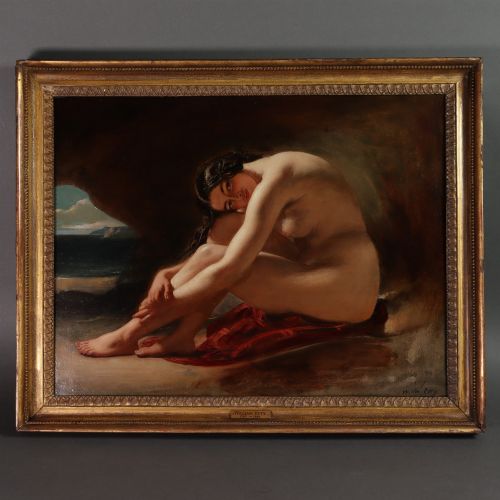
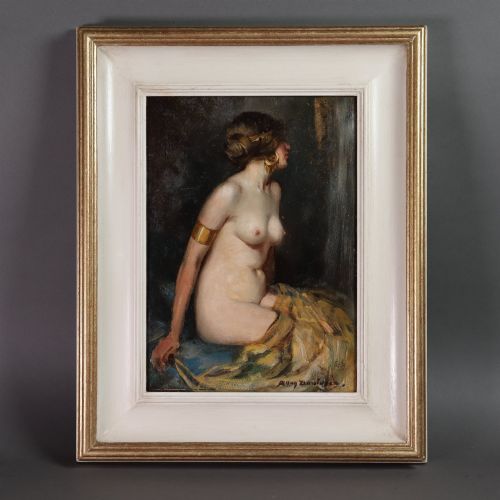
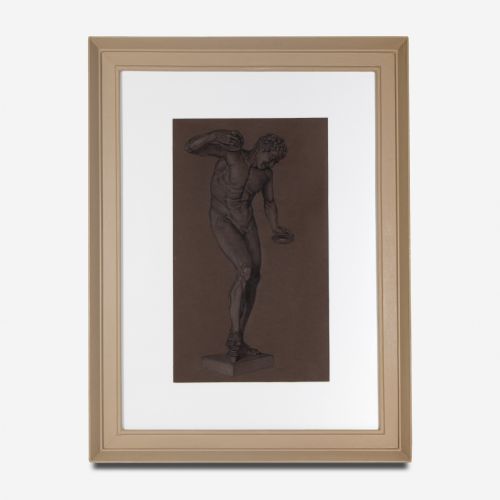
Academic Figure Study
An academic figure study captures the rigorous training of the classical studio through disciplined anatomical observation and form.
Academic Figure Study
An academic figure study represents the cornerstone of traditional art instruction, produced by students and masters alike to master human anatomy and proportion. When exploring an academic figure study, collectors encounter works executed across the eighteenth, nineteenth, and twentieth centuries.
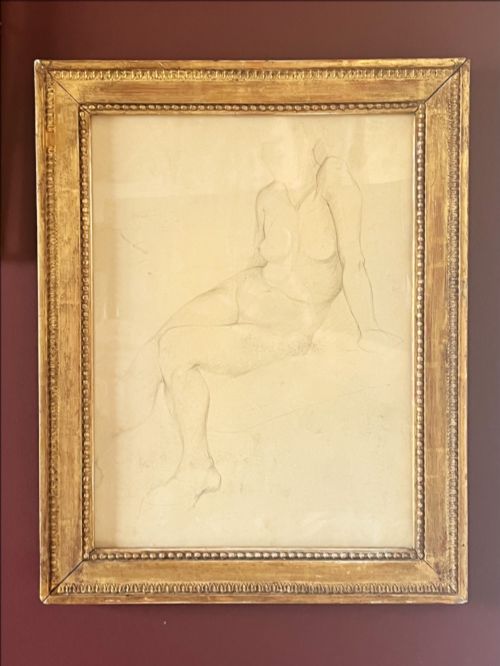
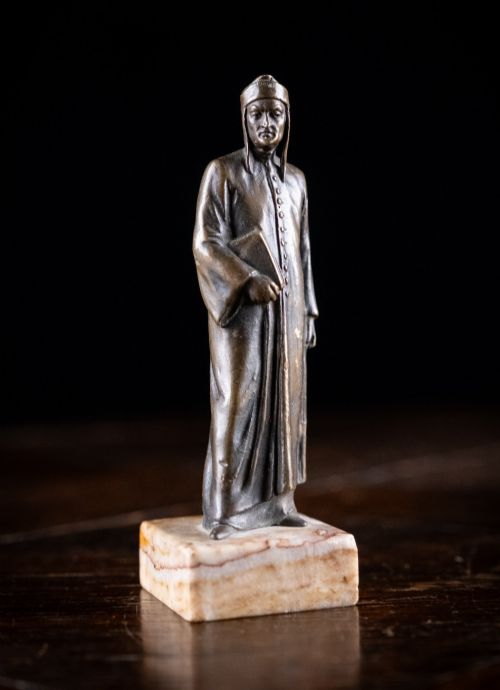
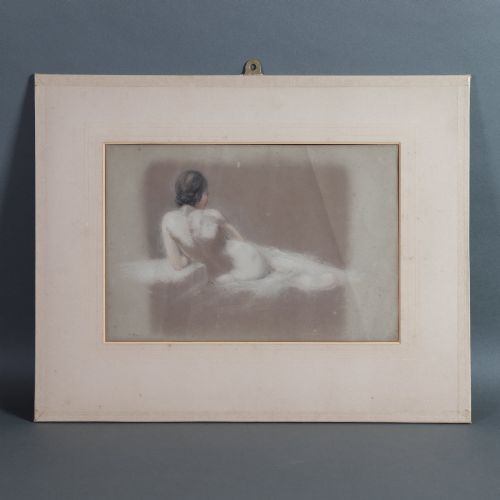
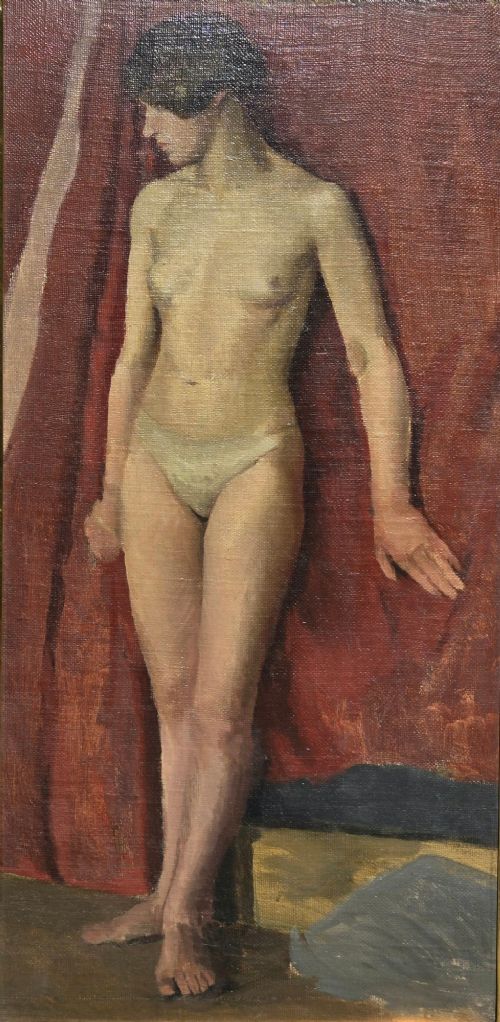
The material record on this page spans framed drawings, oil paintings, and bronze sculptures. Subjects range from male and female life studies to historical figures and mythological characters.
Works originate from various European schools, including British, French, and Italian traditions. Mediums shift from pencil and charcoal on paper to oil on panel and canvas.
How They Were Made
Artists utilised graphite, charcoal, red chalk, and sanguine on paper to build form through tonal gradation and precise line work. These dry mediums allowed draftsmen to record the nuances of musculature and shadow observed directly from the live model in the studio.
Painted studies employed oil on canvas, panel, or paper, capturing flesh tones and light integration through layered brushwork. Sculptors rendered anatomical studies in bronze, translating skeletal and muscular tension into three-dimensional patinated metal.
Several sheets bear drawings on both sides, offering a glimpse into an artist reusing precious paper during a busy studio session.
What Varies in Quality
The distinction between standard student exercises and masterworks lies in the surety of the line and the anatomical conviction of the rendering. Superior examples demonstrate a profound understanding of skeletal structure beneath the skin rather than a mere copying of surface appearance.
Execution depth separates routine school productions from significant pieces associated with recognised academies or exhibiting artists. Preservation state and the integration of medium integrity also influence the standing of an individual work.
William Etty·Winifred Rymer Standing·Augustus John·Henry Arthur Roberts·Alexandre-Louis Martin·Allan Douglas Davidson·Pierre-Paul Prud'hon·Jean Jules Salmson·James Clark·William Edward Frost·Winifred Eugene Ballard·Marcel Debut
The Academic Figure Study Glossary
- Academic Realism
- A style of painting and sculpture produced under the influence of European academies of art. It combines neoclassical discipline with realistic observation.
- Grand Tour
- A traditional trip of Europe undertaken by upper-class European young men of sufficient means. It frequently resulted in the acquisition of classical art studies and antiquities.
- Sanguine
- A chalk of a reddish-brown colour used in drawing. Artists favoured it for warm flesh tones in figure studies.
- En Grisaille
- Painting executed entirely in shades of grey or neutral greyish-brown. It often served as a preliminary stage for oil paintings or as a finished monochromatic work.
- Recto and Verso
- The front and back of a single sheet of paper or panel. Drawings sometimes appear on both sides of historical sheets from artist sketchbooks.
Academic Figure Study: Frequently Asked Questions
What is an academic figure study?
An academic figure study is a rigorous drawing, painting, or sculpture created to understand human anatomy and proportion within a formal training environment.
These works reflect the standard curriculum of art academies, where drawing from the nude model formed the foundation of artistic education.
How were these pieces used historically?
Artists produced these studies as preparatory exercises for larger historical or mythological paintings, or as competitive submissions for academic prizes.
Schools and ateliers kept successful pieces as instructional examples for subsequent generations of students.
How do I live with paper drawings?
Paper drawings require careful placement away from direct sunlight to prevent the fading of graphite, chalk, and ink mediums.
Framing with acid-free mounts and UV-filtering glass protects the paper substrate from environmental degradation over time.
How can I tell the periods apart?
Eighteenth-century works often feature red chalk and classical sculptural subjects, while nineteenth-century pieces lean toward graphite life studies and academic realism.
Twentieth-century examples introduce modernist interpretations and mixed media while retaining the core focus on the human form.