


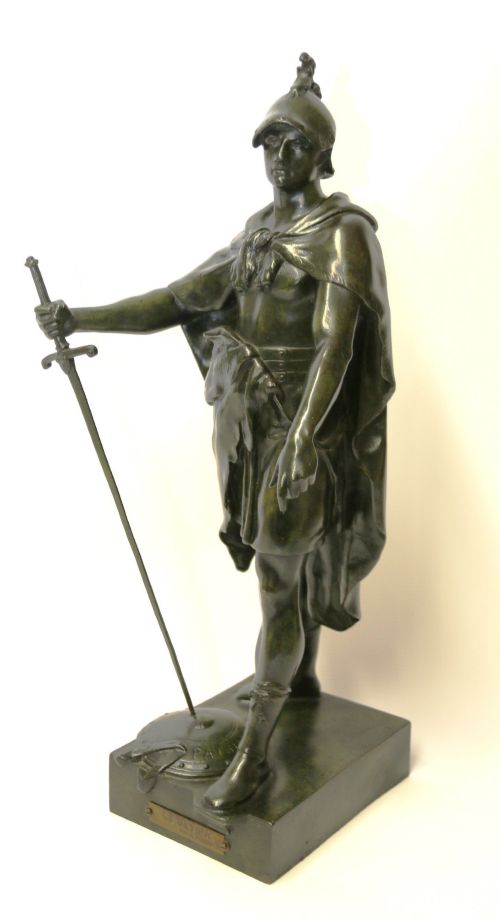
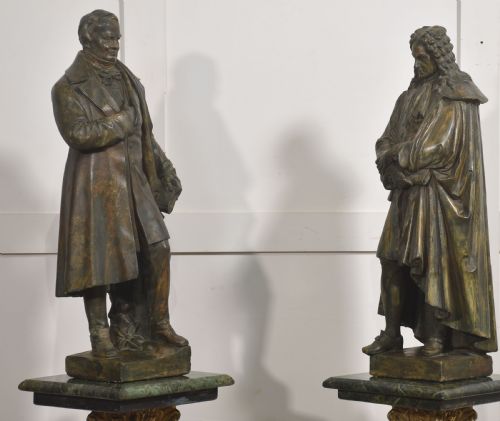


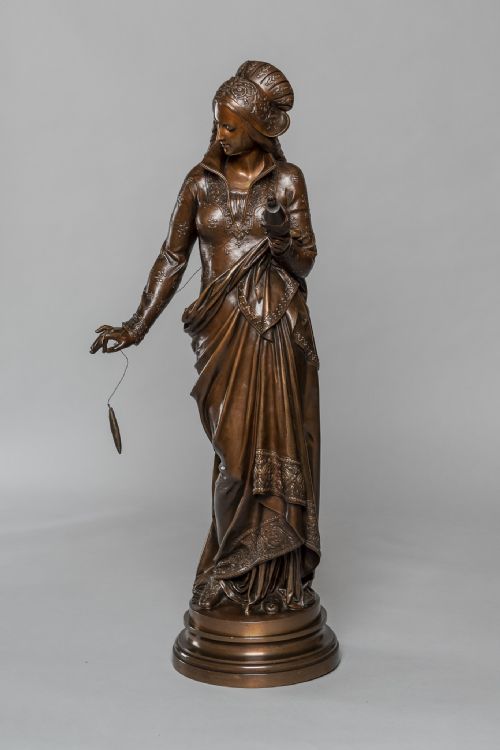
Academic Classical Bronze Statue
An academic classical bronze statue brings nineteenth-century mythological, historical, and allegorical subjects into a room through rigorous foundry work.
Academic Classical Bronze Statue
An academic classical bronze statue represents figures from antiquity, literature, and allegory, shaped by the standards of nineteenth-century European art academies. These works take the form of freestanding human figures, busts, and sculptural groups mounted on stone bases.
The versions most commonly met on this page originate from nineteenth-century French studios, alongside Italian and British interpretations. They portray soldiers, maidens, musicians, and classical heroes produced in varying scales for domestic display.
How they were made
Foundries created these sculptures using the lost-wax method or sand casting, capturing intricate details of musculature, drapery, and facial expression. Artisans then applied chemical treatments to achieve dark patinas or golden surface finishes.
Many sculptures incorporate integral plinths or rest upon turned marble bases, anchoring the weight of the metal and providing a finished architectural footing.
Academic Classical Bronze Statue Retail Price Guide 2026
Typical asking prices for academic classical bronze statue among the pieces listed under this phrase on Sellingantiques today, from the lower quarter to the upper quarter. They describe what is for sale here now, not the wider market.
Listings feature nineteenth-century French academic works spanning the Victorian era, utilising both patinated bronze and marble.
What varies in quality
Quality separates in the crispness of the chasing and the fidelity of the cast to the original model. Finer examples retain sharp definition in hair, hands, and fabric folds without softening from worn production moulds.
The integration of the patination and the density of the metal alloy also divide standard production pieces from those bearing the signatures of celebrated founders and sculptors.
Émile Louis Picault·Auguste Moreau·Antonin Mercié·Albert Carrier Belleuse·Barbedienne
The Academic Classical Bronze Statue Glossary
- Patina
- A chemical colouration applied to the surface of the bronze. This finish protects the metal and defines the highlights and shadows of the sculpture.
- Lost-wax casting
- A traditional method where a wax model is melted out of a ceramic mould to be replaced by molten bronze. This technique allows for complex undercuts and fine surface detail.
- Chasing
- The post-casting process of refining the metal surface with chisels and punches. Skilled artisans use this step to clean seams and sharpen textures.
- Spelter
- A zinc alloy commonly utilised as a substitute for bronze. Figures cast in this material typically feature applied bronze-coloured paint rather than a chemical patina.
- Plinth
- A block or base supporting a statue or bust. These are frequently fashioned from veined marble to elevate the metalwork.
Academic Classical Bronze Statue: Frequently Asked Questions
How do I identify a genuine bronze from a spelter copy?
Genuine bronze feels noticeably heavier and colder to the touch than zinc-based spelter. Examining the underside often reveals the warm tone of the metal rather than a painted grey interior.
Magnification helps locate foundry marks or stamps that confirm true copper-alloy casting. Spelter alternatives frequently show paint flaking rather than a stable chemical patina.
What is the best way to clean and maintain antique bronze?
Dusting the surface regularly with a soft, dry brush prevents particulate accumulation in the crevices of the casting. Avoid liquid cleaners, oils, and abrasive cloths, which strip the historical patina.
Applying a very light coat of microcrystalline wax by hand protects the metal from atmospheric moisture. This preserves the original finish without altering the surface sheen.
Why do some statues feature marble bases?
Marble bases provide structural stability and visual weight to tall or top-heavy figures. They elevate the sculpture from the furniture surface, creating a distinct boundary for the artwork.
In many nineteenth-century works, the stone is carefully turned and matched to complement the dark tones of the patinated metal.
How do I determine the subject of a classical figure?
Inscriptions on the base or foundry plaques often name the title and the artist directly. Attributes such as lyres, weaponry, or specific headwear point toward classical mythology or historical events.
Comparing the pose and costume with nineteenth-century Salon catalogues reveals the precise literary or allegorical source inspiring the composition.