






Abstract Wall Art Canvas
Abstract wall art canvas works bring mid-century energy and painterly abstraction into a room, spanning decades from the nineteen-thirties to nineteen-sixties.
Abstract Wall Art Canvas
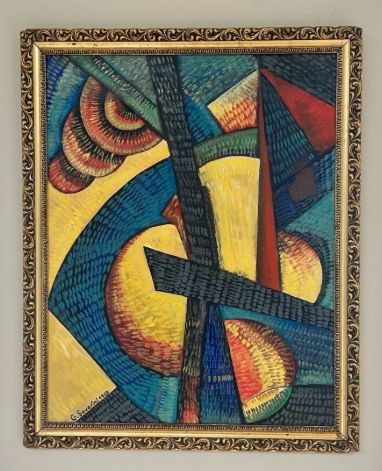
When you search for abstract wall art canvas, you encounter mid-century modern paintings, still lifes, cityscapes, and portraits created across the nineteen-thirties, nineteen-forties, nineteen-fifties, and nineteen-sixties. The most common form on this page is the mid-century abstract oil painting on canvas or board, reflecting movements such as modernism, abstract expressionism, and brutalism.
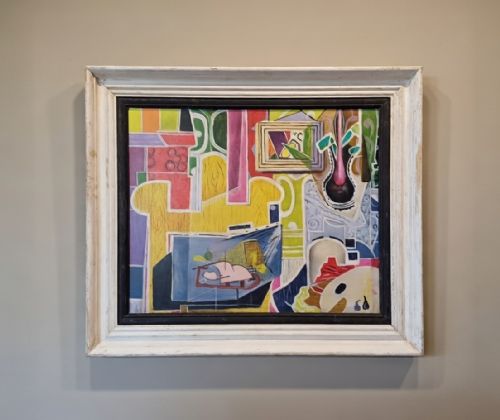
These works range from large framed compositions to intimate studies, originating from British, French, and Spanish artists working within recognised regional schools and independent studios. The subjects extend from cubist interiors and landscapes to pure geometric abstraction and figurative interpretations.
Every piece bears the marks of its specific decade, utilising the visual vocabulary of the mid-century period to explore colour, form, and texture on canvas or hardboard.
How they were made
Makers built these works using oil paint applied to canvas, hardboard, or wooden boards, often building heavy impasto layers to create textured surfaces. Some compositions incorporate relief elements or acrylic paint alongside traditional oils to achieve depth.
Canvases are stretched over wooden frames, occasionally housed within contemporary or period frames that complement the painted surface. The handling of the medium varies from thin washes to thick, expressive brushwork characteristic of mid-century expressionism.
A soup tureen from nineteen-forty shares space with vibrant jazzy op art and whispering chestnut leaves.
What varies in quality
The strength of the composition and the confidence of the brushwork separate the most accomplished pieces from ordinary decorative works. Mastery of colour harmony and the structural integrity of the abstract form dictate the visual impact of each painting.
Provenance and documented artist attribution elevate certain works, particularly those linked to established European art schools or known twentieth-century painters. The preservation of the original paint layer and the stability of the canvas or board also influence the standing of an individual piece.
Mark Ingram·Tony Giles·Denis Mitchell·Barbara Hepworth·Gino Severini·William Littlejohn·William McCance·Peter Jackson·Antonio Ferri·Rowland Fade·Burr Singer·Leon Kossoff·Sonia Delaunay·Terry Frost·William Ernst Burwell
The Abstract Wall Art Canvas Glossary
- Impasto
- Paint applied thickly to a canvas or board, standing out in relief from the surface and retaining the marks of the brush or palette knife.
- Brutalist
- A style of mid-century art and architecture characterised by rough, heavy textures and stark, monolithic forms.
- Cubist
- An artistic approach originating in the early twentieth century that breaks subjects down into geometric planes and multiple viewpoints.
- Hardboard
- A type of fibreboard used as a rigid painting support by mid-century artists.
- Op art
- A style of visual art that uses optical illusions, geometric patterns, and vibrant colour contrasts.
Abstract Wall Art Canvas: Frequently Asked Questions
How do I hang a canvas safely?
Secure picture wire or D-rings directly to the wooden stretcher frame or backing support, ensuring the weight is distributed evenly across the fixings.
Use appropriate wall plugs and screws matched to the weight of the painting and the specific wall material in your home.
What periods do these paintings cover?
The available works span the nineteen-thirties, nineteen-forties, nineteen-fifties, and nineteen-sixties, capturing the evolution of mid-century modernism.
Most pieces concentrate within the nineteen-fifties and nineteen-sixties, reflecting post-war abstract expressionism and European modernist movements.
Are these works painted on canvas?
Many of the listed pieces are executed in oil paint on stretched canvas, reflecting the primary medium of the period.
Other works utilise alternative supports such as wooden boards, hardboard, or canvas panels alongside traditional oil and acrylic applications.