




Geometric Abstract Artwork
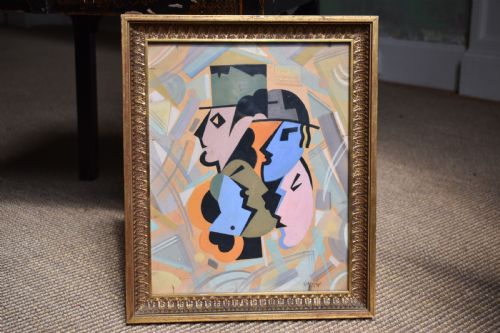
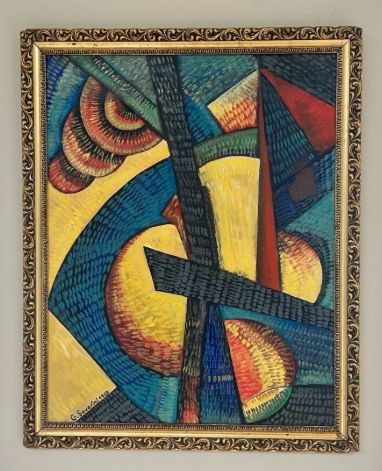
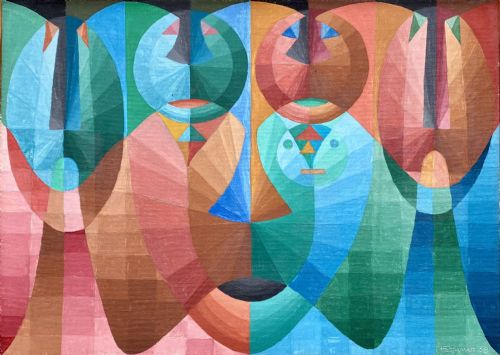
Geometric abstract artwork brings sharp lines and structured colour into a room, offering the bold compositions collectors seek from the mid twentieth century.
Geometric Abstract Artwork
Geometric abstract artwork on this page spans paintings, wall art, and oil paintings created across the twentieth century. The selection ranges from early modernist works from the nineteen twenties to mid-century abstract, brutalist, and op art pieces from the nineteen fifties and sixties.
Buyers are most likely to encounter canvas and board works executed in oil paint, alongside watercolours on paper. Forms vary from domestic kitchen geometry and still life to large-scale canvases and landscapes.
Origins include named artists working in distinct twentieth-century idioms, reflecting European and British modernism. The pieces capture the period's fascination with structured form, pattern, and optical movement.
How they were made
Artists built these compositions primarily using oil paint on canvas or board, alongside watercolour and paint on paper. Wood framing and gesso preparation frequently support the painted surfaces.
Techniques range from flat planes of colour to textured applications seen in brutalist and mid-century abstract styles. Support structures often include original framing that complements the geometric nature of the imagery.
One vibrant op art canvas from nineteen sixty-eight proudly presents itself as a hymn to life.
What varies in quality
Quality rests in the precision of the composition and the confidence of the brushwork across the canvas or board. Stronger pieces demonstrate a rigorous command of line and colour balance that defines successful modernist design.
Provenance and attribution elevate certain works, particularly those bearing signatures, dates, or documented associations with known modernist circles. The physical integrity of the original paint layer and support surface also distinguishes finer examples.
Edward Carter Preston·Rowland Fade·William Ernst Burwell
The Geometric Abstract Artwork Glossary
- Cubism
- An early twentieth-century avant-garde art movement that revolutionised European painting by breaking subjects down into geometric shapes. Works in this style use multiple viewpoints to construct a flat, structured composition.
- Op art
- A style of visual art that uses optical illusions, employing abstract patterns with stark contrast and precise geometric forms. These pieces create a sense of movement or swelling on a two-dimensional surface.
- Brutalist
- A style of visual art and architecture characterised by raw, heavy textures and uncompromising geometric forms. In painting, this translates to thick applications of pigment and stark structural arrangements.
- Gesso
- A white paint mixture consisting of a binder mixed with chalk, gypsum, or pigment, used as a preparatory layer on wood panels or canvas. It provides a stable and smooth surface for oil painting.
- Mid-Century Modern
- A design movement spanning roughly the middle decades of the twentieth century, embracing minimalism, clean lines, and abstract geometry. Paintings from this period reflect a shift towards non-representational forms.
Geometric Abstract Artwork: Frequently Asked Questions
What periods do these artworks date from?
The listings span the twentieth century, with concentrations in the nineteen fifties and sixties alongside earlier modernist examples from the nineteen twenties.
These dates reflect the rise of mid-century abstract movements, op art, and brutalist painting styles.
What materials were used in these paintings?
Artists utilised oil paint and watercolour on supports such as canvas, paper, and board. Wood framing and gesso preparations are also commonly found.
These traditional materials support the distinct textures and flat colour planes characteristic of modernist art.
Where should I hang a large abstract canvas?
Large-scale canvases require unobstructed wall space where their geometric compositions and bold colour fields can anchor a room. Placing them away from direct sunlight preserves the oil paint and canvas.
Mid-century abstract works pair particularly well with minimalist interiors and period furnishings.