


9ct Gold Pearl Strand
A 9ct gold pearl strand combines lustrous pearls with yellow or white gold clasps, offering classic elegance from mid-century makers.
9ct Gold Pearl Strand
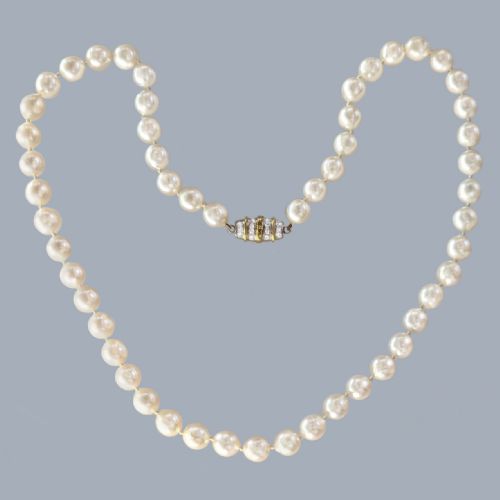
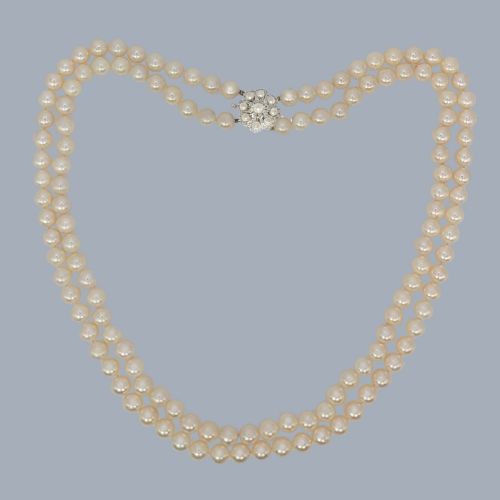
When searching for a 9ct gold pearl strand, a buyer encounters necklaces and bracelets featuring single or multiple rows of pearls secured by gold mechanisms.
The pieces on this page originate predominantly from the mid-twentieth century, spanning the 1930s through the 1960s, alongside occasional Victorian examples.
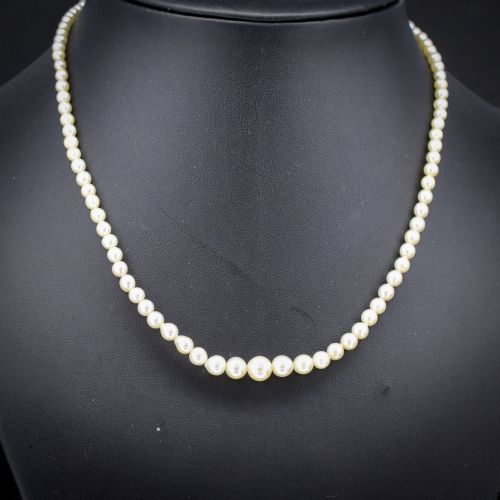
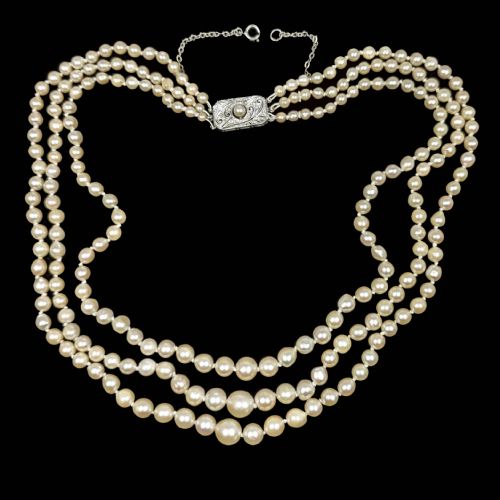
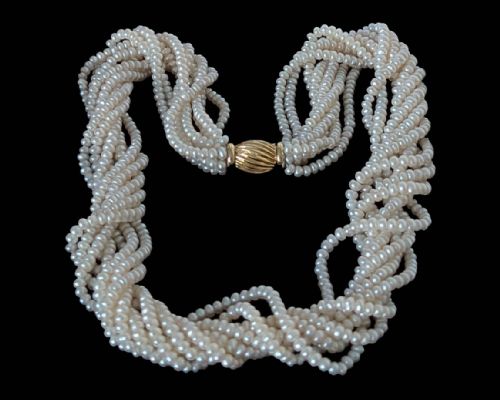
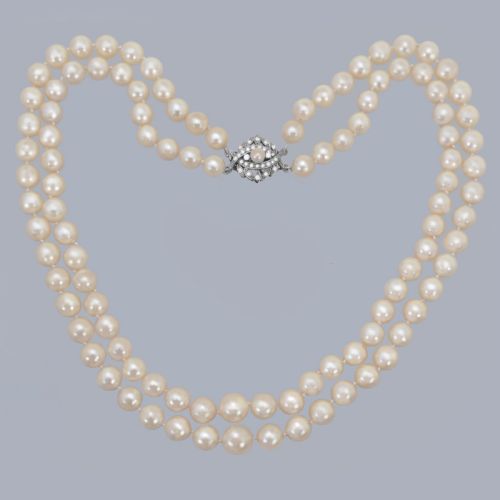
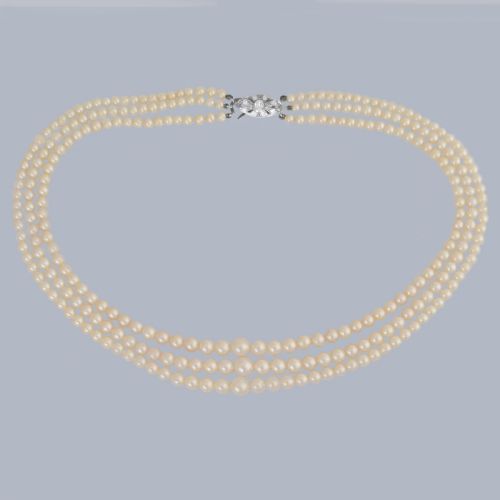
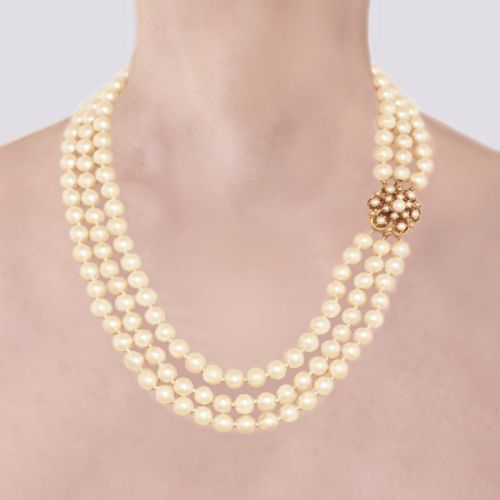
Single, double, and triple strand configurations dominate the selection, often complemented by clasps set with coloured gemstones or diamonds.
How They Were Made
The construction relies on silk thread to string the pearls individually, frequently secured through hand-knotting to protect each gem against friction.
Clasps are cast and fabricated from 9ct yellow or white gold, incorporating conventional mechanisms such as barrel, lock, or box designs.
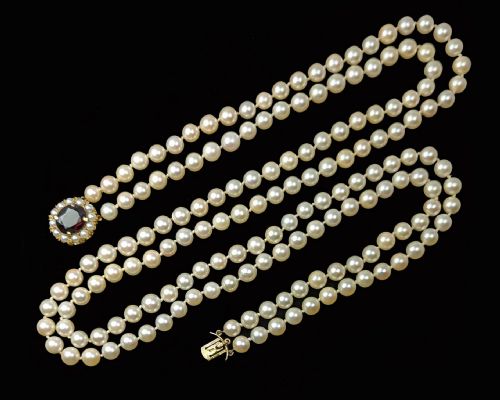
Gems including diamonds, garnets, sapphires, and amethysts are flush, claw, or cluster-set into the gold mountings of the clasps.
One remarkably long strand stretches across fifty inches, allowing multiple loops or a dramatic draped silhouette.
What Varies in Quality
Quality rests upon the uniformity, lustre, and size of the pearls, where matching rows demand careful sorting by diameter and surface orient.
The artistry of the 9ct gold clasp distinguishes standard productions from finer items, particularly those featuring complex floral clusters or pavé-set diamonds.
Internal integrity depends on the condition of the stringing materials, with professionally restrung strands offering greater security during wear.
Cropp and Farr
The 9ct Gold Pearl Strand Glossary
- Cultured Pearl
- Pearls formed through human intervention by inserting a nucleus into an oyster, resulting in nacre layers over a foreign irritant. They form the majority of mid-century strands found in these listings.
- Seed Pearl
- Very small natural or cultured pearls, often measuring under two millimetres in diameter. They are used in multi-strand configurations and delicate cluster clasps.
- Graduated
- Pearls arranged in size order along a strand, scaling down from the largest centre pearl toward the fastening. This layout was traditional for single-row necklaces.
- Clasp
- The mechanical fastening device securing the ends of a necklace or bracelet. In these pieces, they are cast from 9ct gold and frequently decorated with gemstones.
- AnchorCert
- An assay office gemstone and pearl report service providing verification of origin and treatment. Such certificates accompany specific pieces listed with independent laboratory testing.
9ct Gold Pearl Strand: Frequently Asked Questions
What is a 9ct gold pearl strand?
A 9ct gold pearl strand is a necklace or bracelet composed of cultured or natural pearls finished with a nine-carat gold clasp. These items draw on mid-century designs featuring single or multiple rows.
Clasps often incorporate gemstones like diamonds, garnets, and sapphires, functioning as decorative elements worn at the back or rotated to the front.
How do I care for my pearl strand?
Pearls require gentle handling because organic nacre is softer than mined gemstones and precious metals. Put them on after applying cosmetics and hairspray to prevent chemical damage.
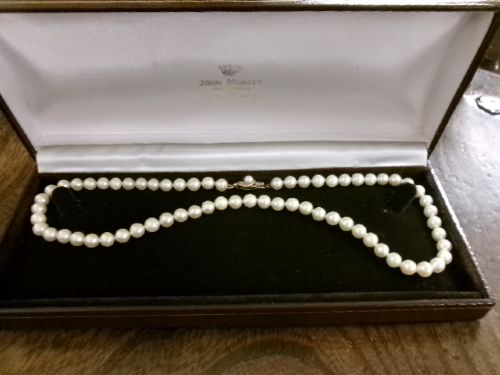
Store them flat in a lined box rather than hanging them, which stretches the silk thread over time. Wipe them with a soft, damp cloth after wearing.
Are these necklaces restrung?
Many vintage pearl strands are offered with recent restringing notes to ensure the silk thread is secure for daily wear. Over decades, silk degrades and weakens between the pearls.
Professional restringing includes individual knots placed between each pearl to prevent loss if the main strand breaks.
How can I tell the period of a pearl necklace?
Dating relies primarily on the hallmarking stamped onto the 9ct gold clasp, which records the assay office and year of manufacture. Stylistic clues in the clasp design, such as mid-century floral clusters, also indicate the era.
Additional documentation like period boxes or laboratory gem reports provide further historical context.