
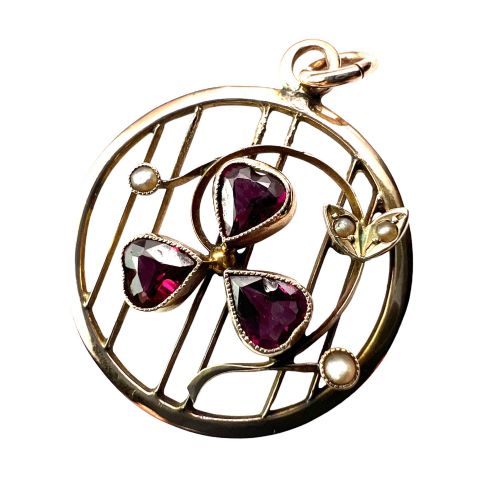


9ct Gold Openwork Pendant
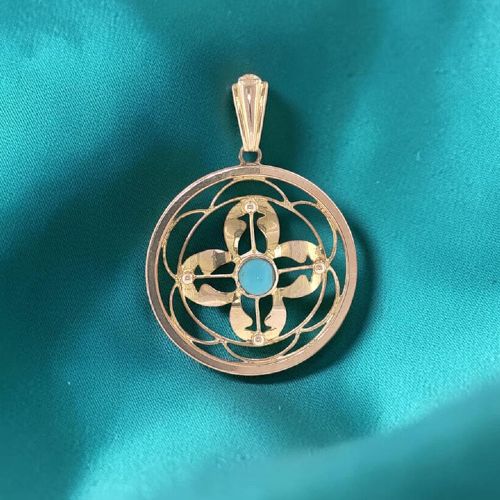
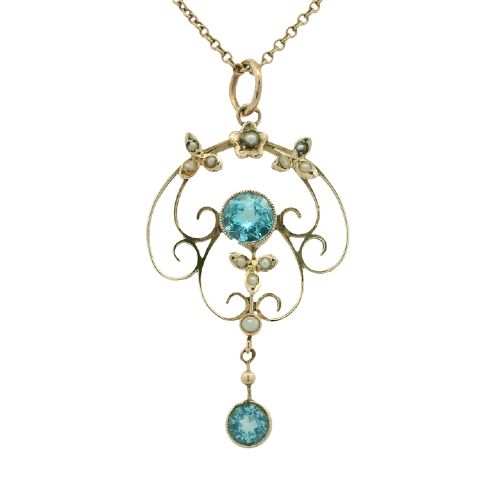
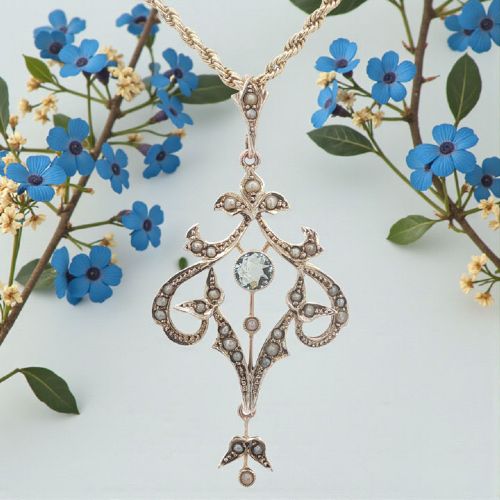
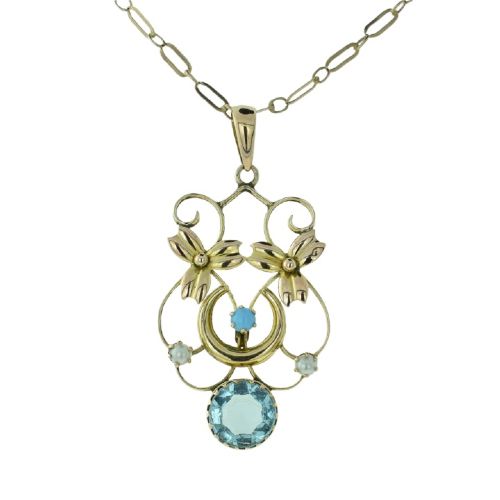
These 9ct gold openwork pendant pieces combine intricate metalwork with coloured gemstones, offering delicate craftsmanship for everyday wear.
9ct Gold Openwork Pendant
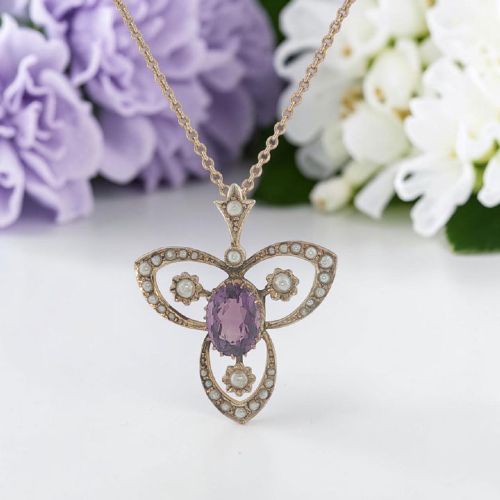
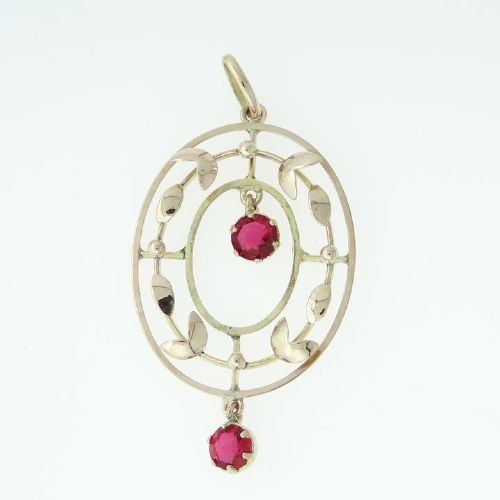
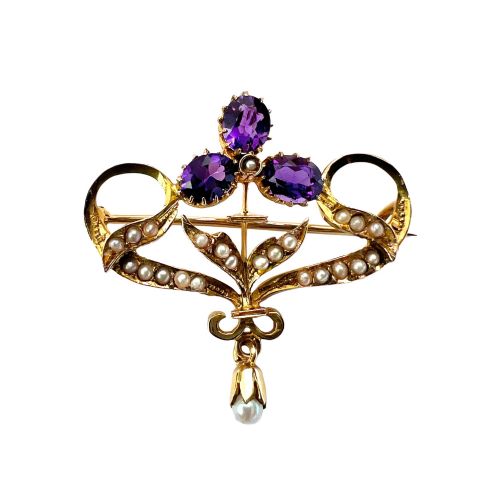
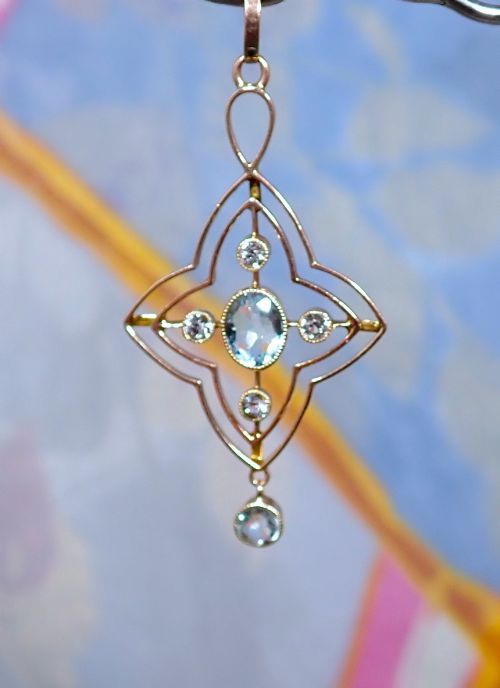
A 9ct gold openwork pendant is a piece of jewellery featuring pierced or fretworked metal designs, frequently set with stones like amethyst, seed pearl, and peridot. Buyers seeking these items will encounter examples primarily spanning the Victorian, Edwardian, and Art Nouveau periods, alongside occasional mid-century and later pieces.
The most common forms found on this page are drop pendants and necklaces incorporating floral, foliate, or geometric motifs. Many of these items were originally designed to function as convertible brooch pendants, offering dual utility as both chest ornaments and neckwear.
Dating ranges from the late nineteenth century through to the mid-twentieth century, capturing shifts in design from heavy Victorian ornamentation to the fluid lines of Art Nouveau and the lighter styles of the Edwardian era.
Materials and Construction Techniques
The foundation of every piece is 9ct gold, utilised in yellow and rose hues to shape the delicate frames and bezels. Goldsmiths employed piercing, wirework, and casting techniques to achieve the characteristic openwork lattice designs.
Gemstones such as garnets, aquamarines, blue topaz, and turquoise are integrated alongside seed pearls and natural pearls to accent the metalwork. These stones are typically claw-set or bezel-set within the intricate wire frames to maximise light passage through the open sections.
Listings feature 9ct gold in both yellow and rose variations, paired with gemstones including amethyst, peridot, aquamarine, garnet, and turquoise across Victorian and Edwardian styles.
Distinguishing Quality in Openwork Jewellery
The standard of execution in the piercing and soldering of the 9ct gold framework separates fine workshop production from simpler output. Superior pieces display crisp, symmetrical fretwork with minimal solder pooling at the joints.
Gemstone selection and matching also dictate the grade of a piece, with well-matched seed pearls and clean, vibrant amethysts, peridots, or aquamarines elevating the overall composition.
S. Blanckensee & Son
The 9ct Gold Openwork Pendant Glossary
- Openwork
- Metal design featuring pierced, cut-out, or wire-formed spaces that create a lace-like or skeletal pattern. This technique lightens the visual weight of the gold.
- Seed Pearl
- Very small natural or cultured pearls, often half-drilled and glued or pegged onto gold pins. They are a defining feature of Edwardian and Victorian cluster settings.
- Foliate
- Ornamentation or design incorporating leaf motifs. This style is frequently seen in Victorian and Edwardian pieces mimicking natural plant forms.
- Convertible Brooch
- A piece of jewellery fitted with both a pin mechanism and a suspension loop, allowing it to be worn interchangeably as a brooch or a pendant.
9ct Gold Openwork Pendant: Frequently Asked Questions
How do I date a 9ct gold openwork pendant?
Dating relies on stylistic markers such as the flowing asymmetrical lines typical of Art Nouveau pieces from the 1890s versus the symmetrical garlands characteristic of Edwardian work around 1910. Hallmark stamps, where present, provide further chronological clues.
Changes in gold colour, from Victorian rose gold to later yellow tones, also help narrow down the period of manufacture.
Were these pendants originally worn on chains?
Many Edwardian and Victorian pendants were suspended from fine trace chains or silk cords, though original chains rarely survive intact. Contemporary wearers typically pair them with compatible antique or vintage gold chains.
Some pieces designed as convertible brooches may lack dedicated suspension loops until a small bail is added.
How should I care for seed pearls?
Seed pearls are sensitive to moisture, chemicals, and cosmetics, requiring gentle wiping with a soft cloth after wearing. They should be stored separately to prevent scratching from harder gemstones like garnets or amethysts.
Avoid submerging pearl-set jewellery in liquid cleaning solutions.
What is the difference between Victorian and Edwardian openwork?
Victorian openwork tends to be robust, often combining rose gold with deep-hued stones like garnets and amethysts in heavier, closed-back or substantial settings. Edwardian pieces favour lighter yellow gold or platinum-topped gold, utilising aquamarine, tourmaline, and seed pearls in airy, lace-like arrangements.
Both periods frequently employ botanical themes, but the execution reflects changing aesthetic priorities over the decades.