
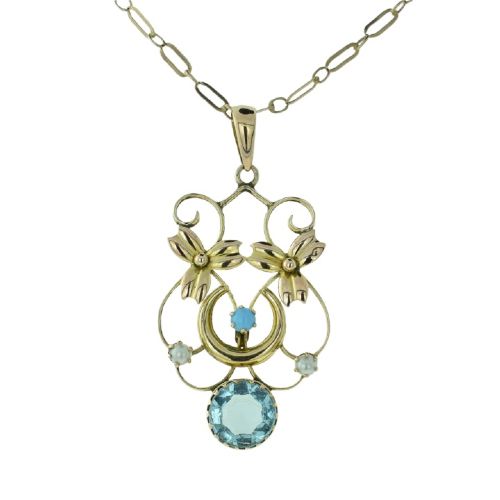


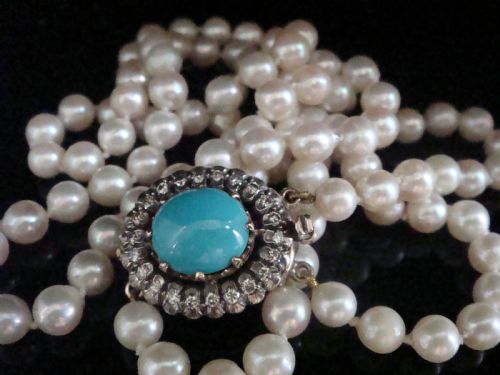
Edwardian Turquoise Necklace
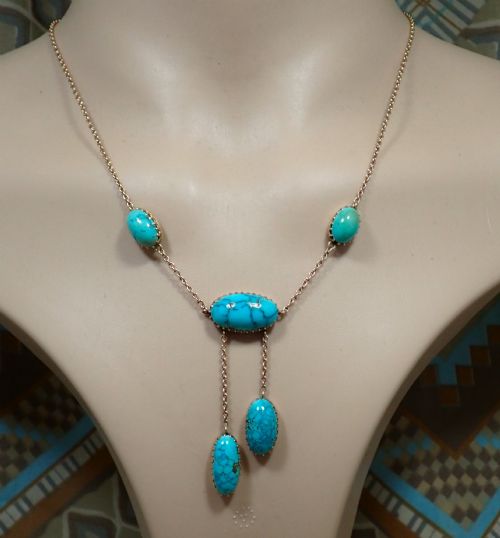
An edwardian turquoise necklace brings together robin-egg blue matrix stones and delicate gold work that defines early twentieth-century jewellery.
Edwardian Turquoise Necklace
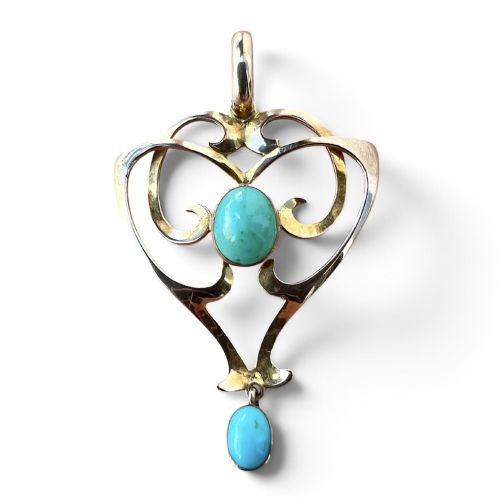
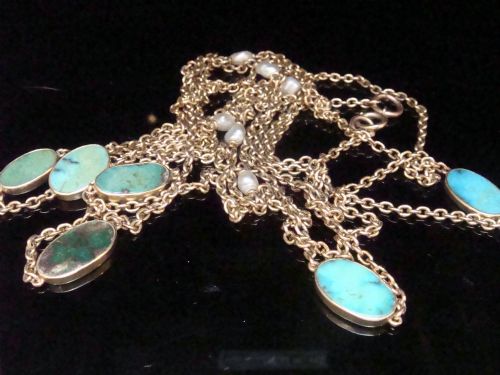
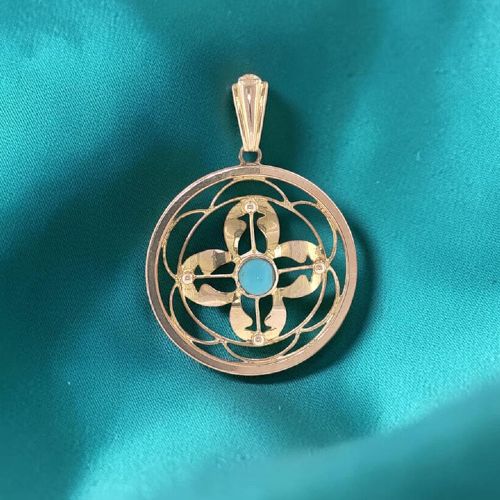
When searching for an edwardian turquoise necklace, you encounter delicate pendants, longuard chains, and elaborate parures dating from the early twentieth century alongside Victorian precursors. The pieces on this page span the Edwardian period, 1900, 1910, 1930, and the nineteenth century, reflecting various stylistic movements.
You frequently meet Arts and Crafts, Art Nouveau, and Edwardian designs that incorporate turquoise matrix alongside pearls, enamel, and diamonds. These items originate from workshops and makers working in gold, silver, and rose gold.
Materials and construction
Jewellers constructed these pieces using 9ct gold, 15ct yellow gold, 18ct gold, and silver, mounting natural turquoise and turquoise matrix alongside seed pearls and enamel drops. Metalsmiths employed hollow gold forming, wirework, and bezel settings to secure the fragile stones.
Makers integrated delicate chains, dog clips, and pendant mounts into the designs, combining gold and silver elements particularly within Arts and Crafts pieces.
Several pieces include functional dog clips originally engineered to secure pocket watches to long chains.
Assessing quality in early jewellery
The reputation of the maker, documented signatures, and the overall coherence of Arts and Crafts or Art Nouveau design elevate a piece above standard commercial production.
Deakin and Francis·The Gaskins·Dorrie Nossiter·Liberty and Co
The Edwardian Turquoise Necklace Glossary
- Turquoise matrix
- A gemstone showing the dark web of the host rock running through the blue material. This webbing provides visual depth and confirms natural origin.
- Longuard chain
- A very long Victorian or Edwardian neck chain often fitted with a swivel dog clip. These versatile pieces were designed to hold watches, lockets, or pendants.
- Parure
- A matched set of jewellery intended to be worn together. Surviving sets frequently include a necklace alongside earrings or rings.
- Negligee necklace
- A drop-style necklace featuring asymmetric dangling elements suspended from a central motif. This graceful form gained popularity during the Edwardian era.
- Seed pearl
- A very small, naturally occurring pearl often used in clusters. Makers drilled and threaded these tiny pearls to accent turquoise pendants.
Edwardian Turquoise Necklace: Frequently Asked Questions
How do I wear a longuard chain?
A longuard chain can be looped twice around the neck to create a layered look or worn at its full length with a pendant attached to the dog clip. The secure clasp mechanism was originally designed to anchor watches or decorative charms safely to the wearer's clothing.
These substantial gold chains function well as standalone statement pieces or paired with other period necklaces. Their length offers considerable versatility for daily wear.
Are turquoise stones treated?
Period pieces from the nineteenth and early twentieth centuries generally feature natural turquoise or turquoise matrix rather than modern stabilised treatments. The stones rely on their original geological composition and polish.
Over decades, natural turquoise can absorb skin oils and environmental moisture, which may subtly alter the blue hue toward a greener shade. This natural patina forms part of the history of antique jewellery.
What is the difference between Edwardian and Arts and Crafts styles?
Edwardian jewellery typically showcases light, airy platinum or yellow gold settings with diamonds and pearls, emphasising formal elegance and symmetry. Arts and Crafts pieces focus instead on handcrafted silver, visible hammering marks, enamelling, and untreated turquoise matrix.
Many pieces from the era blend these aesthetics, combining delicate Edwardian stones with the organic, artisan-led philosophy of the Arts and Crafts movement.
How should I care for antique turquoise?
Turquoise is a relatively soft and porous gemstone that requires gentle handling and protection from harsh chemicals, cosmetics, and ultrasonic cleaning. Wipe the stones with a soft, dry cloth after wearing rather than submerging them in water.
Store your necklace separately in a lined box to prevent the gold or silver mounts from scratching the softer turquoise and pearl surfaces.