
9ct Gold Heart
A 9ct gold heart carries sentimental weight from the Victorian and Edwardian eras, combining precious metal with enduring romantic symbolism.
9ct Gold Heart
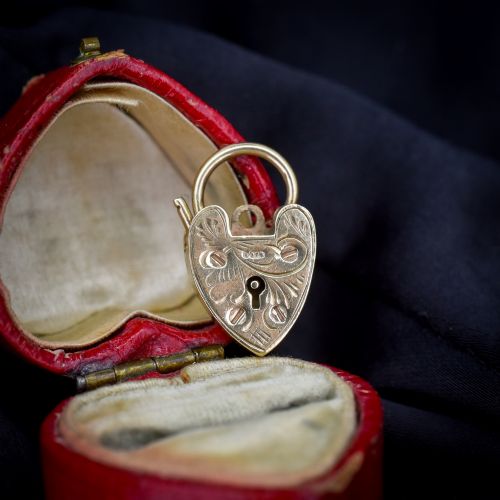
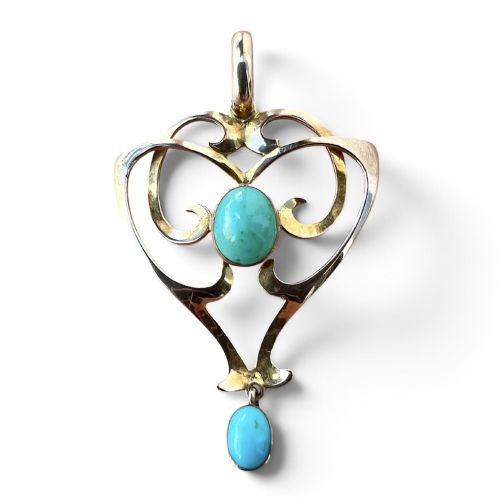
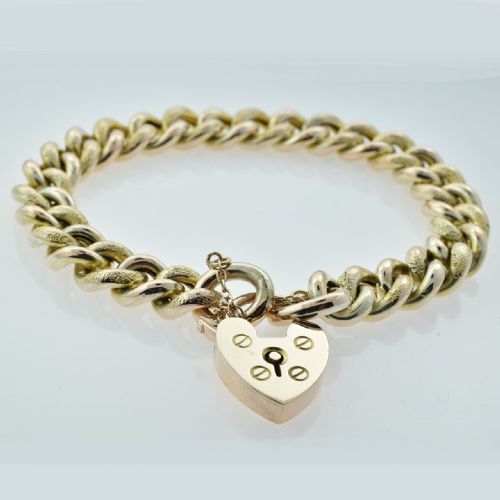
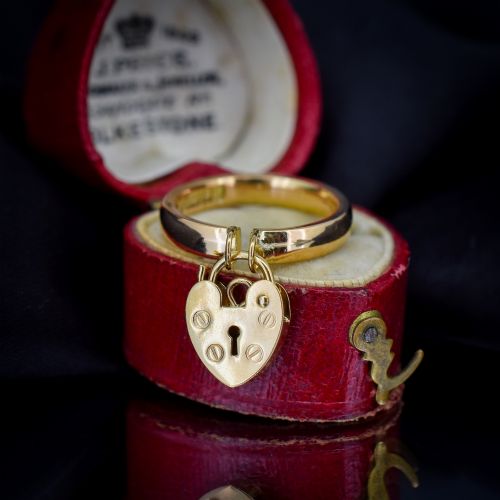
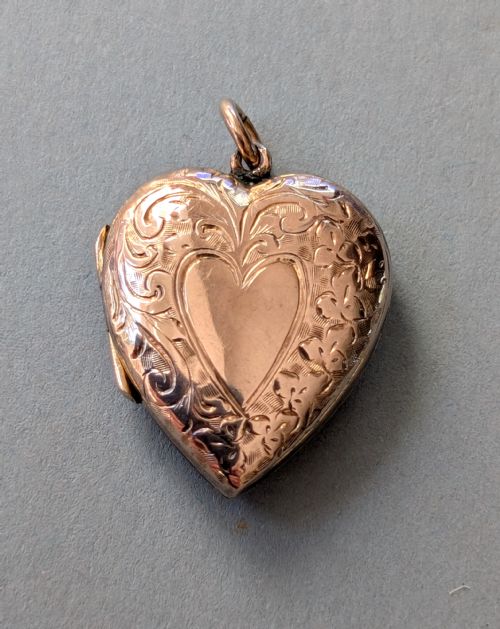
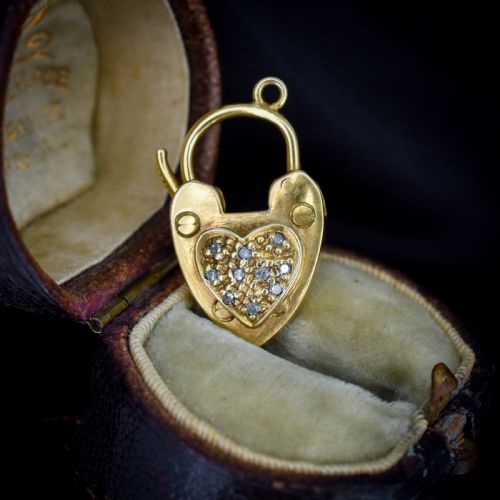
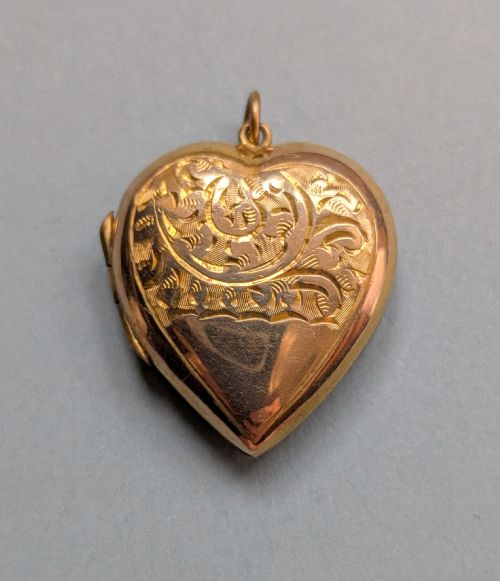
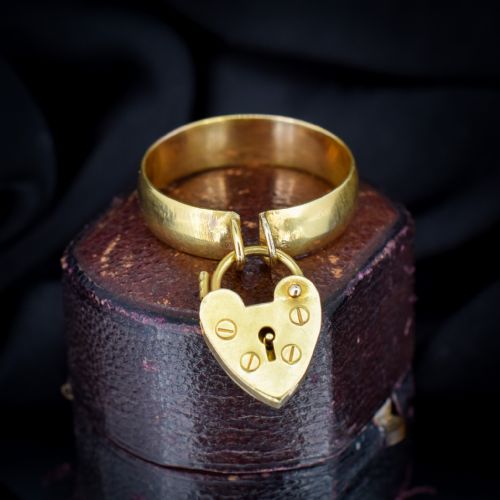
When searching for a 9ct gold heart, buyers encounter a diverse selection of antique and vintage jewellery spanning from the late Victorian period through the mid-twentieth century. The assortment includes hollow and solid lockets, puffy pendants, charm bracelets fastened with heart padlocks, and gemstone-set rings.
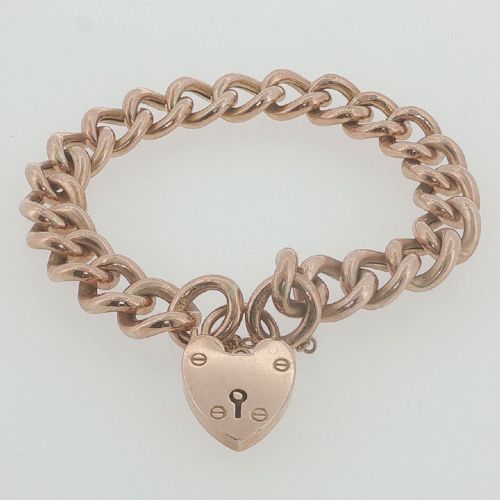
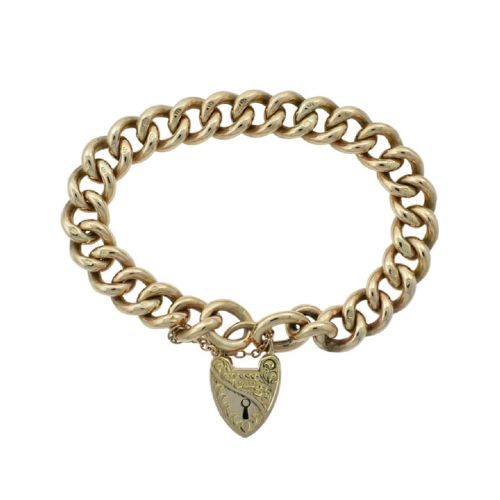
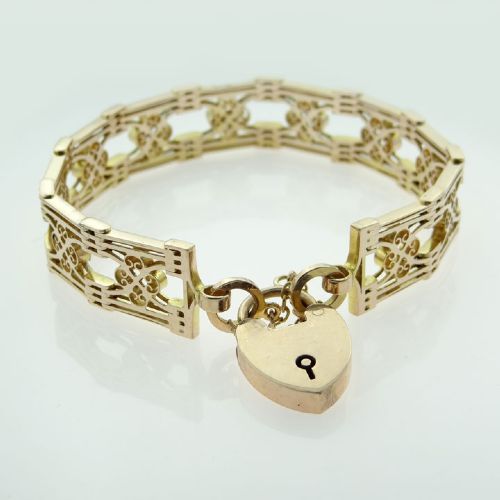
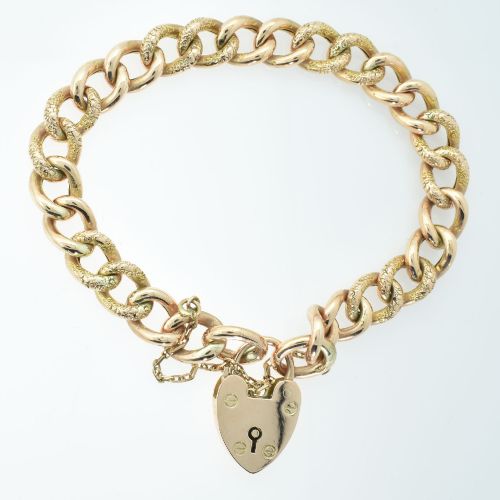
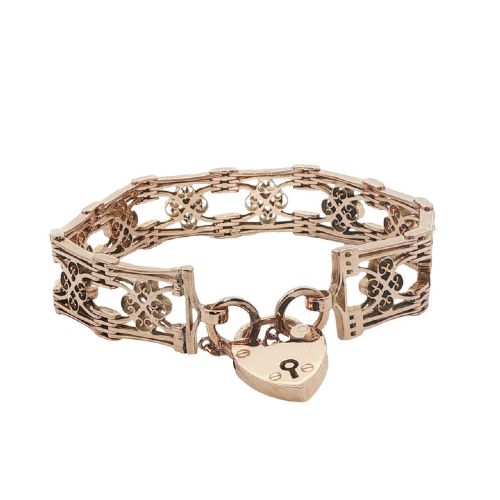
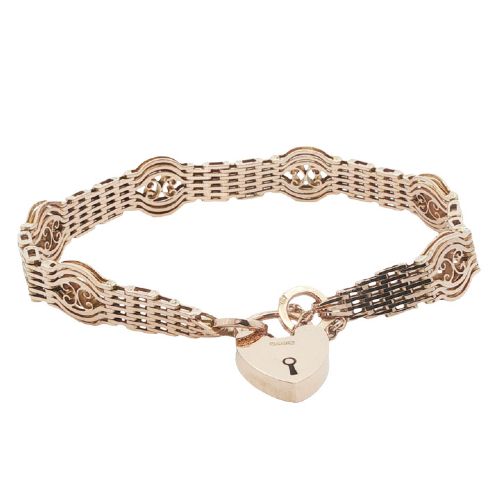
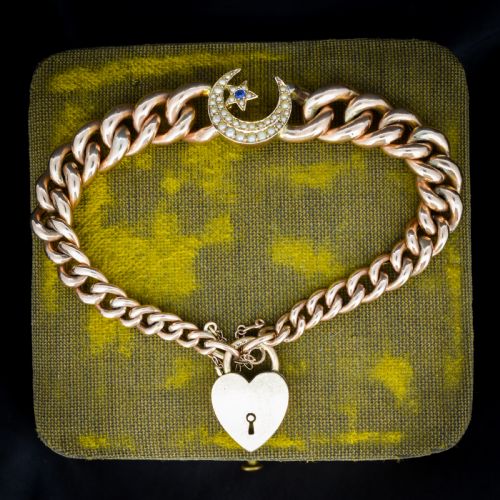
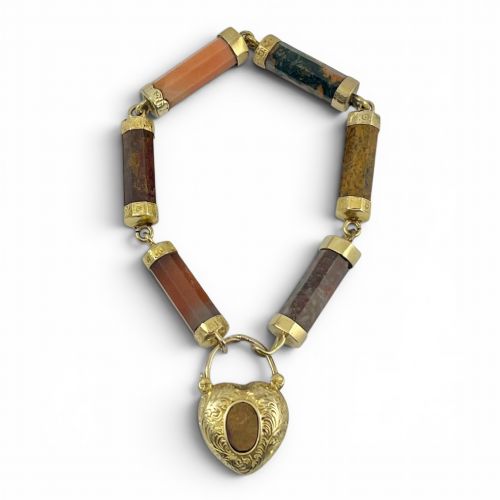
The most common formats on this page are curb link and gate bracelets secured by engraved heart padlocks, alongside romantic brooches and pendants. These items originate predominantly from British workshops operating in Birmingham, Chester, and London during the late nineteenth and early twentieth centuries.
How they were made
The materials span 9ct yellow, rose, and white gold alloys, frequently paired with natural gemstones such as amethyst, garnet, turquoise, seed pearls, and old-cut diamonds. Goldsmiths utilised hand-engraving, chasing, and hollow-stamping techniques to create lightweight yet ornate puffy forms and secure padlock mechanisms.
Many items display detailed chased foliate patterns, pierced metalwork, or secure bezel and prong settings to hold delicate stones. Hallmarks stamped directly into the metal provide verifiable evidence of assay offices and manufacturing dates.
Among the romantic charms, opening purse padlocks and tiny clover hearts hid tiny tokens of affection near the heart.
What varies in quality
The distinction between tiers rests upon the depth of hand-engraving, the thickness of the gold alloy used in hollow forms, and the selection of accent gemstones. Pieces exhibiting crisp, hand-chased ornamentation and substantial weight demonstrate superior craftsmanship compared to lighter, machine-stamped alternatives.
The integration of secure, fully functional mechanisms, such as spring-loaded padlock clasps and reliable hinge pins, elevates an item's standard. Furthermore, the presence of clear, legible British hallmarks adds considerable historical integrity to the piece.
Deakin & Francis·W.H. Wilmot
The 9ct Gold Heart Glossary
- Padlock clasp
- A heart-shaped locking mechanism that functions as both a secure bracelet fastening and a decorative charm.
- Puffy heart
- A three-dimensional hollow pendant formed from two convex metal halves joined at a central seam.
- Gate bracelet
- A flexible wrist ornament constructed from parallel rows of linked metal bars connected by vertical links, frequently secured with a heart padlock.
- Mizpah
- A sentimental inscription or motif derived from Hebrew origins denoting an emotional bond between absent friends or lovers.
- Seed pearl
- A tiny, naturally formed saltwater or freshwater pearl utilised extensively in Victorian and Edwardian cluster designs.
9ct Gold Heart: Frequently Asked Questions
How can I date my 9ct gold heart jewellery?
Dating these items relies primarily upon the British hallmarks stamped directly onto the metal, which denote the assay office, the gold purity, and a specific date letter. Stylistic indicators, such as the intricate foliate engraving typical of the late nineteenth century or the lighter geometries of the 1920s and 1930s, provide further context.
Examining the construction methods, such as hollow versus solid fabrication and the cut of any set gemstones, helps narrow the production era.
What gemstones are found in antique heart jewellery?
Antique heart pieces frequently incorporate seed pearls, amethysts, garnets, turquoise, and old-cut diamonds or sapphires. These stones were chosen for their colour and symbolic meanings, often arranged in clusters or framing a central gold motif.
Makers utilised prong, bezel, and star settings to secure these delicate gems into pendants, rings, and brooches.
How should I care for vintage 9ct gold hearts?
Maintaining vintage gold and gemstone jewellery requires gentle cleaning with warm soapy water and a soft cloth, avoiding harsh chemical dips that can damage softer stones like pearls or turquoise. Store pieces individually in soft pouches to prevent scratching between items.
Periodically check the security of hinges, clasps, and stone settings, especially on hollow items and charm padlocks subject to daily wear.