
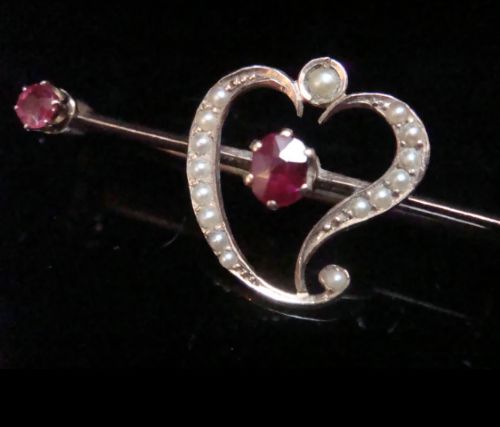


9ct Gold Bar Brooch
A 9ct gold bar brooch brings together slender precious metalwork and detailed gemstone settings from the Victorian, Edwardian and vintage eras.
9ct Gold Bar Brooch
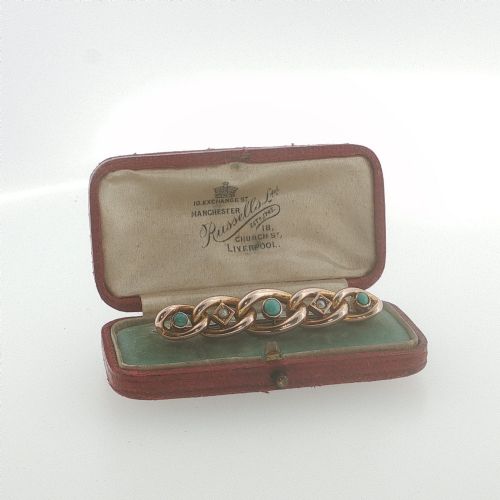
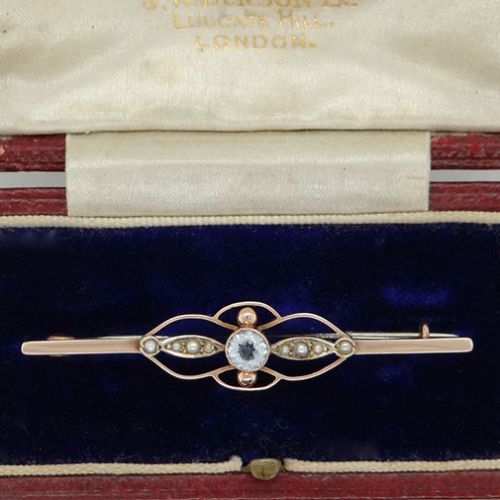
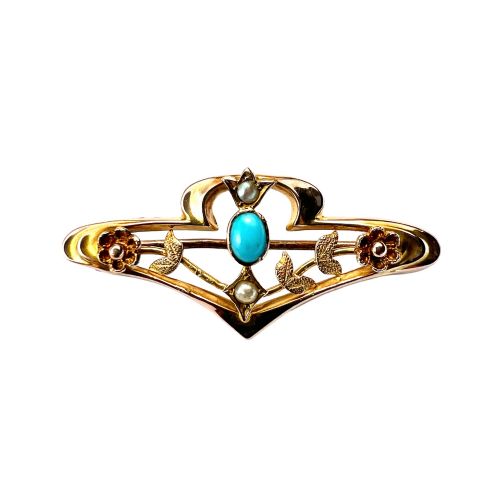
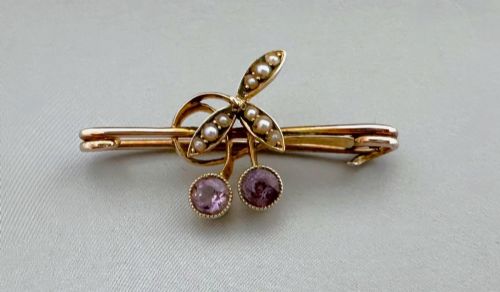
A 9ct gold bar brooch presents a linear metal pin format decorated with central clusters, motifs or single stones. The selections span late Victorian and Edwardian periods alongside mid-century examples.
Common forms combine geometric bars with organic subjects such as insects, hearts, crescents and floral arrangements. Many pieces incorporate seed pearls, turquoise, opals or diamonds arranged centrally on the metal shaft.
Materials and construction
Items rely on 9ct yellow and rose gold formed into rigid bars and secure pin mechanisms. Gemstones including peridot, amethyst, aquamarine and ruby are flush set, bezel set or mounted in open clusters.
Detailed embellishments utilise seed pearls and small diamonds wired or claw-set into position alongside engraved surface decoration. Assay office marks occasionally provide corroboration for regional origin and date.
Several pieces take the form of tiny domestic pets, bicycles and spiders ready to climb lapels.
Judging quality
Quality rests in the precision of the stone setting and the crispness of any engraved or chased detail on the metal bar. Balanced proportions between the central cluster and the supporting pin indicate superior workshop execution.
The integrity of the hinge and pin mechanism alongside securely mounted seed pearls or diamonds marks the difference between standard production and finer examples.
The 9ct Gold Bar Brooch Glossary
- Bar brooch
- A piece of jewellery characterised by a long, narrow metal shaft that fastens with a pin and catch. This format gained popularity during the nineteenth and early twentieth centuries.
- Seed pearl
- A very small natural or cultured pearl used in clusters or pavé settings. They frequently accent Edwardian floral and crescent designs.
- Assay mark
- A stamp indicating the purity of the precious metal and the testing office. Chester and Birmingham marks appear on pieces from this period.
- Suffragette
- A colour scheme involving green, white and violet stones symbolising the movement for women's suffrage. Peridot, seed pearl and amethyst often represent these colours.
- Bezel setting
- A method of holding a gemstone in place with a thin collar of metal that folds over the stone edge. This technique secures softer stones safely.
9ct Gold Bar Brooch: Frequently Asked Questions
How do I wear a bar brooch safely?
Pin the piece through a sturdy fabric weave rather than delicate silk to support the weight of the metal and stones.
Check that the safety catch or roll-over clasp functions correctly before wearing it on coats or heavy knitwear.
How do I tell Victorian from Edwardian pieces?
Victorian examples tend to use heavier rose gold settings with rich red or green stones and naturalistic motifs like insects.
Edwardian pieces frequently showcase lighter yellow gold or platinum-topped designs featuring delicate seed pearls and bright blue aquamarines or peridots.
Were these brooches made for daily use?
Victorian and Edwardian owners wore them regularly to fasten collars, cravats and lapels as functional garments accessories.
Over time their role shifted toward purely decorative items pinned to hats, scarves and winter coats.
What does 9ct gold mean for durability?
The alloy contains thirty-seven point five percent pure gold mixed with other metals to increase strength against daily wear.
This composition allowed makers to form thin, rigid bars that hold gemstone settings securely without bending easily.