







19th Century Ziegler Carpet
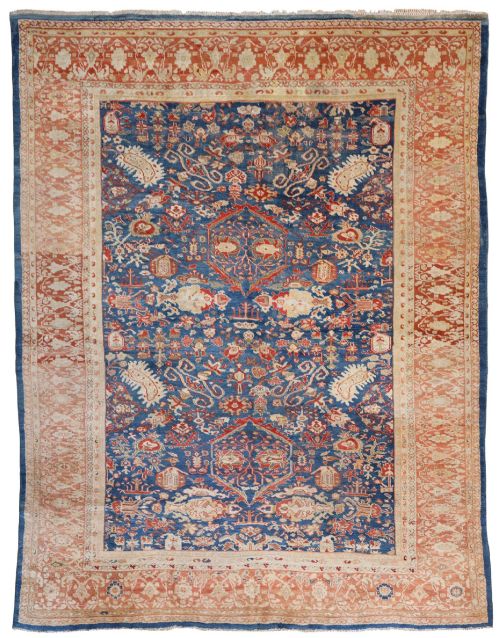
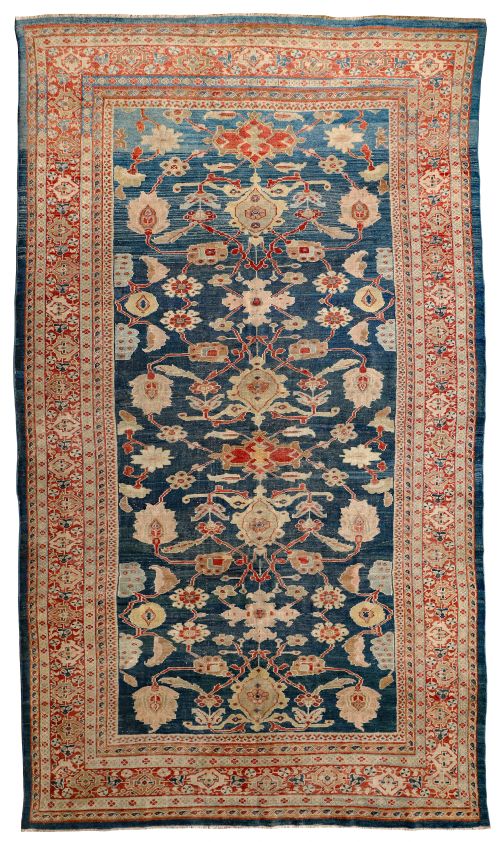
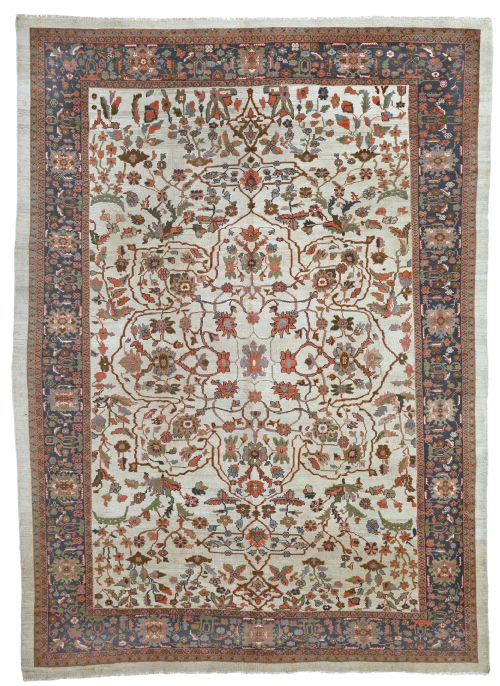
A 19th century ziegler carpet brings subtle, room-grounding tones and grand Persian scale to an interior.
19th Century Ziegler Carpet
A 19th century ziegler carpet is a floor covering originating from West Persia, often associated with the Sultanabad region and the notable firm Ziegler and Co. Buyers searching this phrase look for large-format rugs or area rugs that combine traditional Persian craftsmanship with softened palettes tailored for Western tastes.
The pieces on this page span the late 19th century, specifically the eighteen-eighties, eighteen-nineties, and around nineteen hundred. They appear under stylistic labels such as Persian Ziegler, Sultanabad, Mahal, and Fereghan, reflecting their regional West Persian roots.
Most examples function as substantial carpets or smaller area rugs, offering generous dimensions like three point seven by three metres or over four metres in length. These formats suit expansive reception rooms and studies where a historic, patinated textile anchors the scheme.
Materials and Construction
These carpets are constructed using wool for the pile and cotton for the foundation weave, providing durability and structural stability. The pairing of a wool pile with a cotton warp and weft is characteristic of the production methods employed in West Persian workshops during this period.
Weavers knotted the wool by hand onto the cotton base, allowing for the intricate curvilinear patterns and large-scale floral motifs seen across the inventory. The natural resilience of these materials ensures the survival of pile and pattern through generations of domestic use.
19th Century Ziegler Carpet Retail Price Guide 2026
Typical asking prices for 19th century ziegler carpet among the pieces listed under this phrase on Sellingantiques today, from the lower quarter to the upper quarter. They describe what is for sale here now, not the wider market.
Listings on this site exclusively feature wool and cotton materials, spanning production dates from eighteen-eighty to nineteen-hundred.
Assessing Quality and Merit
Quality in these carpets rests on the harmony of the faded palette, the precision of the drawing, and the balance of the large-scale floral motifs. Finer examples display a sophisticated handling of dye absorption in the wool, creating gentle abrash and tonal depth across the field.
The prestige of the specific West Persian weaving centre, such as Sultanabad or Fereghan, alongside the execution of the grand design, distinguishes the upper tier of pieces. Proportion, structural integrity, and the preservation of the original borders further separate standard room rugs from exceptional works.
Ziegler and Co
The 19th Century Ziegler Carpet Glossary
- Ziegler
- A commercial term derived from the Manchester-based firm Ziegler and Co, which commissioned carpets in Persia for the European market. These pieces typically feature muted colours and expansive floral designs.
- Sultanabad
- A regional designation for carpets woven in and around the city of Sultanabad in West Persia. This area became a primary hub for large-scale commercial carpet production in the late nineteenth century.
- Fereghan
- A stylistic and geographical descriptor for rugs originating from the Fereghan district of Persia. They are known for fine knotting and refined botanical patterns.
- Mahal
- A category of West Persian carpet closely related to Sultanabad production. Mahal pieces often feature slightly more relaxed, open drawing styles.
- Abrash
- A natural variation in colour depth within a carpet's field, caused by slight differences in dye batches. Collectors prize this characteristic as a mark of genuine hand-dyeing with natural materials.
19th Century Ziegler Carpet: Frequently Asked Questions
What is a 19th century ziegler carpet?
A 19th century ziegler carpet is a hand-knotted Persian floor covering produced during the late eighteen-hundreds for Western export markets. These pieces are distinguished by subdued palettes and generous floral motifs.
They emerged primarily from the Sultanabad region of West Persia, created through commercial enterprises that adapted traditional designs for European and American drawing rooms.
How do I distinguish Sultanabad and Ziegler rugs?
Sultanabad refers to the broader West Persian production region where these large carpets were woven. Ziegler specifically denotes carpets commissioned or distributed by the firm Ziegler and Co.
In practice, the terms often overlap because the Manchester firm operated extensively within the Sultanabad district, producing similar large-scale, muted decorative carpets.
What materials are used in these carpets?
The pieces utilise a wool pile hand-knotted onto a sturdy cotton foundation. This combination provided the necessary strength for large room-size formats while supporting intricate curvilinear designs.
Natural dyes applied to the wool have aged over the decades, developing the soft, faded tonalities characteristic of late nineteenth-century Persian weaving.
How do I care for an antique carpet?
Protect the wool and cotton fibres by placing the carpet in areas away from direct, harsh sunlight to prevent dye fading. Use a quality underlay to cushion the foundation and reduce friction against hard floors.
Vacuum gently with a suction-only attachment, avoiding beater bars that can damage the antique pile, and consult a specialist rug cleaner for periodic maintenance.