


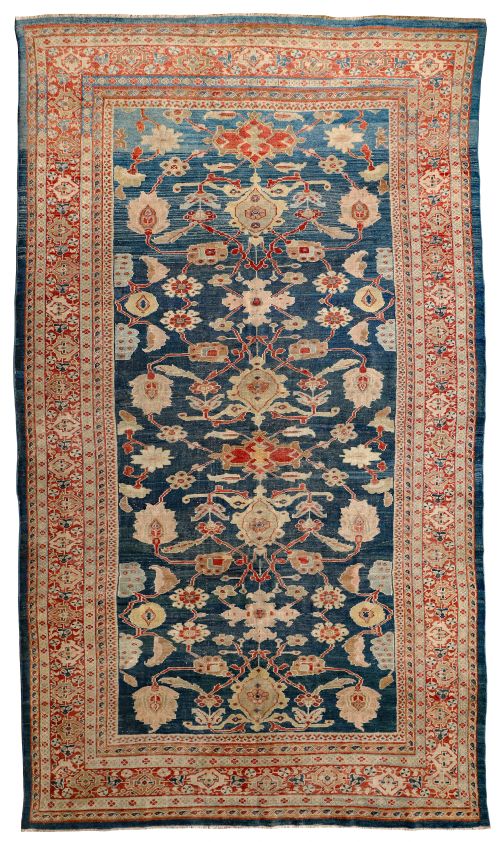


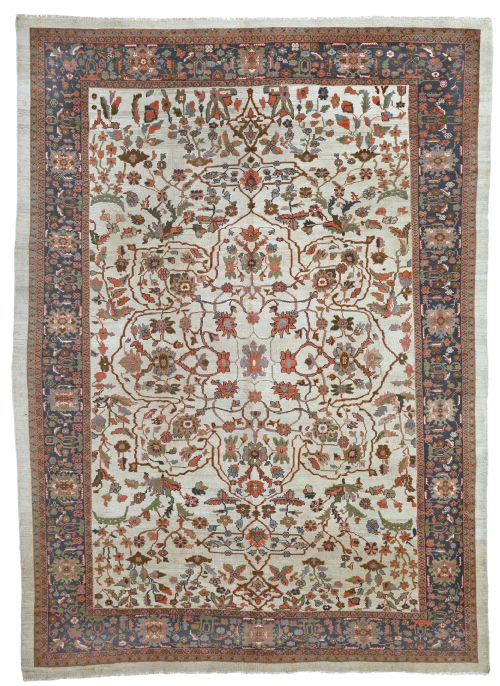


Cream Wool Ziegler Rug
A cream wool ziegler rug brings nineteenth-century Persian workshop design into a modern room with muted palettes and grand scale.
Cream Wool Ziegler Rug
When you search for a cream wool ziegler rug, you encounter floor coverings originating from the Sultanabad region of West Persia. These pieces date from the late nineteenth century, specifically around the 1880 and 1890 periods.
The objects listed take the form of rugs and carpets, often categorized as area rugs. They represent Persian Ziegler and Persian Sultanabad styles translated into room-sized or smaller formats.
Most examples you meet on this page feature the characteristic muted coloration and expansive floral motifs typical of commercial Persian production for the Western market.
How they were made
Weavers constructed these carpets using natural wool pile knotted onto a sturdy cotton foundation. This combination provided both the soft surface texture required for domestic spaces and the structural durability needed for large formats.
Workshops in the Sultanabad region utilised organic dyes and traditional hand-knotting techniques to achieve the characteristic softer palettes and large-scale patterns associated with the Ziegler design tradition.
Cream Wool Ziegler Rug Retail Price Guide 2026
Typical asking prices for cream wool ziegler rug among the pieces listed under this phrase on Sellingantiques today, from the lower quarter to the upper quarter. They describe what is for sale here now, not the wider market.
Nineteenth-century Persian weavers occasionally hid minor knotting irregularities in plain sight, proving even master workshops enjoyed a quiet joke.
What varies in quality
The distinction between standard and finer examples rests on the precision of the knotting and the refinement of the botanical drawing across the field. Superior execution preserves the clarity of the large-scale motifs without crowding the composition.
Condition of the wool pile and the integrity of the original cotton foundation structure dictate the tactile preservation of each rug. Uniform pile height and stable borders separate well-preserved specimens from heavily worn alternatives.
The Cream Wool Ziegler Rug Glossary
- Ziegler
- A nineteenth-century commercial carpet design style originating in Persia, known for softer palettes and large-scale floral patterns tailored for Western tastes. These pieces often bear the name of the firm that commissioned them.
- Sultanabad
- A regional designation for rugs and carpets woven in the district surrounding the city of Sultanabad in West Persia. This area became a major hub for commercial carpet production in the late nineteenth century.
- Pile
- The upright yarn loops or cut ends that form the usable surface of a carpet. In these listings, the pile is composed of wool.
- Foundation
- The underlying structural grid of warp and weft threads that supports the decorative pile knots. The listings record cotton as the primary material for this component.
Cream Wool Ziegler Rug: Frequently Asked Questions
Where were these rugs made?
These rugs were woven in the Sultanabad region of West Persia during the late nineteenth century.
Production was largely geared toward European and American markets, adapting traditional Persian designs into more open and muted formats.
What materials are used?
The surface pile is spun from wool, offering a soft yet durable texture for floor use.
The underlying structural foundation consists of cotton threads, which provide stability and strength to the knotted textile.
How do I date these pieces?
Dating relies on stylistic markers and historical production records from the late nineteenth century, specifically around the 1880 and 1890 periods.
Commercial weaving output from the Sultanabad workshops during these decades displays distinct botanical motifs and colour softening.
Are these rugs or carpets?
The inventory includes both smaller rugs and larger area carpets suited for different spatial requirements.
Terminology often depends on the overall dimensions and format rather than a difference in materials or regional origin.