

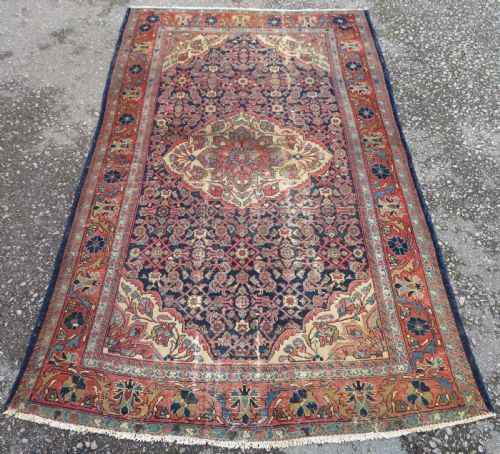
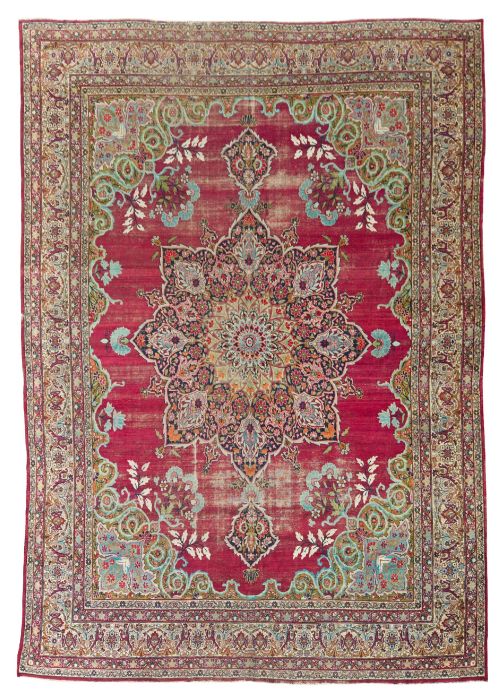
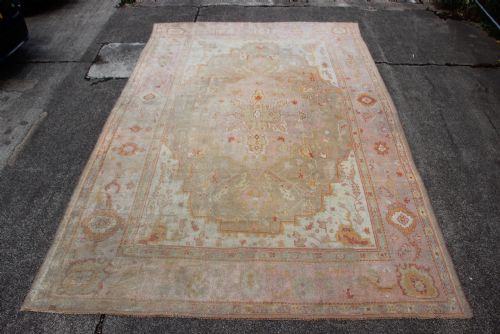


Faded Oriental Area Rug
A faded oriental area rug brings soft, muted tones and history to a room, offering worn textures that modern floor coverings cannot replicate.
Faded Oriental Area Rug
A faded oriental area rug brings time-softened hues into a room, often originating from Persian and Turkish weaving centres across the nineteenth and early twentieth centuries. These floor coverings arrive in various scales, from compact area sizes to room-filling carpets.
Oushak and Ushak productions dominate the available selection, alongside Persian examples such as Kirman, Tabriz, Sarouk, Kashan, Khamseh, and Caucasian Shirvan Kuba pieces. Buyers frequently encounter pale colour palettes, distressed surfaces, and worn wool piles.
The aesthetic centres on gentle patination where vegetable dyes have softened over decades of use. Each piece reflects regional knotting traditions and distinct border geometries developed across Anatolia and Persia.
Materials and construction
Weavers constructed these rugs predominantly using wool piles knotted onto cotton foundations, with occasional variations incorporating angora wool. Hand-spun wool yarns absorbed natural dyestuffs, which gradually mellowed into pastel pinks, pale blues, and muted neutrals over generations.
The structural integrity relies on dense hand-knotting secured by sturdy warps and wefts. Artisans worked from traditional regional designs, creating intricate floral motifs and medallion layouts that define the Persian and Ottoman styles seen in the collection.
Faded Oriental Area Rug Retail Price Guide 2026
Typical asking prices for faded oriental area rug among the pieces listed under this phrase on Sellingantiques today, from the lower quarter to the upper quarter. They describe what is for sale here now, not the wider market.
Materials recorded across the inventory are strictly limited to wool, cotton, and angora wool.
Assessing quality and character
Quality reveals itself in the fineness of the knotting and the balance of the composition as the pile wears away. Superior examples retain structural stability despite significant patination, allowing the underlying design to remain legible beneath softened tones.
The harmony of the fading process distinguishes exceptional specimens from simpler utility grade carpets. Artisans who used stable natural dyes achieved an even, graceful lightening of colour rather than uneven discolouration.
The Faded Oriental Area Rug Glossary
- Oushak
- A Turkish town renowned for large-scale carpets featuring gentle pastel hues and expansive floral patterns. These pieces typically display a relaxed knotting structure and soft wool.
- Distressed
- A descriptive term for surface wear where the pile has thinned significantly through age and use. This process softens the original contrasts and creates a muted appearance.
- Kirman
- A Persian weaving tradition known for finely knotted carpets with elaborate floral and vase designs. These works often transition gracefully into soft, faded tones.
- Warp
- The vertical threads stretched across the loom that form the structural foundation of the rug. Weavers tie the pile knots around these parallel foundation strands.
- Knot
- The individual loops of coloured wool tied around the warp threads to create the decorative pile. The density and precision of these ties determine the clarity of the pattern.
Faded Oriental Area Rug: Frequently Asked Questions
How do I clean a faded oriental area rug?
Gentle surface cleaning and professional specialist washing preserve the fragile, low-pile wool fibres and soft dyes. Avoid harsh chemical treatments and aggressive scrubbing.
Regular light vacuuming without a rotating brush head prevents dust accumulation within the cotton foundation.
Will a distressed rug withstand heavy foot traffic?
Pieces with significant wear suit low-traffic areas like bedrooms or quiet sitting rooms where further abrasion remains minimal. Using a quality underlay provides crucial cushioning and reduces friction against the floor.
Heavily thinned antique carpets require careful placement to maintain their structural integrity over time.
How do I identify an Oushak carpet?
Oushak carpets generally display looser knotting, softer wool, and large-scale geometric or floral motifs rendered in muted pastel palettes. They originate from the Anatolian region and often feature warm, faded pinks and pale blues.
The relaxed weave distinguishes them from tightly packed Persian counterparts.
What causes the faded appearance?
Decades of natural sunlight exposure, gentle foot traffic, and historic washing processes gradually lighten the original vegetable and natural dyestuffs. This organic ageing process creates the sought-after patinated surface.
Unlike chemical bleaching, natural fading softens the transitions between colours evenly.