





19th Century Writing Set
These 19th century writing set pieces bring order and elegance to a desk through fitted inkwells, trays, and stands.
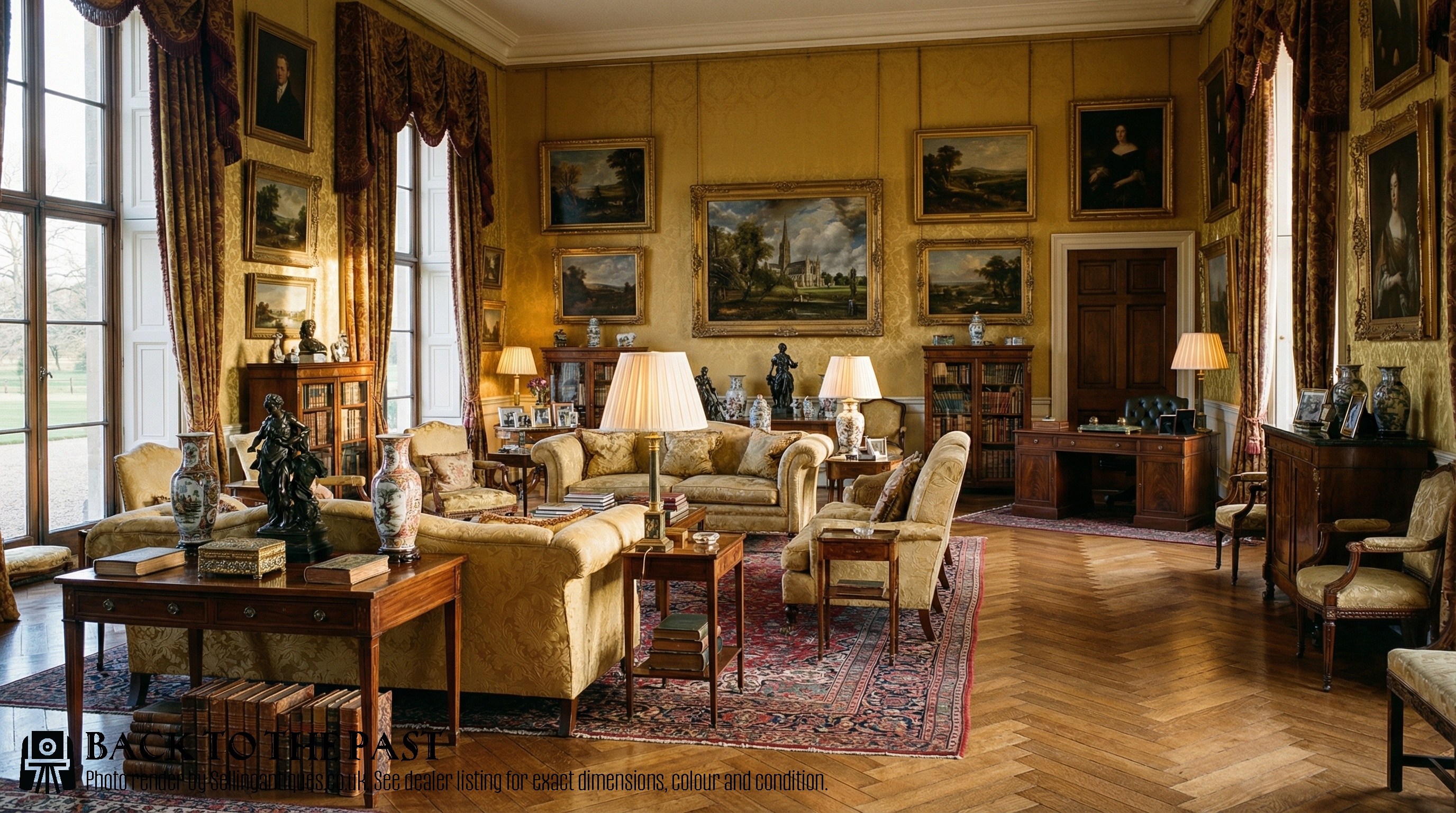
19th Century Writing Set
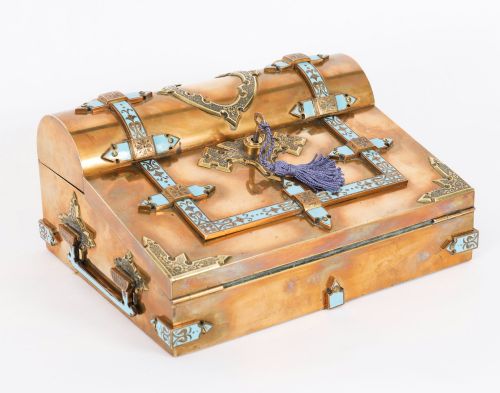
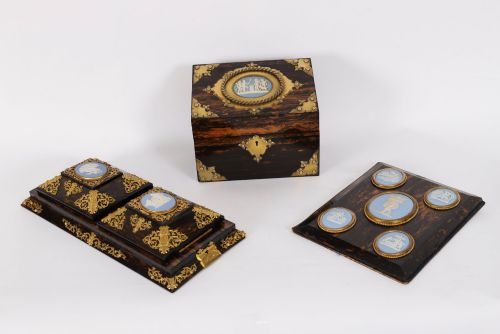
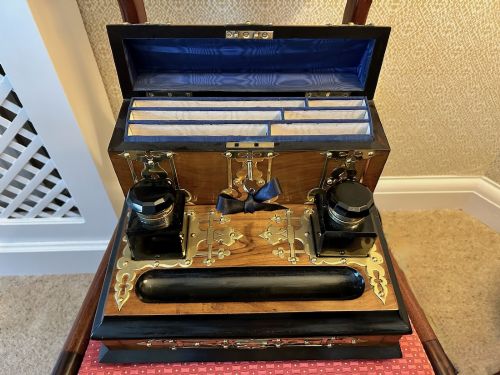
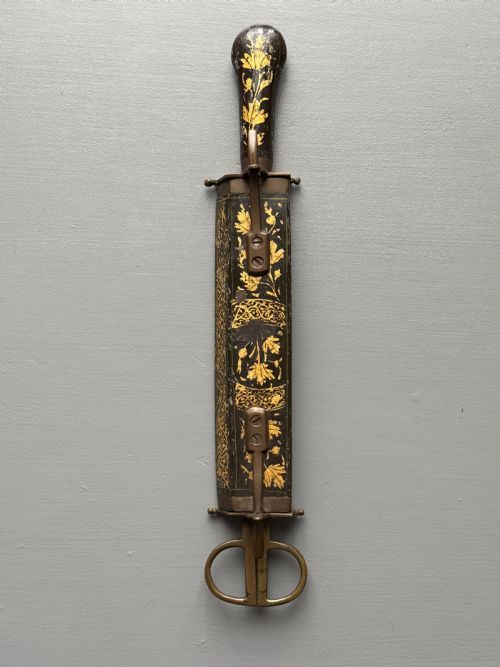
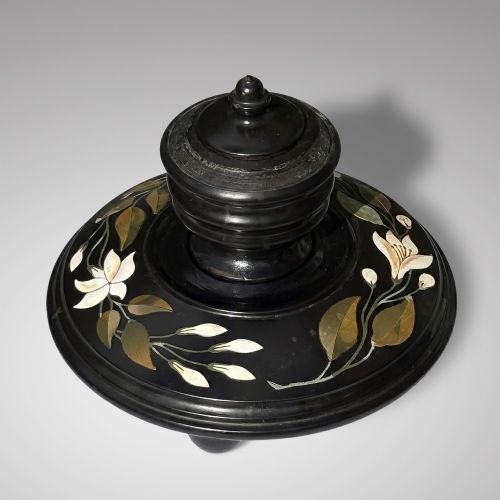
A 19th century writing set encompasses desk accessories, inkstands, inkwells, and standishes designed for correspondence and desk management. The pieces encountered here span Victorian, Regency, French Empire, and Napoleon III styles.
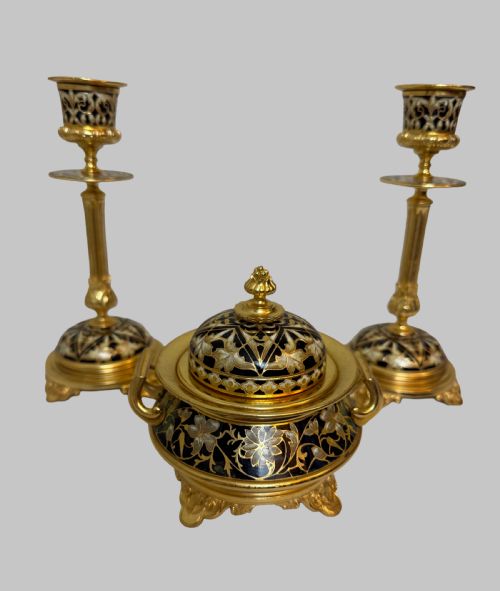
Forms range from simple single glass or porcelain inkwells to elaborate multi-piece desk sets featuring candlesticks and sanders. Walnut, coromandel, and papier-mâché frequently form the foundational trays and boxes holding these ink reservoirs.
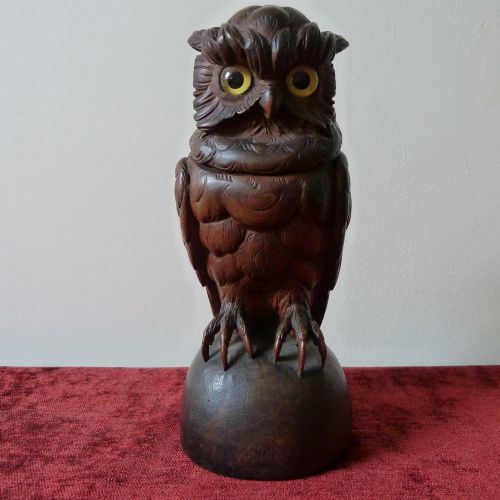
Origins stretch across English, French, Dutch, and Asian workshops, reflecting diverse aesthetic movements from Grand Tour souvenirs to Black Forest carvings. Buyers find everything from utilitarian travel boxes to decorative centrepieces for library desks.
Materials and construction
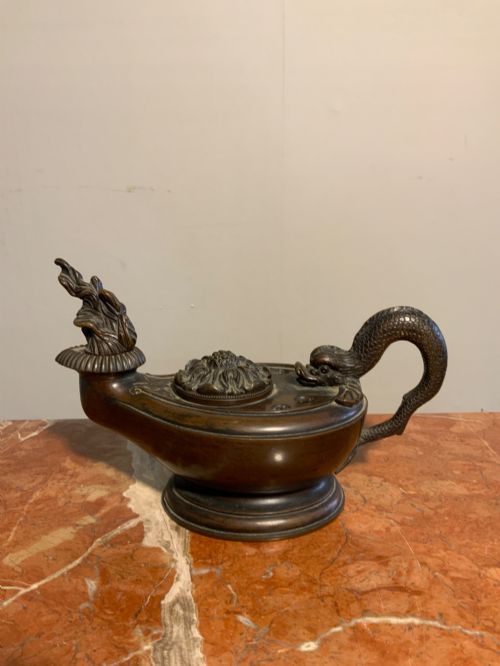
Metals such as bronze, ormolu, gilt bronze, and cast brass provide structural mounts and sculptural figures, often paired with marble or Sienna marble bases. Sterling silver and silver gilt mounts add precious detail to wooden trays.
Organic materials including walnut, coromandel-wood, maplewood, tortoiseshell, ebony, and papier-mâché demonstrate advanced cabinetmaking and lacquer techniques. Intricate hand carving appears in Black Forest wooden animal figures and floral papier-mâché lids.
Ceramic elements utilise porcelain from factories like Worcester and Minton, alongside Delft blue and white faience and champlevé enamel. Glass ink inserts and agate cabochons complete the varied material palette.
19th Century Writing Set Retail Price Guide 2026
Typical asking prices for 19th century writing set among the pieces listed under this phrase on Sellingantiques today, from the lower quarter to the upper quarter. They describe what is for sale here now, not the wider market.
Listings feature numerous French and English pieces utilising ormolu, bronze, walnut, and porcelain across the Victorian and Regency periods.
Distinctions in quality
The refinement of the casting in bronze or ormolu defines the upper tiers, where chisel work brings out crisp details in animal figures and foliate scrolls. Superior pieces integrate diverse materials seamlessly, such as combining tortoiseshell with inlaid brass or matching marble bases.
Maker attribution elevates standing, with signed works by known silversmiths or Parisian bronze founders carrying distinct provenance. Hand-painted ceramic panels and intricate marquetry or mother-of-pearl inlay in papier-mâché separate exceptional examples from standard production.
Wilkinson Co·Flight Barr Barr·Robert Garrard·Rupert Favell·Lefebvre·Robert Hennell·Jules Dalou
The 19th Century Writing Set Glossary
- Inkstand
- A tray or stand holding inkwells, pen trays, and sometimes sanders or wafer boxes. It sits centrally on a desk to organise writing implements.
- Standish
- An alternative term for an inkstand, often denoting a more portable or elaborately mounted desk accessory with fitted compartments.
- Ormolu
- Gilt bronze mounted on decorative objects and furniture, created by applying a mercury and gold amalgam to bronze. It provides a bright golden surface finish.
- Champlevé
- An enamelling technique where troughs are carved into metal and filled with vitreous enamel before firing. The resulting surface displays colourful decorative patterns.
- Papier-mâché
- A composite material made from paper pulp or layers of paper reinforced with glue, then lacquered and painted. It allows for lightweight yet durable moulded desk trays.
19th Century Writing Set: Frequently Asked Questions
What is a standish?
A standish is a portable or stationary desk stand that houses inkwells, quill pens, and powder compartments for writing. These pieces served as the central station for penning letters before the invention of the fountain pen.
They often incorporate silver mounts, porcelain inserts, or bronze figures to display status in a nineteenth-century study or drawing room.
How do I use an antique inkwell?
Antique inkwells contain a glass or ceramic insert designed to hold liquid ink safely without damaging the outer material of bronze, wood, or marble. Modern users typically place bottled ink inside the inner liner for display or occasional use.
Care should be taken to clean residual dried ink from the glass inserts using warm water to preserve the original fittings.
How do I identify French Empire pieces?
French Empire desk sets display classical motifs inspired by ancient Rome and Greece, including paw feet, sphinxes, laurel wreaths, and military trophies. Ormolu and bronze dominate these compositions, frequently mounted on dark marble bases.
Proportions remain formal and symmetrical, reflecting the aesthetic preferences of the early nineteenth century.
What is papier-mâché?
Papier-mâché is a durable composite material formed from paper layers or pulp mixed with binders, then baked and finished with dark lacquer. Victorian makers decorated these surfaces with hand painting, mother-of-pearl inlay, and gilt highlights.
Desk sets utilising this technique offer a smooth, glossy surface that mimics Japanese lacquerware popular during the period.