

19th Century Wooden Coffer
A 19th century wooden coffer offers robust utility and honest period craftsmanship, making it a practical storage choice for any traditional interior.
19th Century Wooden Coffer
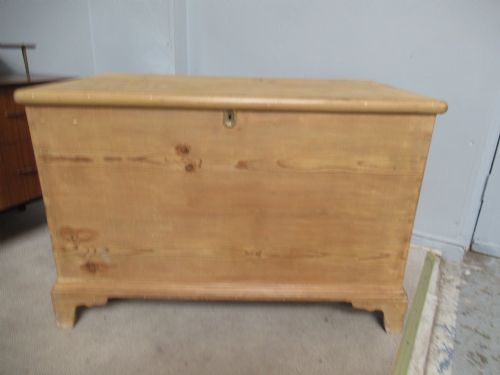
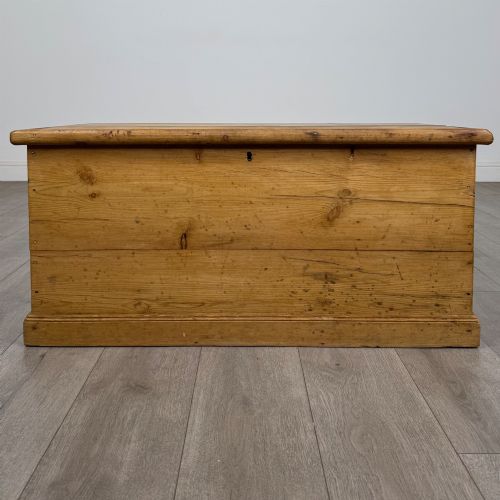
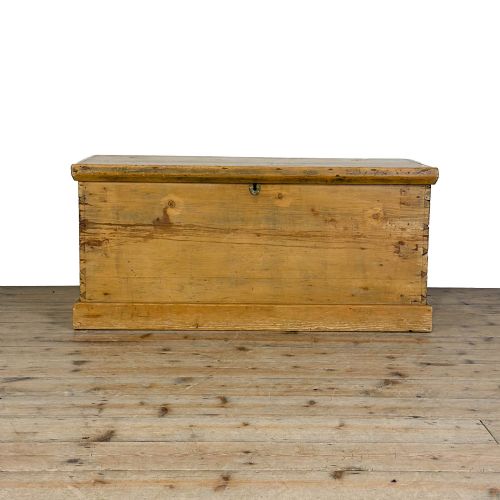
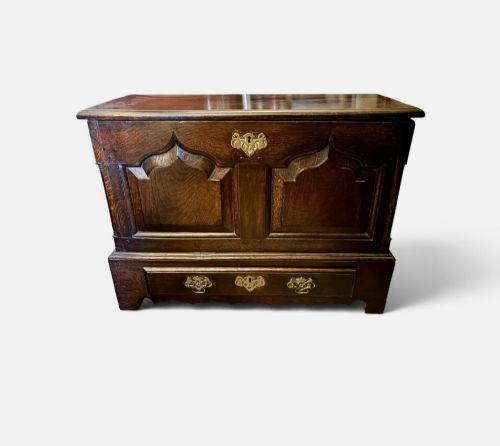
A 19th century wooden coffer serves as a sturdy storage vessel for blankets, tools, and personal belongings. Buyers encounter various regional and military interpretations spanning the Victorian era and earlier decades.
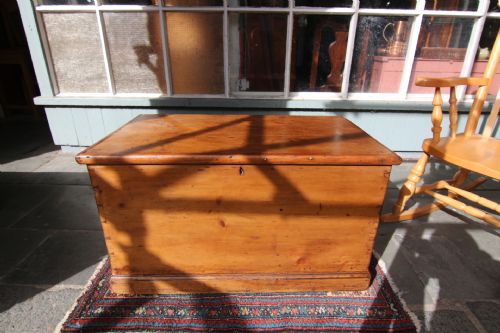
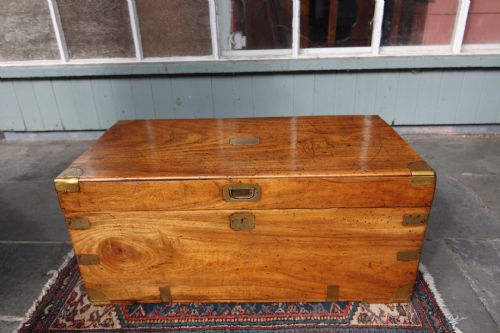
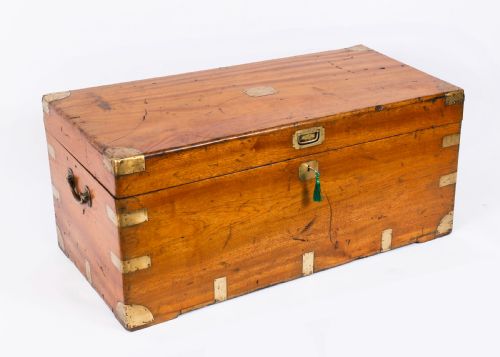
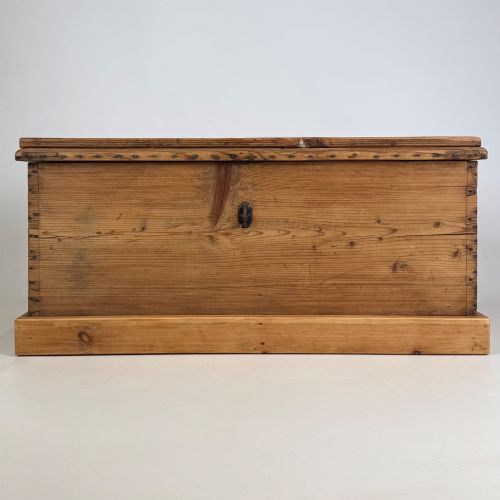
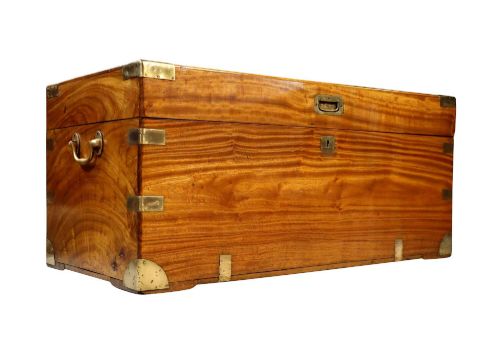
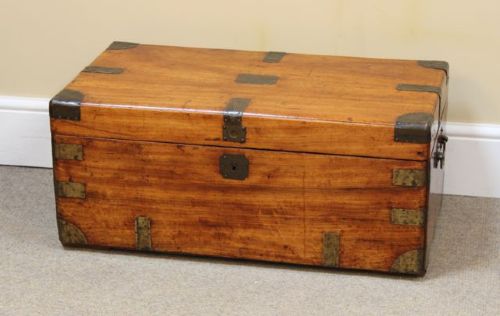
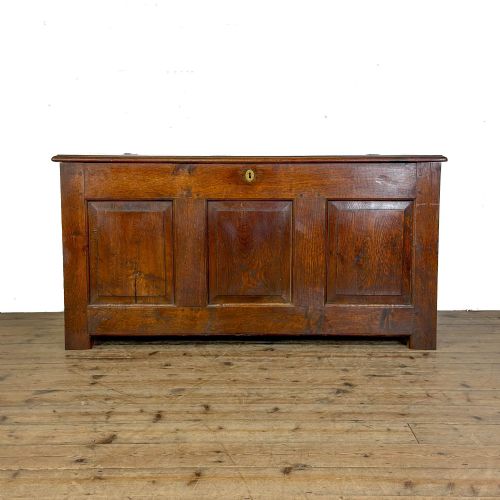
The selection ranges from simple pine blanket boxes and country oak chests to brass-bound camphor wood campaign trunks designed for travel. These pieces reflect the utilitarian demands of their original owners across different global contexts.
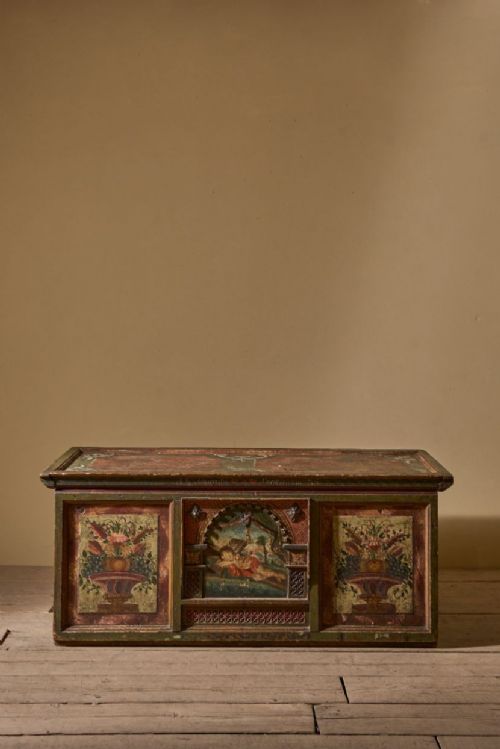
Domestic forms include Welsh pine chests, painted mule chests, and oak coffers, whilst overseas examples introduce exotic timbers and metal reinforcement. Each variant provides deep interior storage with a hinged or removable lid.
Materials and construction methods
Carpenters utilised native timbers such as oak, pine, and walnut alongside durable imported woods like camphor, teak, and padouk. These materials were selected for strength and resistance to splitting during heavy daily use or transit.
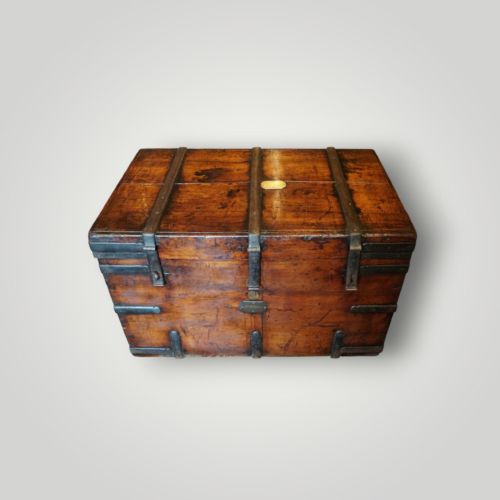
Metal fittings played a crucial structural role, with brass corners, iron straps, and studwork reinforcing the wooden joints. Handles and locks were forged or cast to withstand the rigours of military transport and maritime trade.
Camphor wood trunks retain their distinct medicinal aroma for over a century, silently guarding contents against moths just as they did on Victorian merchant ships.
Distinguishing quality in period storage
Quality rests in the integrity of the timber selection and the precision of the joinery rather than decorative excess. Superior examples display tight dovetailing, robust internal partitions, and well-fitted lids that maintain alignment over time.
The degree of original hardware preservation marks a clear tier of excellence. Original brass banding, functional locks with working keys, and untouched surface patination separate standard utility boxes from superior campaign pieces.
The 19th Century Wooden Coffer Glossary
- Campaign trunk
- A portable chest built in sections with recessed brass handles and corner brackets for military transport. These items were engineered for officers on active service.
- Mule chest
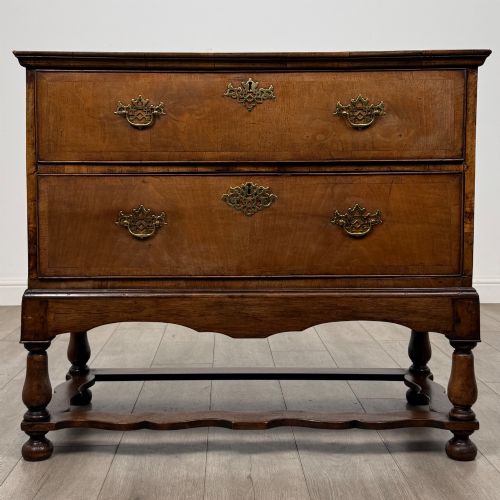
- A storage chest fitted with one or more drawers beneath the main compartment. This form bridges the gap between the simple blanket box and the chest of drawers.
- Scumble
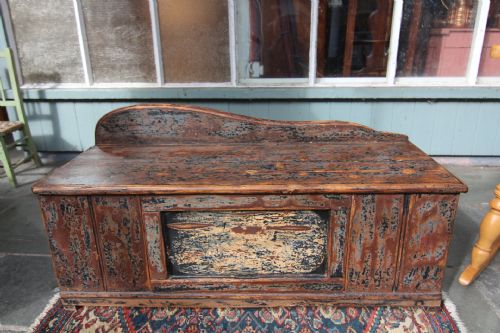
- A decorative painting technique used to simulate wood grain or create mottled surface patterns on pine furniture. Painters applied a translucent glaze over a lighter base coat.
19th Century Wooden Coffer: Frequently Asked Questions
What is a coffer used for?
A coffer functions primarily as a secure repository for household textiles, blankets, and personal documents. The deep interior accommodates bulky items while keeping dust away from stored goods.
Historically, these chests also served as benches or tables within modest homes. Today, they provide concealed storage in living rooms and bedrooms while adding historical character to a room.
Are pine chests antique?
Pine chests from the nineteenth century are genuine antiques constructed from softwoods that were common in domestic settings. Country workshops produced these boxes for everyday storage needs across Britain and Europe.
Patination, hand-cut nails, and dovetail joints help distinguish genuine period pine from later reproductions. Many retain traces of original paint or scumble finishes applied by past owners.
How should I care for camphor wood?
Camphor wood requires minimal maintenance due to its natural oils, which deter insects and preserve the timber. Keep the chest away from direct heat sources and sudden humidity shifts to prevent wood movement.
Regular dusting with a dry cloth maintains the surface. Avoid harsh chemical polishes that can degrade the natural grain and characteristic aroma of the wood.