


19th Century Wooden Caddy
A 19th century wooden caddy is a compact box for storing dried leaves, built to keep precious cargo dry and secure.
19th Century Wooden Caddy
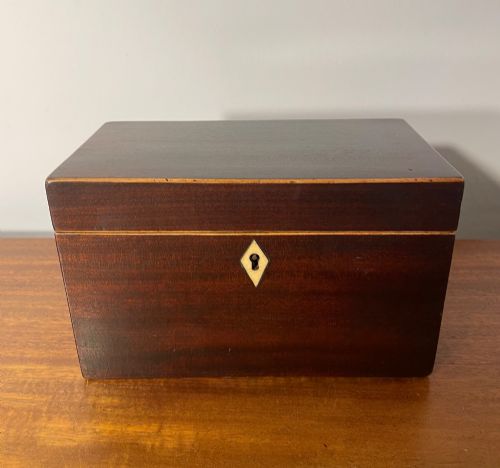
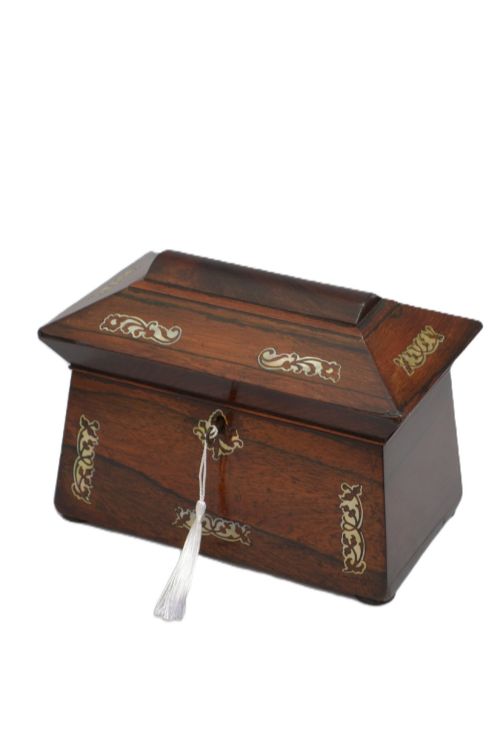
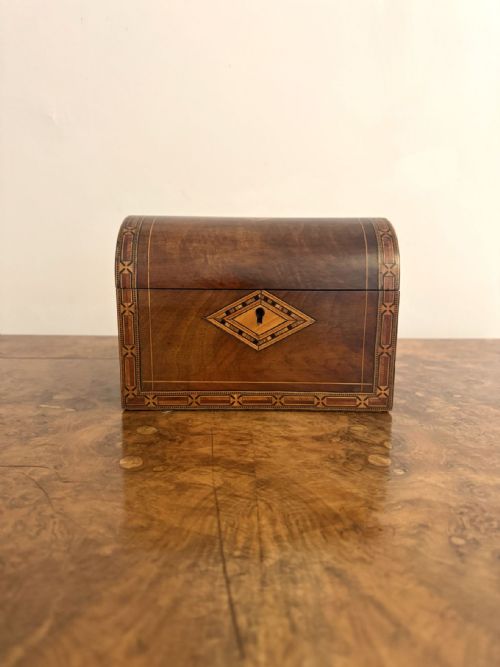
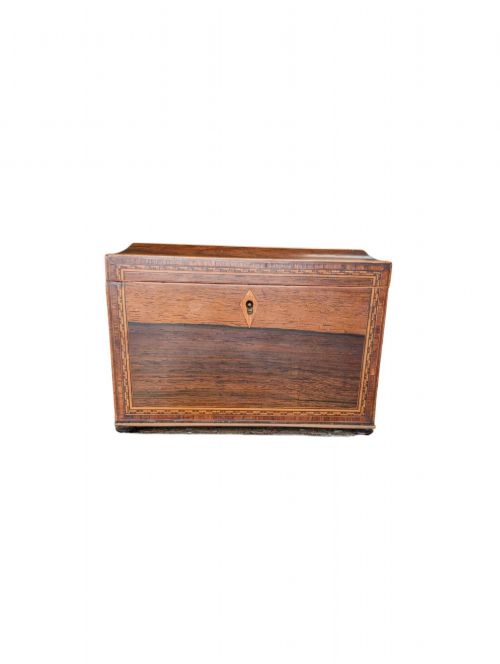
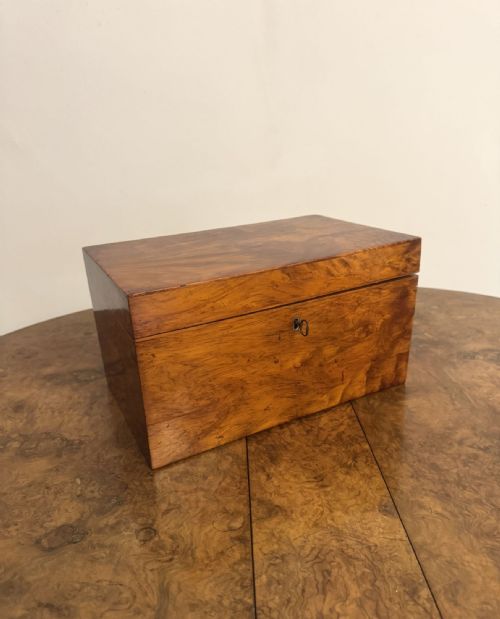
A 19th century wooden caddy encompasses a variety of lidded containers designed primarily for leaf storage, alongside related forms like teapoys and work boxes. Buyers inspecting this selection encounter pieces spanning the Georgian, Regency, and Victorian periods, often taking the shape of rectangular chests, sarcophagi, or domed receptacles.
The most common examples on this page utilise dense tropical hardwoods like rosewood and mahogany, frequently shaped into classical architectural profiles. Many incorporate internal compartments or mixing bowls made from cut glass, reflecting the ritual associated with dried leaves in period households.
Materials and construction
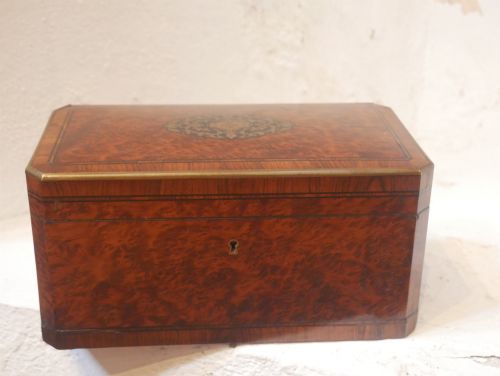
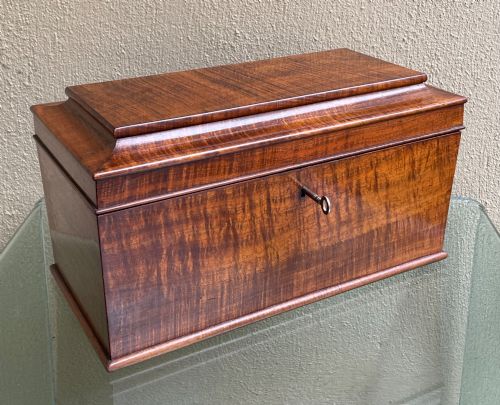
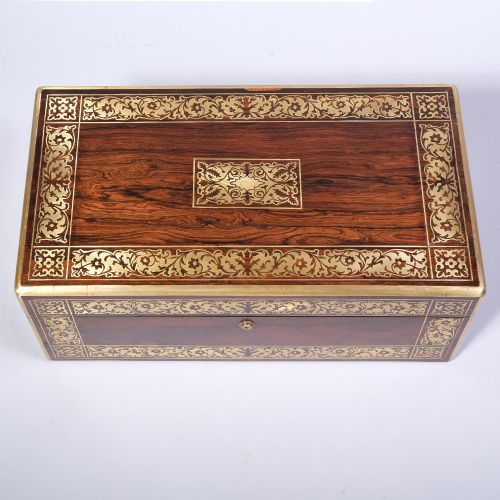
Cabinetmakers utilised timber like rosewood, mahogany, and walnut as structural foundations, often veneered onto secondary woods to display rich grain patterns such as flame figures. These surfaces were frequently enhanced with intricate parquetry, boxwood stringing, or brass inlay set flush into the grain.
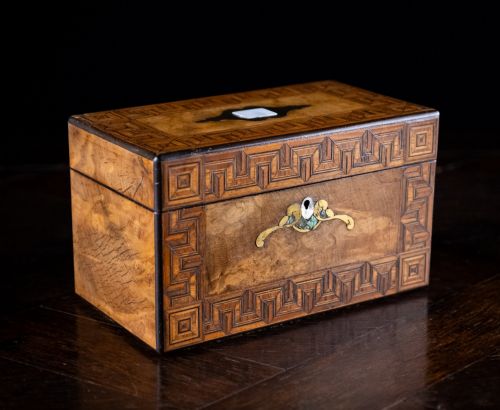
Specialised techniques such as Tunbridge inlay introduced tiny individual wood mosaic blocks to form pictorial scenes or geometric bands around the lids. Interiors often featured fitted wooden lids covering individual foil-lined compartments designed to preserve the contents.
Listings feature woods such as amboyna, coromandel, yew, and gonçalo alves alongside traditional mahogany and rosewood.
Assessing quality and execution
Quality separates standard production boxes from exceptional examples through the precision of the joinery and the selection of veneer figures. Superior pieces exhibit seamless mitred corners, perfectly balanced grain matching across lid panels, and intact original hardware such as working brass locks and lion mask handles.
The refinement of decorative embellishment dictates the standing of a piece within its period. Finely executed brass inlay, complex mother-of-pearl work, or detailed Tunbridge mosaic panels demonstrate superior workshop competency compared to plain timber surfaces with basic linear stringing.
Tahan Paris·Henry Hollamby
The 19th Century Wooden Caddy Glossary
- Sarcophagus form
- A box style featuring a stepped, sloping lid resembling an ancient stone coffin, popular during the Regency period. This architectural shape allowed makers to showcase continuous wood grains across multiple bevelled planes.
- Tunbridge ware
- A type of woodwork decorated with mosaics created from many tiny pieces of naturally coloured British and foreign timbers. These arrangements formed intricate geometric patterns or architectural views.
- Teapoy
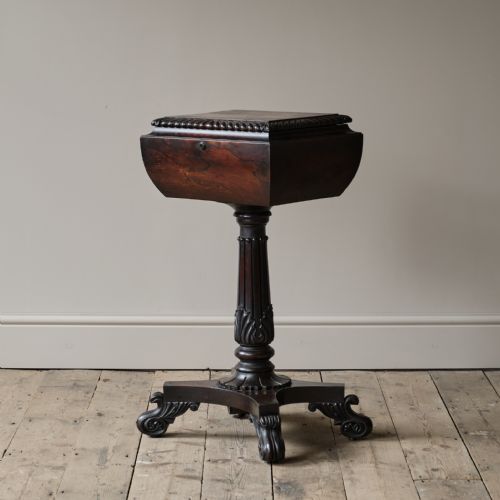
- A pedestal table or large freestanding box equipped with internal containers for storing leaf varieties. They frequently stood on central pillars with tripartite bases during the Regency and Victorian eras.
- Parquetry
- A geometric mosaic of wood pieces used for decorative veneer on floors and furniture surfaces. Makers utilised contrasting tones of satinwood, boxwood, and darker hardwoods to create three-dimensional optical effects.
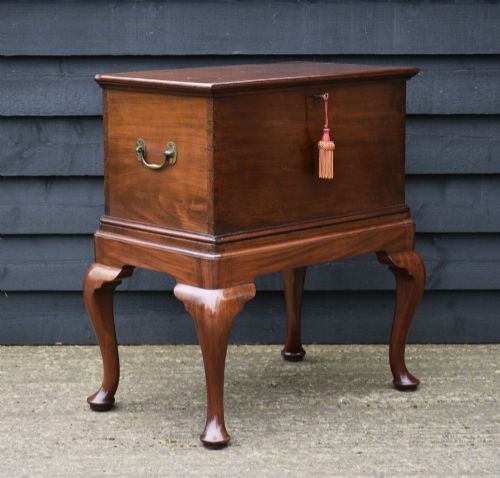
- Cellarette
- A lockable container or cabinet designed to hold bottles of wine and spirits safely. These sturdy pieces often featured lead-lined interiors or compartmentalised wooden inserts.
19th Century Wooden Caddy: Frequently Asked Questions
What were tea caddies used for?
These lidded boxes stored dry leaves securely under lock and key when supplies remained expensive commodities. Servants or homeowners dispensed measured amounts into teapots for daily consumption.
Interior compartments kept different leaf varieties separated, while central glass bowls often served as mixing receptacles for blending flavours before brewing.
How do I identify a Regency caddy?
Regency examples frequently display classical architectural silhouettes, including sarcophagus shapes, sarcophagus lids, and tapered rectangular bodies. Makers favoured dense exotic timbers like rosewood contrasted with bright brass inlay or delicate stringing.
Bun feet, ring handles, and lion maskes often punctuate the corners, reflecting the neoclassical taste prevalent during the early decades of the nineteenth century.
Are original keys usually included?
Original keys appear with some boxes, though many survived centuries of use without them due to normal displacement over generations. Locks remain fitted to the front edge, often featuring brass escutcheons set flush into the wood.
The presence of an operational lock adds historical completeness, but working mechanisms without period keys represent standard conditions for antique boxes.
How do I clean wooden caddies?
Maintenance requires gentle dusting with a dry, soft cloth to prevent abrasive particles from scratching vulnerable polished surfaces. Avoid liquid cleaners, modern polishes, or silicones that can penetrate aged veneer and degrade old finishes.
Occasional applications of microcrystalline wax help protect dry timber and maintain the natural sheen without harming historical patination.