




Vintage Tea Storage Chest
These vintage tea storage chest examples are timber and metal containers built to preserve dry leaves, offering tangible history for daily use.
Vintage Tea Storage Chest
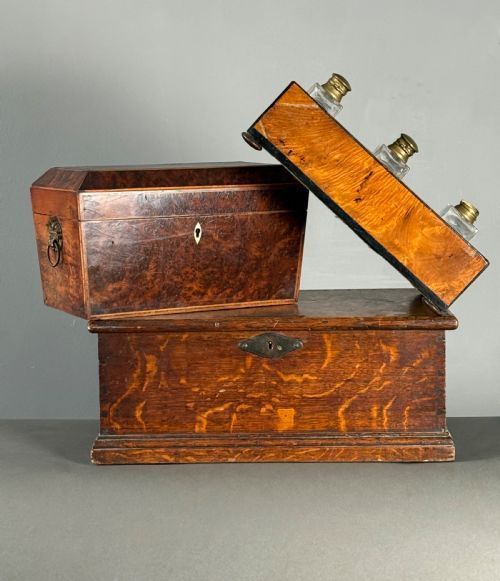
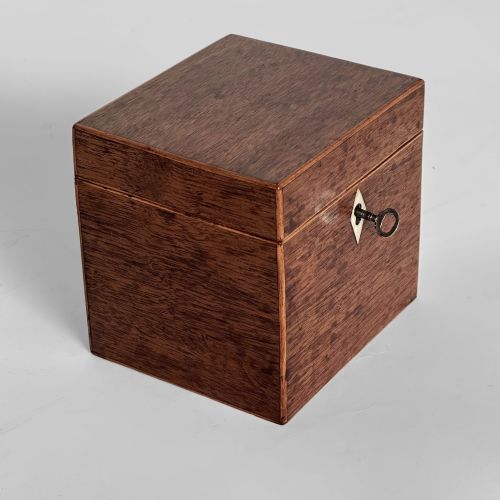
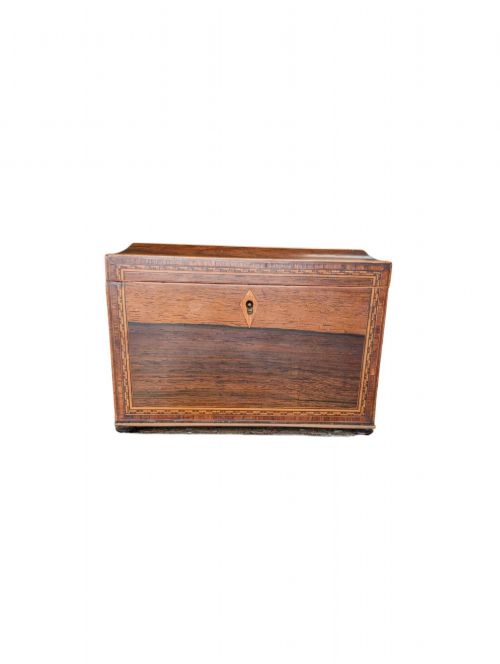
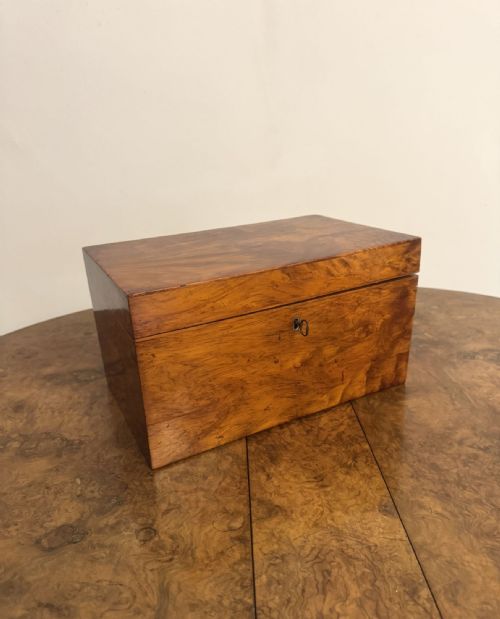
A vintage tea storage chest is primarily encountered on this page as a tea caddy, spanning periods from the 18th century and Georgian eras through to the Regency, Victorian, and Edwardian years. These timber boxes were originally designed to protect precious tea leaves under lock and key when tea was an expensive commodity.
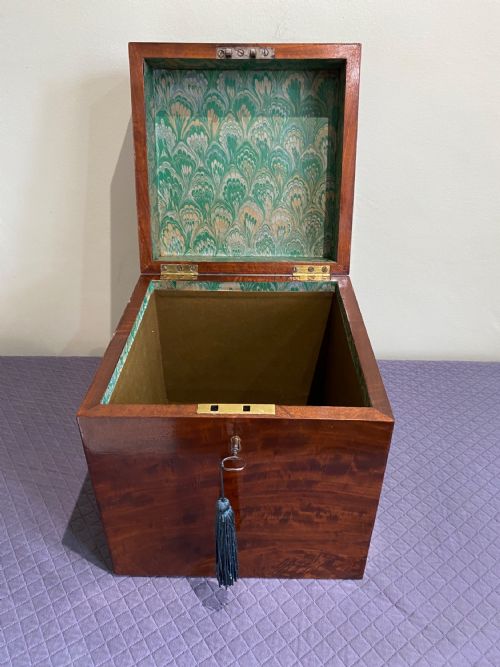
The forms range from simple rectangular wooden boxes to dome top shapes, cubes, and oval designs, sometimes housing dual compartments or metal canisters inside. Alongside standard timber tea caddies, related decorative boxes and decanter boxes appear within the selection.
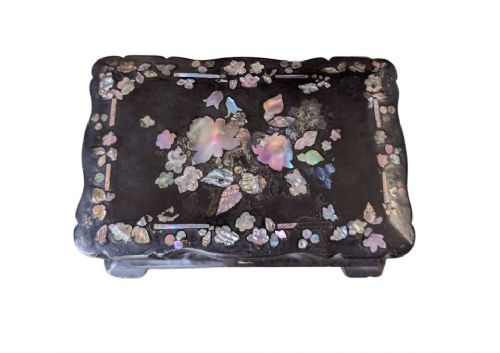
Originating predominantly from English workshops, these pieces reflect changing domestic habits across the 18th, 19th, and early 20th centuries. Buyers searching for a vintage tea storage chest will find numerous Georgian mahogany and Regency rosewood iterations alongside papier mâché and sterling silver variants.
How they were made
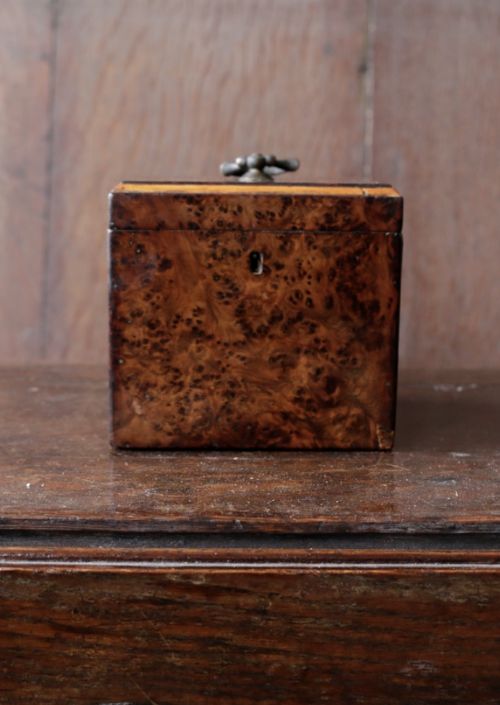
Cabinet makers constructed these pieces using dense hardwoods such as mahogany, rosewood, walnut, and yew, often selecting figured grains like burr maple, burr yew, and flame mahogany for visual impact. Tunbridge ware, partridge wood, satinwood, and papier mâché also feature prominently across the periods.
Decoration relied heavily on precise inlay work utilising boxwood, ebony, bone, mother of pearl, and brass details. Metal canisters, sterling silver fittings, and functioning keys completed the internal architecture of these storage chests.
Materials across these listings span mahogany, rosewood, walnut, satinwood, burr yew, papier mâché, sterling silver, bone, and mother of pearl.
What varies in quality
The choice of timber grain fundamentally separates standard utility boxes from exceptional pieces, with burr figures and matched veneers demanding superior craftsmanship. The intricacy of boxwood and ebony stringing or mother of pearl inlay indicates the maker's skill level.
Interior completeness, including original metal canisters, mixing bowls, and functional locking mechanisms with matching keys, elevates a specimen. The crispness of geometric inlays and the preservation of polished timber surfaces determine the tier of the piece.
The Vintage Tea Storage Chest Glossary
- Tea Caddy
- A box or chest originally built to store loose tea leaves securely. The term covers various timber and papier mâché forms from the Georgian and Victorian eras.
- Tunbridge Ware
- A type of woodwork characterised by mosaic patterns assembled from tiny pieces of naturally coloured wood. It creates detailed geometric or pictorial designs on small boxes.
- Stringing
- A narrow strip of contrasting timber inlaid into the surface of furniture or boxes to form a border. It is commonly seen in ebony or boxwood on mahogany surfaces.
- Papier Mâché
- A composite material made from paper pulp or layers of paper bound with glue, then moulded and lacquered. It provided a smooth dark surface suitable for mother of pearl inlay.
- Canister
- A small internal container, often made of metal, fitted inside a caddy to hold different varieties of tea separately.
Vintage Tea Storage Chest: Frequently Asked Questions
What is a vintage tea storage chest?
A vintage tea storage chest is a period box, commonly known as a tea caddy, created to hold and protect dry tea leaves. These containers date from the 18th century through the Victorian era.
They were essential household items when tea was a valuable commodity, featuring secure locks to restrict access to the precious leaves.
How were these chests used originally?
Wealthy households kept their loose tea locked inside these caddies to prevent theft by domestic staff. The mistress of the house typically kept the key on her person.
Many examples feature dual internal compartments or separate canisters to store different varieties of black and green tea side by side.
How do I date a wooden tea caddy?
Dating relies on observing timber choices, construction techniques, and decorative styles aligned with periods like Georgian, Regency, or Victorian. Mahogany and simple box forms frequently suggest 18th-century or Georgian origins.
More elaborate rosewood with brass inlay points toward the Regency period, whilst papier mâché with mother of pearl typically indicates mid-Victorian manufacturing.
Can I still use one for storing tea?
Many surviving chests retain clean wooden or metal interiors suitable for dry storage. However, collectors often use them to store small keepsakes, jewellery, or letters rather than consumable goods.
Checking the condition of the internal foil lining or metal canisters helps determine if modern storage is appropriate.
What woods were used for tea chests?
Cabinet makers utilised dense and decorative hardwoods including mahogany, rosewood, walnut, and yew. Exotic veneers like burr maple and satinwood appeared on higher-status pieces.
Details often incorporated contrasting timbers such as boxwood and ebony for stringing and geometric borders.