


19th Century Wooden Barrel
A 19th century wooden barrel brings honest utility and warmth into a room, serving as storage or an umbrella stand.
19th Century Wooden Barrel
A 19th century wooden barrel encompasses utilitarian vessels and storage pieces shaped from timber during the 19th Century, Victorian era, and Georgian periods. These containers served practical functions on farms, in homes, and aboard ships before finding a place in modern interiors.
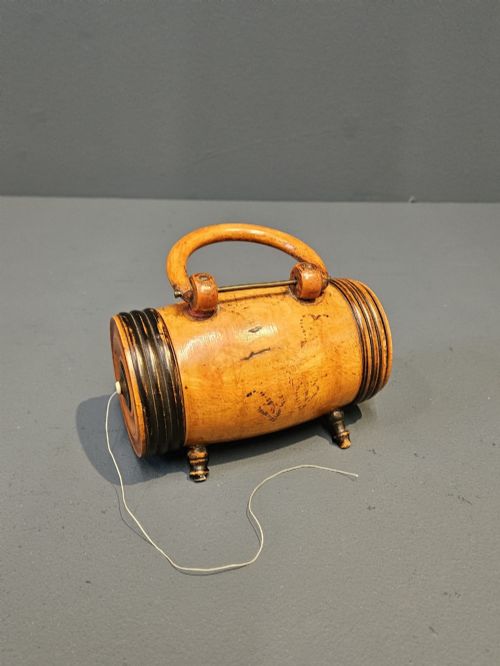
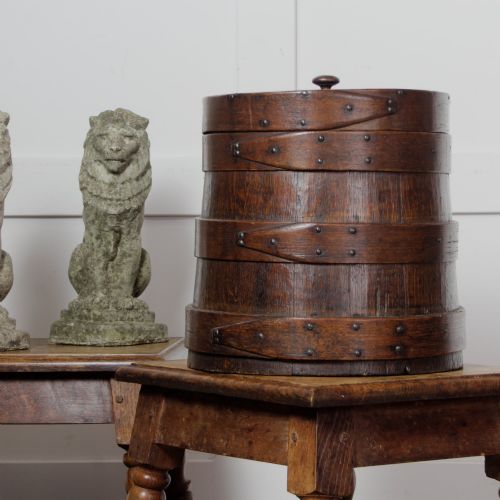
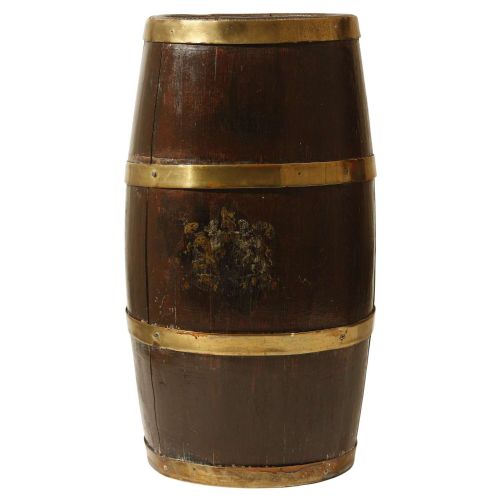
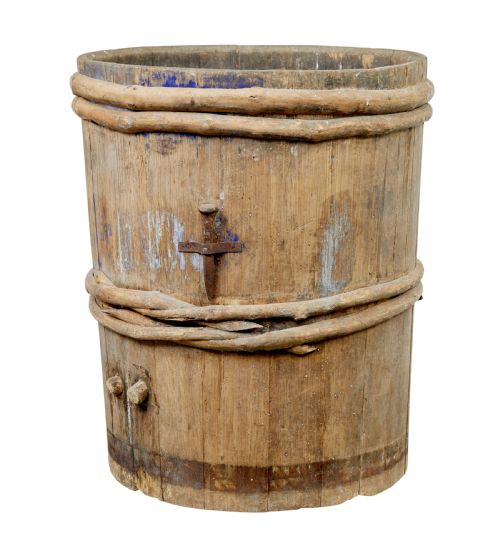
The versions most frequently met on this page include sturdy Scandinavian pine storage barrels, oak umbrella stands fitted with brass braces, and smaller treen items such as string holders and butter barrels. Hardwood and mahogany examples also appear alongside rustic country pieces.
Originating from English, Scandinavian, Dutch, and French workshops, these vessels display regional building traditions, ranging from heavy painted pine to polished hardwoods bound with iron or brass hoops.
Materials and construction
Coopers and joiners built these vessels using native and imported timbers, selecting oak, pine, mahogany, teak, hardwood, and sycamore for strength and grain pattern. Iron and brass bands were fitted tightly around the staves to hold the wooden sections secure under pressure.
Metal hardware including brass braces and iron hoops provided structural integrity while adding decorative contrast to the warm tones of the wood. Some domestic treen pieces were turned on a lathe from dense woods like lignum vitae.
Assessing quality in 19th century wooden barrels
Quality rests upon the integrity of the original construction, the tightness of the cooperage, and the survival of the original metal mounts and surface finishes. Superior pieces retain their original brass or iron bindings and show careful jointing of the staves.
Condition varies according to historical working use, with domestic items often bearing softer patination while utilitarian storage vessels display the marks of heavy agricultural or maritime service. Untouched surfaces and original patination elevate the standing of a piece.
The 19th Century Wooden Barrel Glossary
- Cooper
- A craftsman who builds wooden wooden barrels, tubs, and vats using staves and metal or wooden hoops. These makers used traditional hand tools to shape each stave so the vessel held liquids or dry goods.
- Stave
- One of the narrow vertical blocks of wood that form the sides of a barrel. Staves are bevelled at the edges to fit closely together and curve outward at the centre.
- Treen
- Small handmade wooden household objects such as string holders, nutmeg graters, and small barrels. The word derives from old English meaning tree or wood.
- Butter barrel
- A small wooden vessel used historically for churning, storing, or transporting butter. These items often feature tight cooperage and secure lids.
19th Century Wooden Barrel: Frequently Asked Questions
What were wooden barrels used for in the 19th century?
These vessels stored dry goods, grains, butter, and liquids in domestic kitchens, farmhouses, and commercial trade environments.
Larger examples functioned as storage bins or were adapted into umbrella and stick stands for hallways.
How do I care for a 19th century wooden barrel?
Keep wooden pieces away from direct heat sources and sudden temperature changes to prevent the timber and staves from drying out and shrinking.
Dust with a dry cloth and occasionally apply a neutral beeswax to nourish the historic wood surface.
How do I tell Scandinavian pine barrels apart from English ones?
Scandinavian pieces frequently display characteristic painted surfaces, pale pine timber, and robust rustic construction traditions.
English variants more commonly utilise oak or mahogany, often enhanced with brass bands and armorial details.
Are all 19th century barrels waterproof?
Most antique barrels offered today served dry storage or decorative purposes and may no longer hold liquids securely due to historic wood movement.
Buyers should treat them as decorative storage vessels or umbrella stands rather than functional liquid containers.