
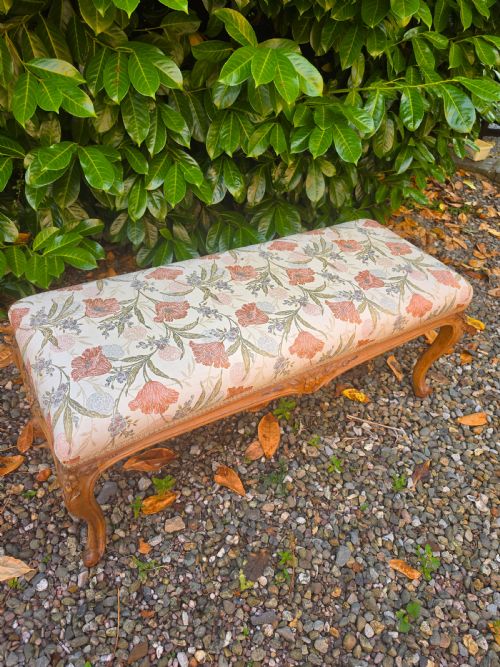
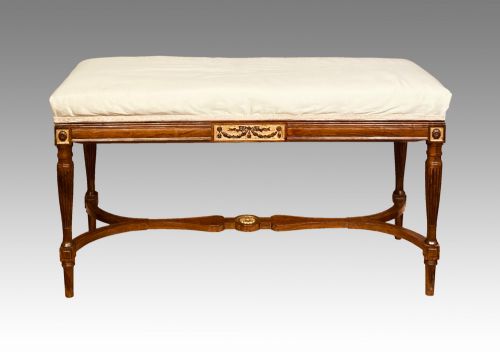
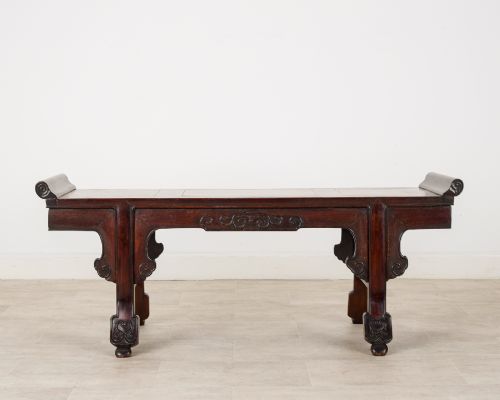
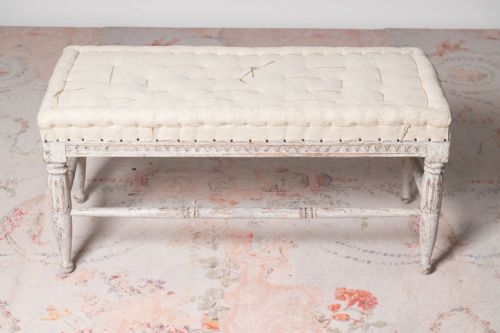


19th Century Window Stool
These 19th century window stool pieces offer architectural long seating designed for light and utility.
19th Century Window Stool
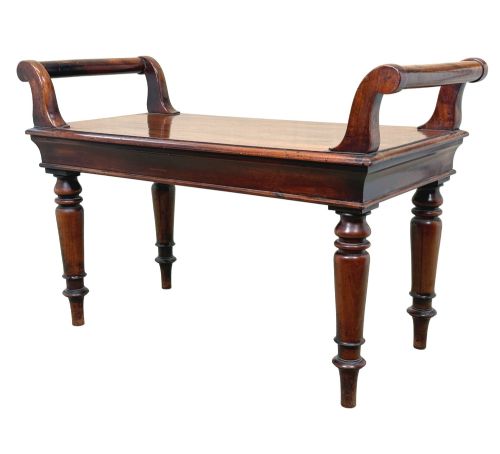
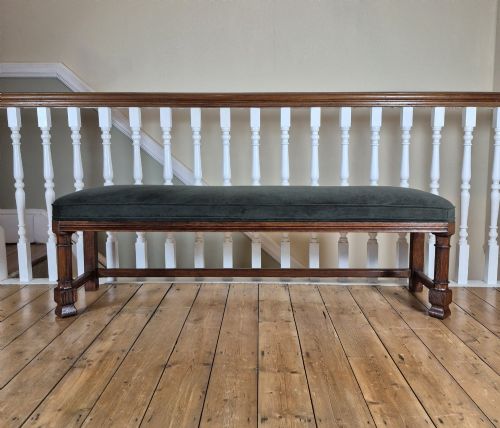
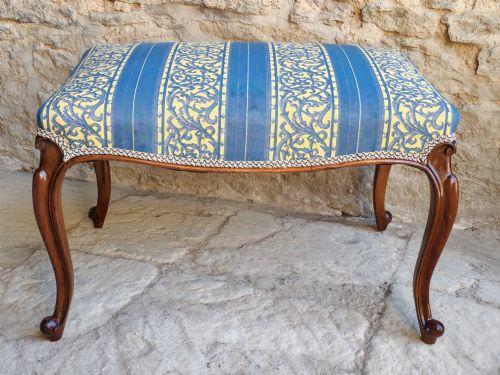
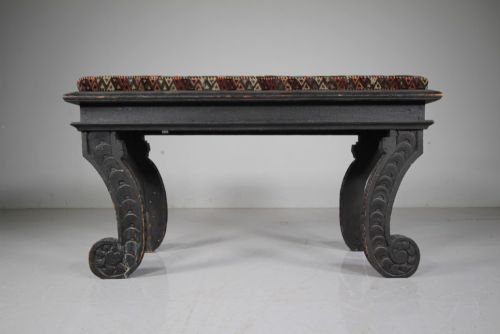
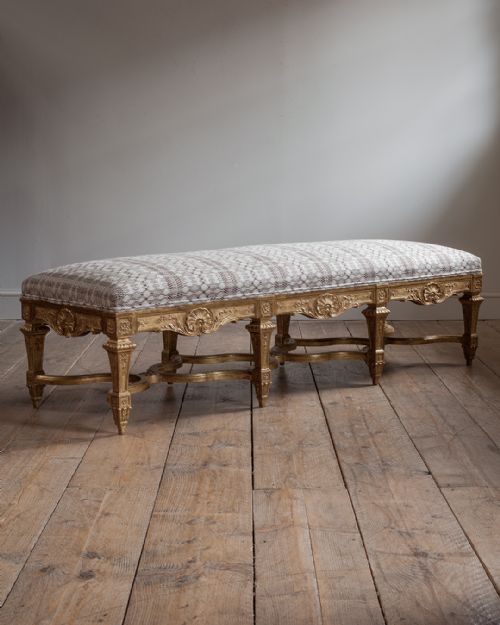
A 19th century window stool sits low and elongated to fit beneath sills or fill hallway corridors. The selection ranges from compact dressing stools to expansive window seats, benches, and ottomans spanning the Victorian, Regency, and Georgian periods.
Makers across England, France, Italy, Sweden, and China shaped these seats to serve as dressing furniture, hall benches, or music stools. Pieces adopt historical idioms including Gothic Revival, Louis XIV Revival, Rococo Revival, and Biedermeier.
Woods and Upholstery
Carpenters constructed frames in solid mahogany, walnut, rosewood, oak, satin birch, and painted pine. Decorative highlights involve burr maple, burr elm, giltwood, and parcel gilt finishes, supplemented by brass mounts.
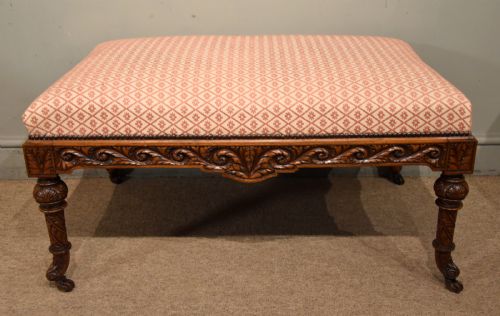
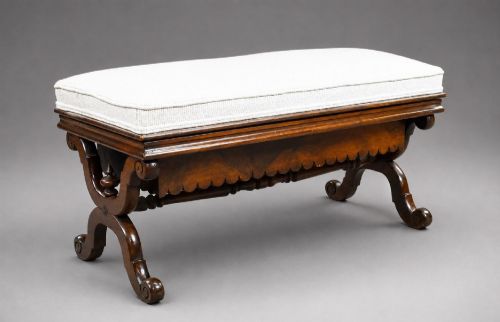
Upholstered versions rely on horsehair and calico beneath top layers of fabric, velvet, or cane seating. Wood carvers shaped structural members with cabriole legs, X frames, or turned supports.
The selection includes mahogany, walnut, rosewood, and oak spanning the Victorian, Regency, and Georgian eras.
Craft and Proportion
Quality rests in the precision of the timber carving and the integrity of the frame construction. Solid hardwoods and nuanced hand-carved detailing distinguish superior examples from plain utility seating.
Proportion and scale dictate desirability, where balanced long benches and matched pairs command greater attention than isolated fragments. The execution of revival styles reveals the competency of the workshop.
Charles Nosotti·James Shoolbred & Co·Gillows
The 19th Century Window Stool Glossary
- X Frame
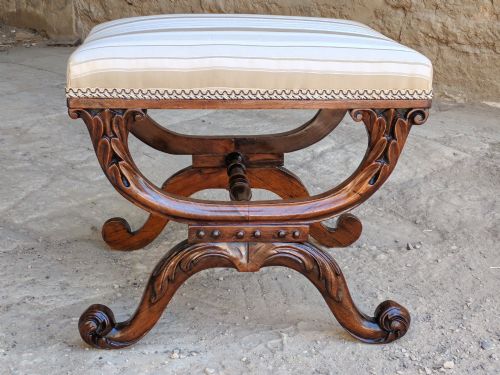
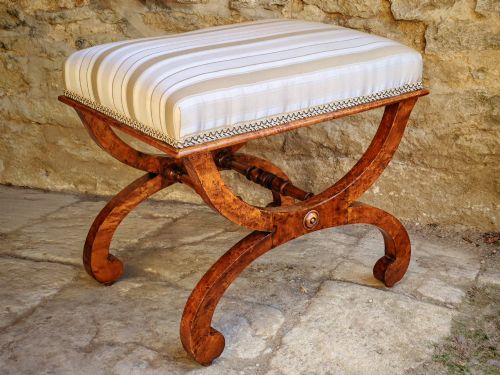
- A stool or bench supported by intersecting diagonal legs forming an X shape. This ancient form gained popularity during the Regency and Empire periods.
- Giltwood
- Timber coated with a thin layer of gold leaf. This finish appears frequently on formal French and English revival seating.
- Horsehair
- A traditional upholstery stuffing material woven from equine tail hair. It provides firm, durable support inside period seats.
- Caning
- Woven rattan strips forming openwork seat panels. This technique lightened the visual weight of large wooden benches.
19th Century Window Stool: Frequently Asked Questions
Where were window stools placed?
These long seats sat directly beneath tall parlour and drawing room windows to provide low seating without blocking natural light. Owners also positioned them along wide hallways and at the foot of large beds.
Their elongated proportions allowed occupants to recline or converse comfortably while enjoying garden views from the casement.
How do I identify a Regency window stool?
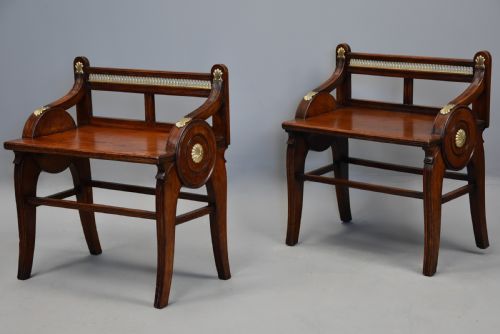
Regency examples display classical restraint, often utilising dark mahogany or rosewood with saber legs and restrained brass inlays. Their silhouettes draw inspiration from ancient Greek and Roman furniture.
Later Victorian interpretations abandoned this strict classicism in favour of heavier carved walnut and exuberant revival ornamentation.
What is an X frame stool?
An X frame stool uses crossing diagonal stretchers or legs that create an architectural cross beneath the seat. This ancient structural form returned to fashion during the early nineteenth century under Empire and Regency influences.
Such pieces frequently feature giltwood or carved mahogany finishes intended for formal reception rooms.
Can I use these seats daily?
Solid hardwood frames and sturdy joinery make these pieces suitable for regular use in modern hallways and living spaces. Traditional upholstery methods utilise durable horsehair and calico foundations built to withstand decades of sitting.
Careful placement away from direct heat sources preserves the antique timber and delicate surface finishes.