




Carved Oak Stool Bench
These carved oak stool bench examples bring centuries of sturdy seating and rich grain into a home.
Carved Oak Stool Bench
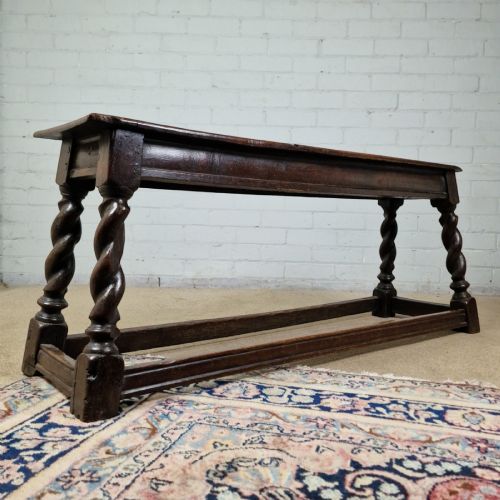
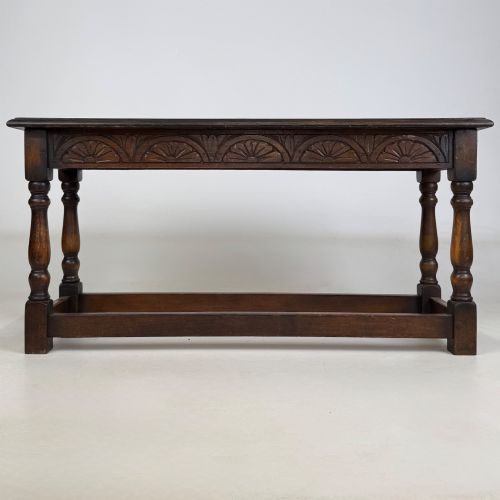
When searching for a carved oak stool bench, buyers encounter a diverse selection ranging from seventeenth-century joint stools to nineteenth-century Gothic revival window seats. The forms span small footstools, long hall benches, piano stools and rustic milking seats shaped from solid timber. Most pieces available combine functional seating with decorative carving, often reflecting Jacobean, Carolean or Victorian design influences.
The nineteenth-century interpretations dominate the selections, frequently adopting Gothic or Arts and Crafts manners alongside vernacular styles. Many examples serve multiple roles, functioning as window seats, hall benches or low footboards within traditional interiors. Buyers frequently find pieces featuring pegged construction, upholstered tops in red damask or velvet, and structural details such as brass mounts or cane webbing.
Materials and construction methods
The primary material across the selections is solid oak, frequently paired with secondary woods like elm and burr elm for seats and structural panels. Makers utilised traditional joinery, including pegged construction and joint stool framing, to ensure durability without relying on metal fixings. Decorative elements rely heavily on hand carving, manifesting as linenfold panels, geometric strapwork, or exuberant baroque motifs.
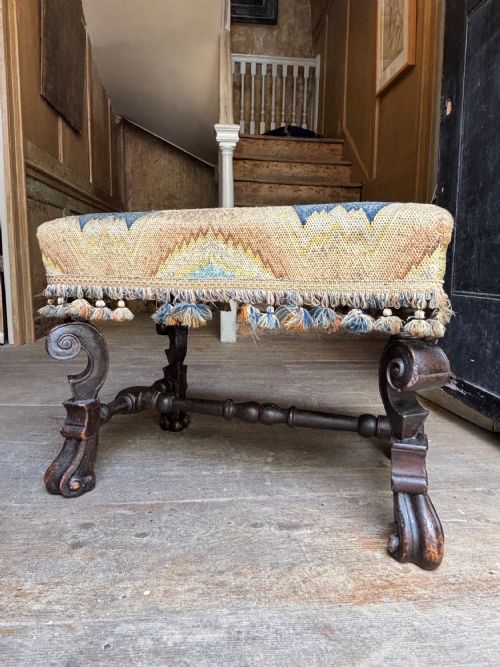
Upholstered variations incorporate fabric, leather, tapestry, or red damask fixed to frames with brass mounting. Caned panels also appear on footstools and longer seating forms, adding texture alongside the carved timber. Surface finishes range from natural scrub oak to polished dark patinations developed over centuries of use.
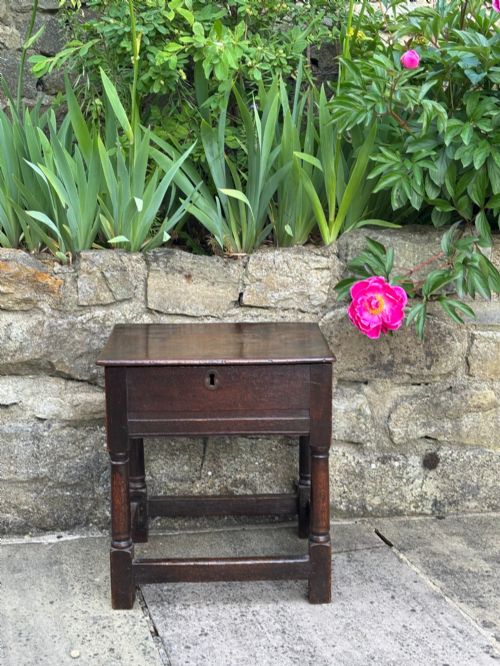
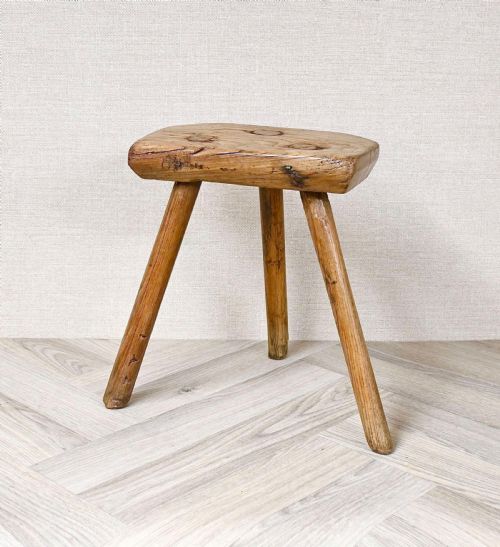
A diminutive vernacular stool c.1800 proves that even historical carpenters understood the simple joy of a smoothly sculpted, rounded seat.
Evaluating quality and execution
Quality in a carved oak stool bench rests upon the crispness of the hand carving and the integrity of the original timber frame. Pieces executed in the seventeenth or eighteenth centuries often display deep, confident chisel work and stable pegged joints that have survived centuries of daily use. Lesser examples might show mechanical uniformity in their decoration or later alterations to their original form.
The choice of secondary timbers and secondary materials, such as heavy brass mounts or fine damask upholstery, elevates the standing of a piece within its period. Proportion and structural balance also separate utilitarian vernacular items from ambitious cabinetmaker productions designed for formal halls and libraries.
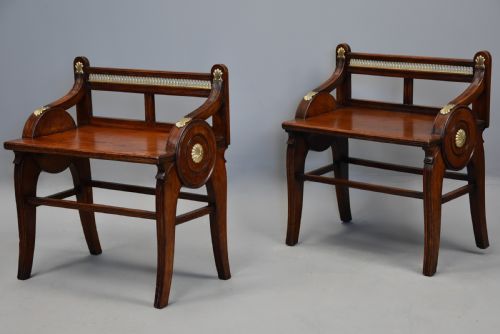
James Shoolbred & Co
The Carved Oak Stool Bench Glossary
- Joint stool
- A sturdy wooden stool constructed with mortise and tenon joints held together by wooden pegs rather than glue. These domestic items formed the primary seating in early households.
- Carolean
- Pertaining to the reign of King Charles II, characterising furniture styles featuring exuberant baroque forms, rich carving, and scrolling motifs. This period followed the Restoration.
- Plank stool
- A primitive form of seating constructed from thick planks of timber joined simply at the base, often associated with rustic vernacular traditions.
- Vernacular
- Everyday utilitarian furniture made by local country joiners using regional materials and traditional methods, rather than following high London fashion. These pieces prioritize function and local utility.
- Reformed Gothic
- A nineteenth-century design movement promoting simplified, honest medieval forms over ornate revivalism, often associated with figures like Augustus Pugin.
Carved Oak Stool Bench: Frequently Asked Questions
What is the difference between a joint stool and a bench?
A joint stool is a compact, four-legged seat built with pegged mortise and tenon joinery designed for single occupancy. These pieces originated as sturdy household seating before the widespread use of chairs.
A bench provides a longer surface to accommodate multiple people or serves as a window seat. Benches often incorporate backrests, arms, or longer upholstered pads tailored for hallways and reception rooms.
How do I identify a 17th-century oak stool?
Seventeenth-century examples typically feature heavy oak timber with dark natural patination, hand-cut pegged joints, and characteristic Jacobean or Carolean chip carving. The construction relies entirely on traditional joinery without modern metal screws.
Experts look for signs of genuine wear on the footings and hand-planed board surfaces that confirm age. True period pieces possess a substantial weight and structural rigidity rooted in early carpentry.
Where should I place a carved oak bench at home?
Carved oak benches suit narrow hallways, entryways, and landings where their narrow profiles provide practical seating without obstructing walkways. They also function well beneath living room windows as low window seats.
Pairing a historic oak bench with neutral walls and natural light highlights the carved details and deep wood grain. They also serve effectively as decorative surfaces for displaying textiles or cushions.
What is Reformed Gothic style furniture?
Reformed Gothic furniture emerged in the nineteenth century as an interpretation of medieval design emphasising structural honesty and flat linear carving. This movement moved away from excessive ornamentation in favour of simplified architectural forms.
Parks of this style often feature chamfered edges, exposed pegged joints, and geometric patterns inspired by ecclesiastical architecture.