



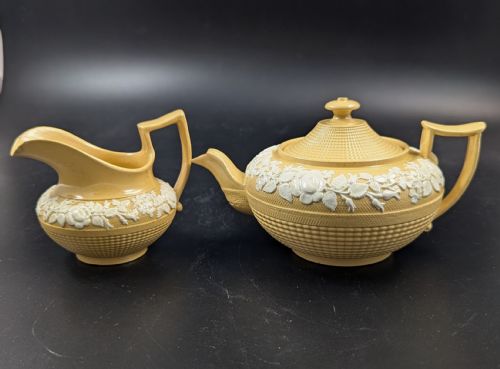


19th Century Wedgwood
These pieces of 19th century wedgwood bring enduring ceramic artistry and classical form into your home.
19th Century Wedgwood
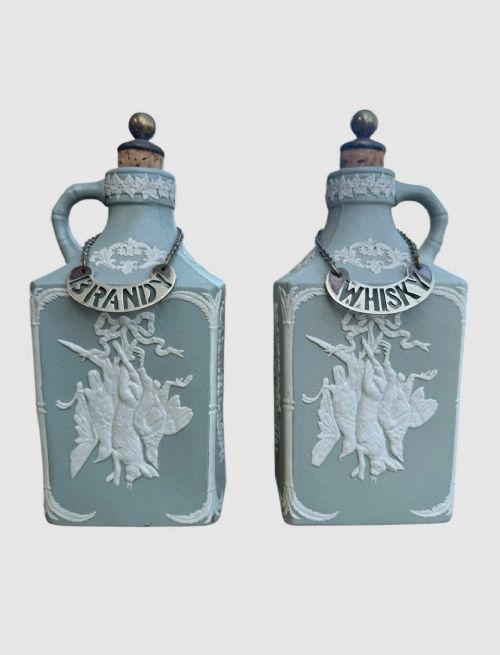
When you search for 19th century wedgwood, you are looking at a diverse selection of ceramic objects spanning earthenware, stoneware, and jasperware from the Georgian, Victorian, and Regency periods. The forms range from utilitarian kitchenalia like game pie dishes and jelly moulds to decorative tea sets, dessert services, and spirit flagons.
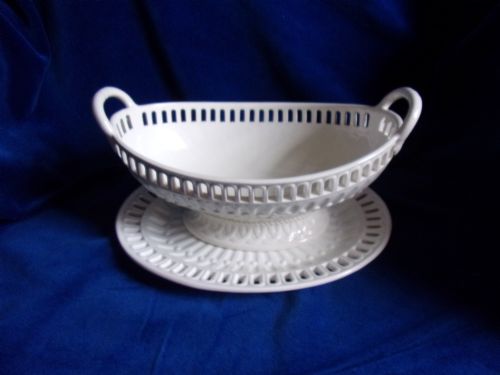
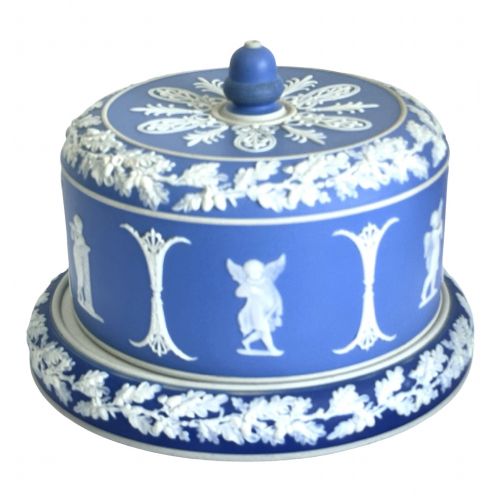
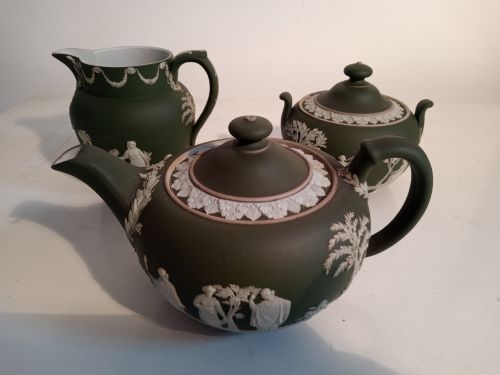
You are most likely to meet iconic jasperware items such as cheese domes and teapots, alongside Majolica dessert services and creamware pieces. These items bridge the gap between functional household wares and ornamental cabinet pieces.
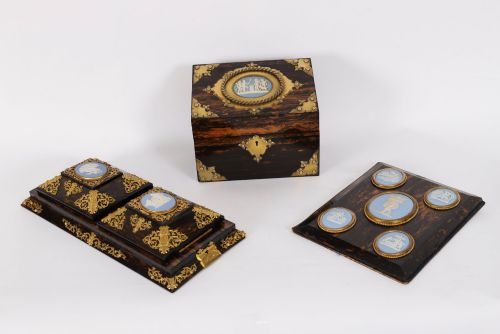
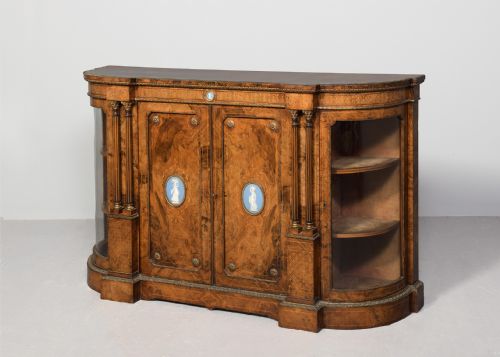
The material evidence encompasses not only ceramics and glazes but also pieces mounted in or combined with ormolu, amboyna, ebonised wood, and giltwood, reflecting the broad output of the potteries across the century.
Materials and Techniques
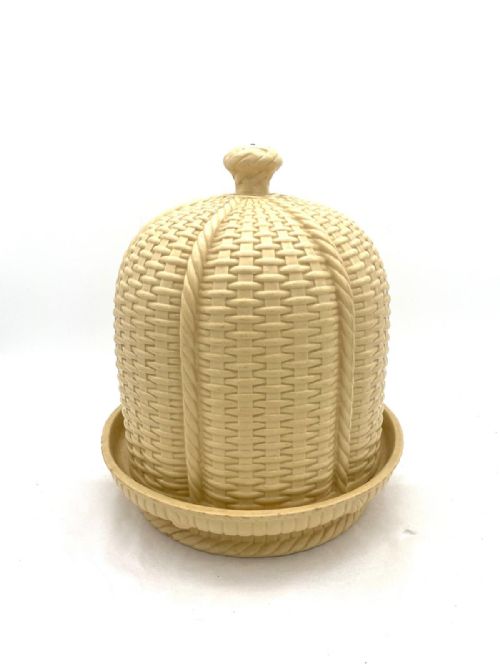
Potters utilised a range of foundational bodies, including creamware, drabware, caneware, and black basalt, shaping them into complex forms such as basket weave cheese dishes and kidney-shaped writing tables. The application of white stoneware figures and reliefs onto blue or green jasperware required precise hand-modelling and attachment.
Surface decoration involved hand-painted details, transfer printing, and specialised majolica glazes that imparted rich colour and glossy depth to dessert services and game tureens.
19th Century Wedgwood Retail Price Guide 2026
Typical asking prices for 19th century wedgwood among the pieces listed under this phrase on Sellingantiques today, from the lower quarter to the upper quarter. They describe what is for sale here now, not the wider market.
A wild boar mould hides among the kitchenware, ready to turn supper into a woodland adventure.
Assessing Quality and Execution
Quality rests upon the crispness of the moulded relief work and the subtlety of the colour saturation in jasperware and majolica glazes. Sharp, well-defined edges on classical motifs distinguish finer output from softer, worn impressions.
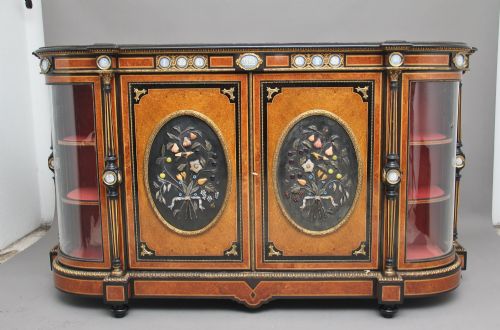
The integration of ceramics into larger decorative schemes, such as writing desks with inset plaques or credenzas, demonstrates the tier of craftsmanship involved in mounting and cabinetry.
Thomas Allen Design
The 19th Century Wedgwood Glossary
- Jasperware
- A fine-grained, unglazed stoneware developed by Josiah Wedgwood, most commonly found in blue or green with applied white classical reliefs. It relies on metallic oxides for its distinctive background colours.
- Caneware
- A buff-coloured, fine earthenware resembling the colour of bamboo or light biscuit, frequently utilised for utilitarian kitchenware like game pie dishes. This body offers both durability and a refined matte texture.
- Majolica
- A heavy earthenware pottery covered with an opaque tin glaze and painted with rich coloured metallic oxides. It achieved immense popularity in the Victorian era for serving dishes and tureens.
- Drabware
- A dull, brownish-grey earthenware body produced in the nineteenth century for domestic wares. It provides a neutral, understated backdrop for moulded basket weave patterns.
- Basalt
- A dense, fine-grained black stoneware that requires no glaze, taking its dark colour from iron and manganese oxides. It was frequently cast into vases, flower pots, and lidded sucrier pots.
19th Century Wedgwood: Frequently Asked Questions
What is 19th century jasperware?
Jasperware is an unglazed vitreous ceramic developed by the Wedgwood potteries, characterised by contrasting coloured backgrounds and applied white neoclassical reliefs. The material gained widespread fame for its matte finish and cameo-like decorative effect.
Items ranged from small trinket boxes and match holders to large cheese domes and tea sets, all showcasing intricate moulded details that mirror classical sculpture and architectural motifs.
How do I care for antique ceramic items?
Antique ceramics require gentle handling and should be washed by hand in lukewarm water with mild soap when necessary, avoiding harsh scrubbing or dishwashers. Keeping them away from direct sunlight protects any hand-painted decoration or gilt highlights from fading.
Displaying pieces on stable surfaces prevents accidental knocks, particularly for items with delicate applied reliefs or integrated ormolu and wooden mounts.
How are different periods identified?
Periods are distinguished by stylistic shifts, changes in ceramic body recipes, and factory marks. Pieces from the early nineteenth century often reflect Regency and Georgian neoclassical tastes, while later Victorian items embrace ornate majolica and Aesthetic Movement influences.
Examining the base for impressed factory stamps, pattern names, or registration marks helps narrow down the production decade within the broader nineteenth-century span.
What were game pie dishes used for?
Game pie dishes were lidded ceramic vessels designed to bake and serve meat pies at the Victorian dining table. The thick caneware or earthenware bodies helped retain heat and moisture during the cooking process.
Many featured elaborate moulded decoration, such as animal motifs, game birds, or rustic basket weave patterns, making them as decorative as they were functional for grand feasts.