



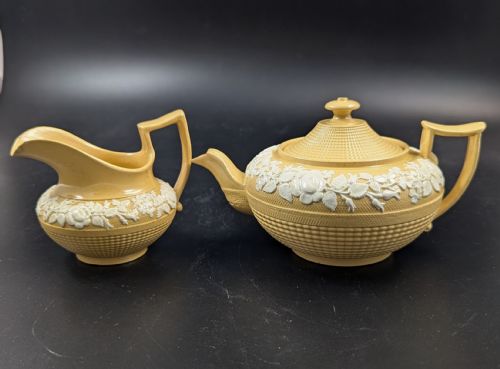


19th Century Wedgwood Stoneware
These 19th century wedgwood stoneware pieces bring distinct Victorian utility and Neoclassical relief to a table, offering durable ceramic forms that collectors prize for their crisp mouldings.
19th Century Wedgwood Stoneware
When buyers search for 19th century wedgwood stoneware, they encounter a range of functional and decorative ceramic objects spanning tea sets, serveware, and table dishes. These pieces reflect the high standards of nineteenth-century British production, utilising dense bodies that resist wear.
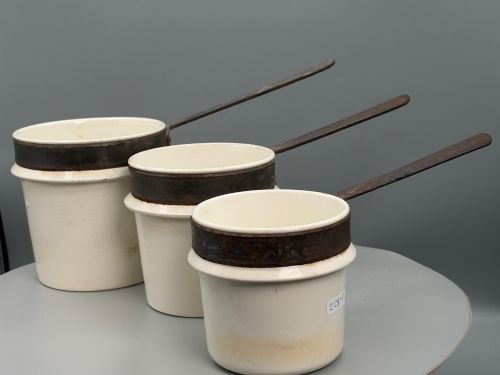
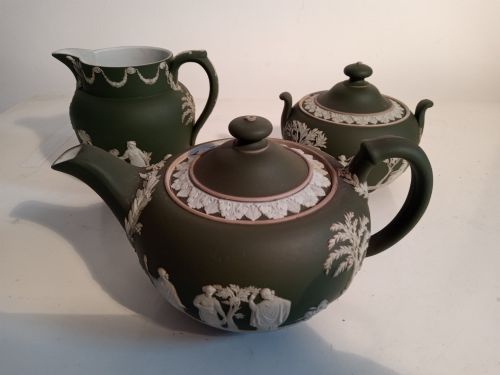
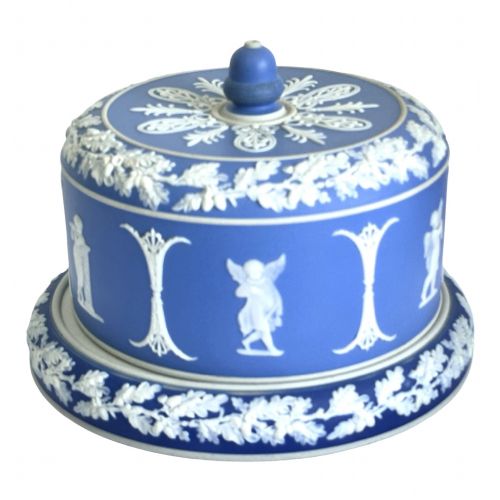
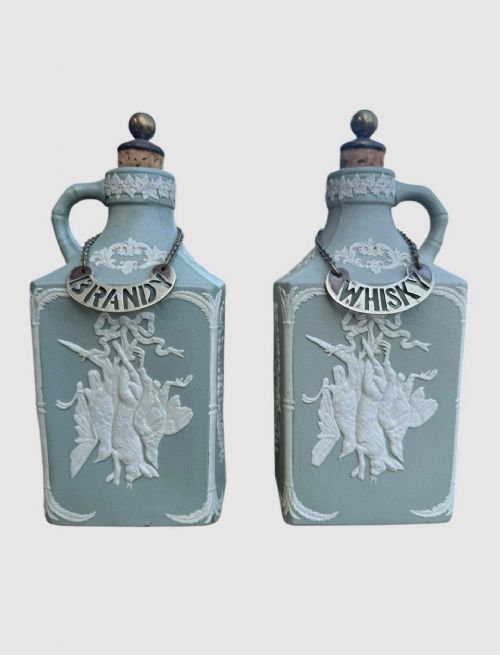
The selections available here emphasise tableware and display items, notably cheese domes, spirit flagons, and game pie dishes. Most common are the blue and olive green jasperware iterations, alongside crisp caneware and white stoneware variants.
Originating across the Victorian era and earlier nineteenth-century decades, these objects often incorporate metal or cork elements alongside the ceramic body. Buyers find both miniature teapots and large proportions suited for varied display contexts.
Materials and construction methods
Makers utilised dense ceramic compositions including standard stoneware, jasperware, caneware, buff stoneware, and earthenware. These bodies were shaped into complex domestic forms such as teapots, decanters, and trinket boxes.
Decorative surfaces often rely on applied contrasting reliefs in the Neoclassical taste, associated with styles like those of W. Hackwood. Additional components such as cork and metal fittings complete functional items like spirit flagons.
19th Century Wedgwood Stoneware Retail Price Guide 2026
Typical asking prices for 19th century wedgwood stoneware among the pieces listed under this phrase on Sellingantiques today, from the lower quarter to the upper quarter. They describe what is for sale here now, not the wider market.
Even a humble cheese dome receives grand Neoclassical treatment here.
Assessing quality in 19th century wedgwood stoneware
Quality rests upon the crispness of the moulded relief work and the evenness of the coloured body. Pieces with sharply defined figures and clean separation between ground and applied motifs sit at the upper end of the scale.
The integrity of larger forms, such as substantial cheese domes and game pie dishes, depends on successful firing without warp or distortion. Finer details in the finishing of spouts, handles, and metal or cork additions further distinguish superior examples.
Wedgwood
The 19th Century Wedgwood Stoneware Glossary
- Caneware
- A yellowish, buff-coloured stoneware resembling the tone of bamboo or unbleached flour, frequently utilised for kitchen and tableware items like game pie dishes. It offers a warm alternative to standard white ceramics.
- Spirit flagon
- A ceramic container designed for holding alcoholic beverages, often fitted with metal or cork stoppers. In nineteenth-century examples, these are frequently rendered in jasperware.
- Game pie dish
- A covered ceramic vessel specifically shaped for baking and serving meat pies, usually ornamented with moulded animal or plant motifs. These large serveware pieces often include matching liners or domes.
- Buff stoneware
- A sturdy, pale brownish-yellow ceramic body fired at high temperatures. This material provides the structural strength needed for heavy kitchen and dining serveware.
19th Century Wedgwood Stoneware: Frequently Asked Questions
What pieces are included in 19th century wedgwood stoneware?
The category encompasses a wide selection of utilitarian and decorative items. Common forms include teapots, tea sets, spirit flagons, trinket boxes, and large serveware like cheese domes and game pie dishes.
Materials range from classic blue and olive green jasperware to caneware, white stoneware, and buff stoneware. Many items incorporate subsidiary elements like metal or cork.
How were these stoneware items used originally?
These ceramics served practical daily functions in nineteenth-century dining and domestic life. Teapots and creamers facilitated tea service, while spirit flagons held liquors for the table or sideboard.
Larger vessels such as game pie dishes and cheese domes were functional kitchen and dining roomware designed for presenting preserved meats and cheeses during formal meals.
How should I live with 19th century wedgwood stoneware?
These durable ceramic pieces integrate well into traditional and contemporary interior displays, whether grouped on open shelving or utilised within a dining setting. Because many are historic domestic objects, gentle hand washing preserves their delicate surface reliefs.
Placing them away from heavy foot traffic protects protruding handles, spouts, and fitted lids on items like miniature teapots and decanters.
How do I distinguish periods and styles within this group?
Dating relies on stylistic markers and specific production details recorded across the nineteenth century. Pieces often exhibit Victorian or Georgian Neoclassical influences, characterised by formal symmetry and classical figures.
References to specific makers or named styles, such as W. Hackwood, provide further context alongside stamped dates or specific colour palettes like olive green and dark blue.