
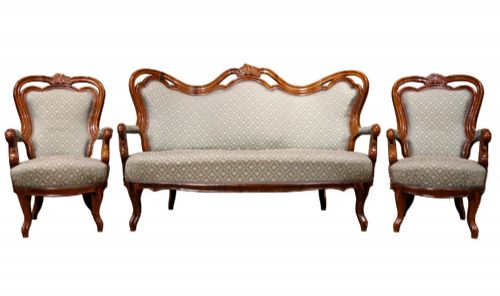


19th Century Walnut Settee
A 19th century walnut settee brings rich wood grain and period character to a drawing room, offering comfortable seating rooted in historic design.
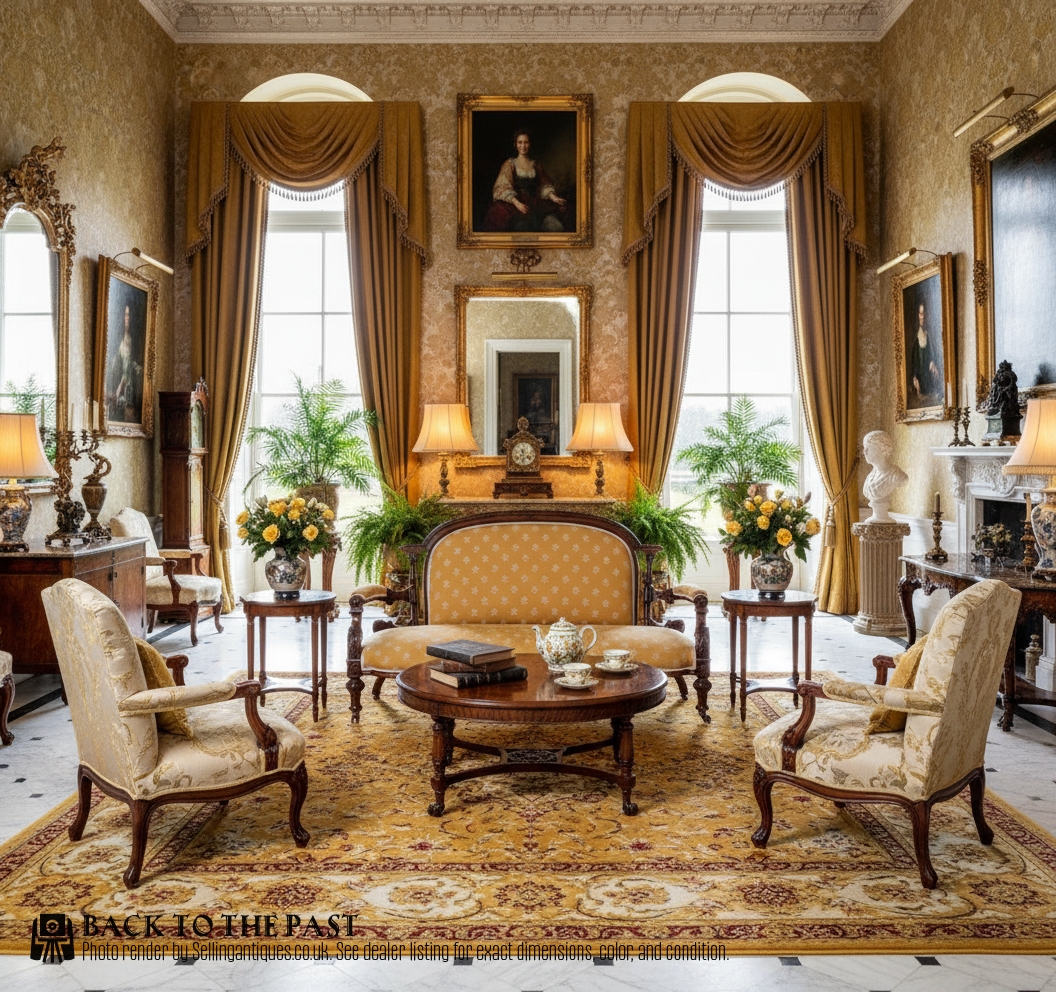
19th Century Walnut Settee
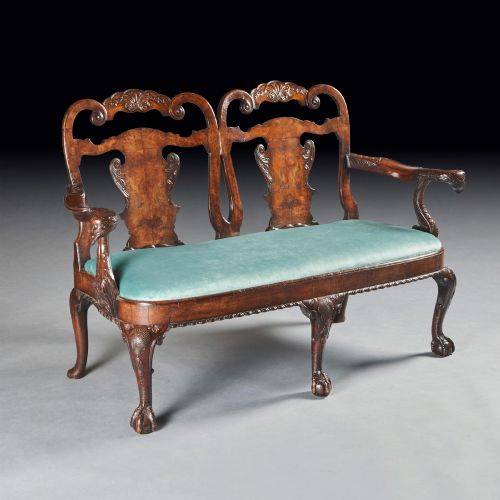
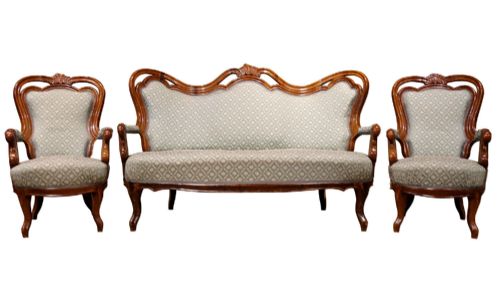
A 19th century walnut settee encompasses large seating options designed for formal reception rooms, including multi-piece salon suites, twin chair back sofas, and double end settees. These pieces date from various decades across the nineteenth century, showing stylistic influences ranging from Rococo Revival and Baroque Revival to Aesthetic Movement and Georgian Revival.
Buyers will encounter single settees alongside larger furniture groups, such as eleven-piece drawing room suites and three-piece salon sets that include matching chairs and footstools. Continental origins appear frequently, alongside French canapés, Italian hall seats, and Dutch marquetry models.
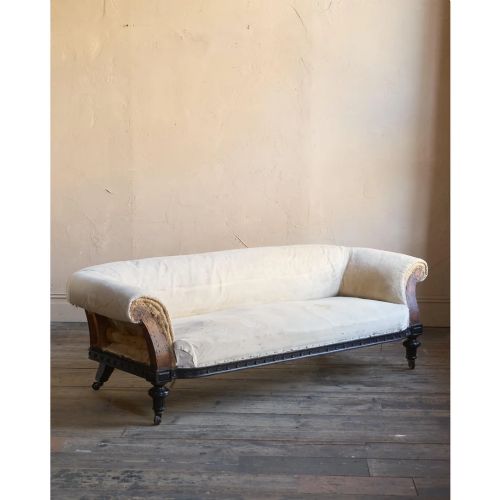
The form spans straightforward upholstered frames, show frame carved walnut Chesterfields in leather or fabric, and day beds or chaise longues. Such variety reflects the shifting domestic fashions of Victorian, Regency, and Second Empire interiors.
What Varies in Quality
Quality rests upon the crispness of the hand carving on the walnut frame and the structural integrity of the joinery beneath the upholstery. Pieces with deeply figured wood veneers and balanced proportions command greater attention.
The grade of the original or replacement upholstery, alongside the preservation of period details like marquetry and show frame polish, dictates the overall refinement of the piece.
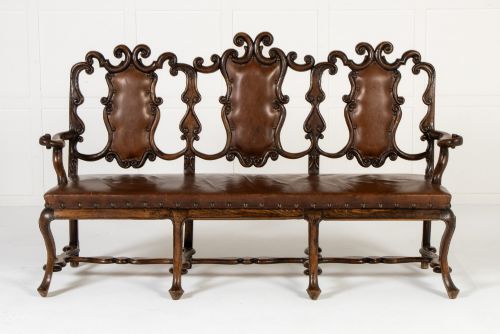
Listings feature walnut frames paired with leather, velvet, and textile upholstery across Victorian, Regency, and Aesthetic Movement periods.
Howard And Sons·Thomas Hope
The 19th Century Walnut Settee Glossary
- Canapé
- An upholstered French sofa featuring an exposed wooden frame. These pieces typically display carved walnut woodwork and cabriole legs.
- Chesterfield
- A large upholstered sofa characterised by deep button tufting and rolled arms. Victorian examples frequently combine walnut framing with leather or velvet upholstery.
- Salon Suite
- A matched group of seating furniture designed for a formal drawing room. These sets usually comprise a central settee accompanied by armchairs and side chairs.
- Marquetry
- Decorative veneer patterns formed by fitting together small pieces of wood and other materials. Dutch makers applied this technique to create floral and geometric surface designs.
- Show Frame
- An exposed wooden structural skeleton that frames the upholstered portions of a seat. Walnut show frames often feature elaborate Victorian or Rococo Revival carvings.
19th Century Walnut Settee: Frequently Asked Questions
How do I identify a Victorian walnut settee?
Look for characteristic nineteenth century revival styles, such as Rococo Revival curves, button back upholstery, and dark walnut show frames with hand-carved details.
Examine the legs and woodwork for period construction methods and timber grain typical of nineteenth century cabinet making.
Were these settees used in everyday rooms?
Original nineteenth century settees generally served formal drawing rooms, parlours, and reception spaces rather than casual family areas.
Their substantial construction and decorative upholstery reflect the social entertaining habits of Victorian and continental households.
How do I care for antique walnut furniture?
Keep wooden frames away from direct sunlight and heat sources to prevent the walnut veneer from drying out or cracking.
Dust the carved woodwork regularly with a soft cloth and protect upholstered surfaces according to their specific fabric or leather requirements.