

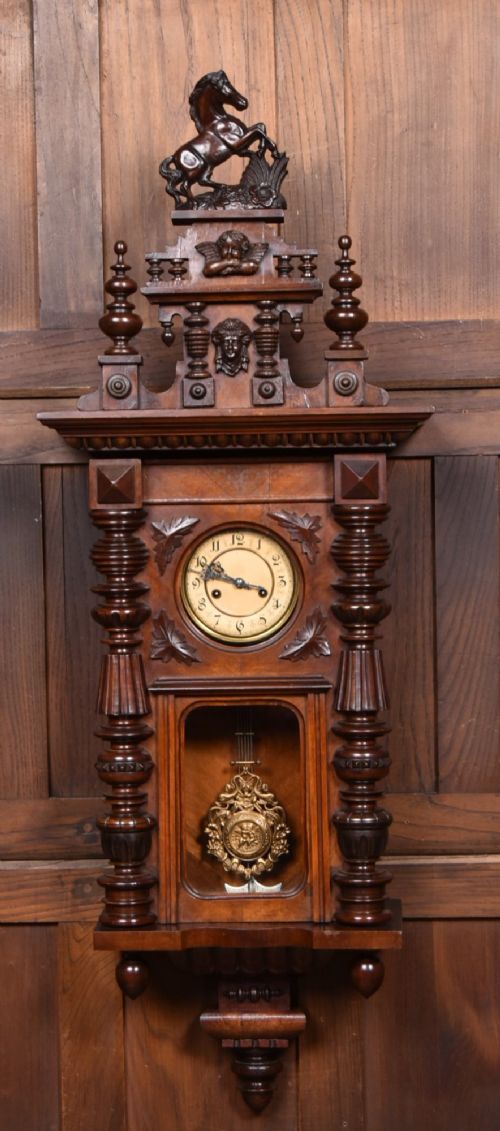


19th Century Vienna Regulator
A 19th century vienna regulator is a precision wall clock prized for accurate timekeeping and elegant walnut cases.
19th Century Vienna Regulator
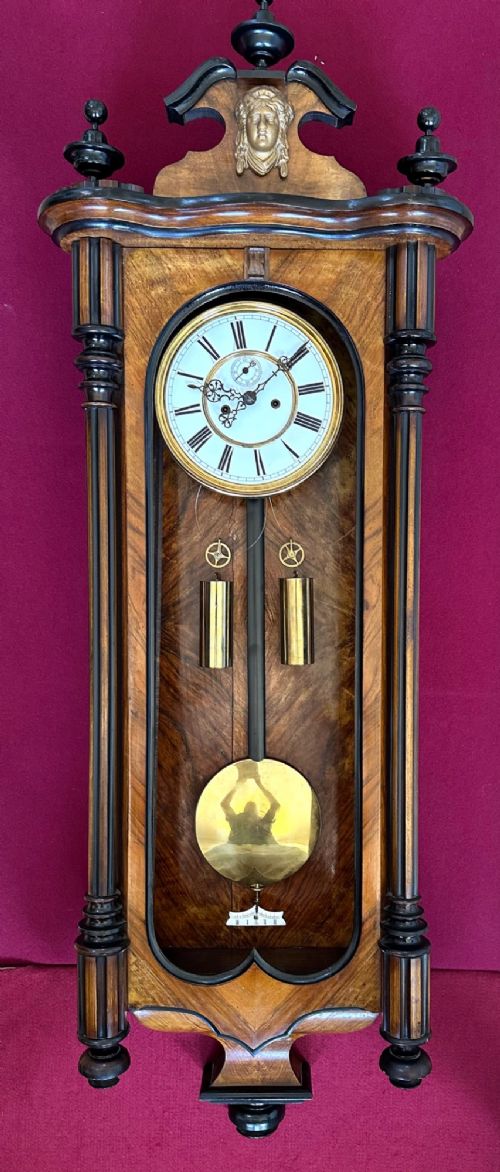
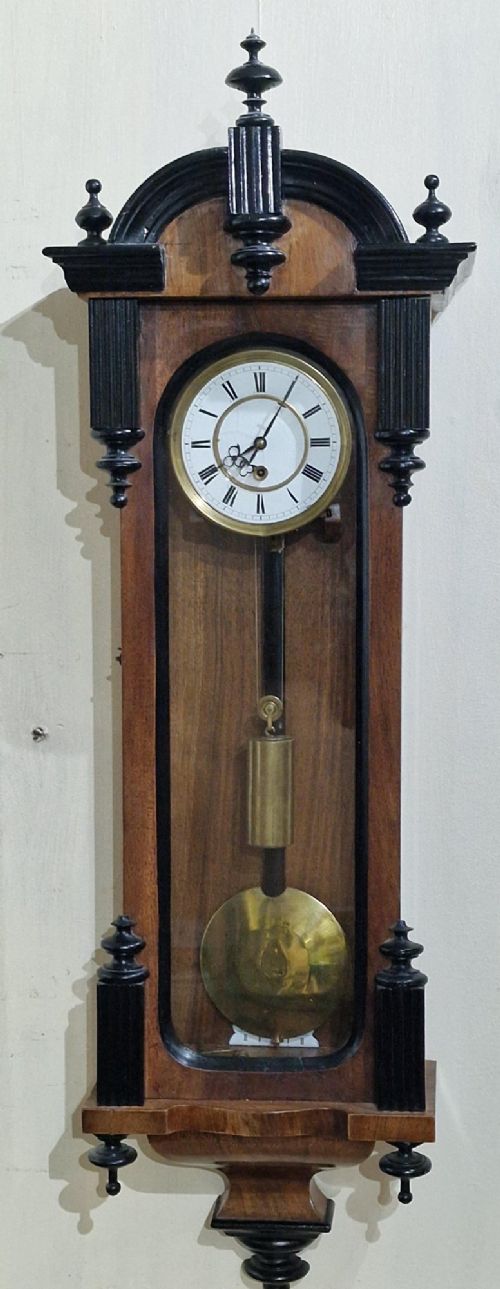
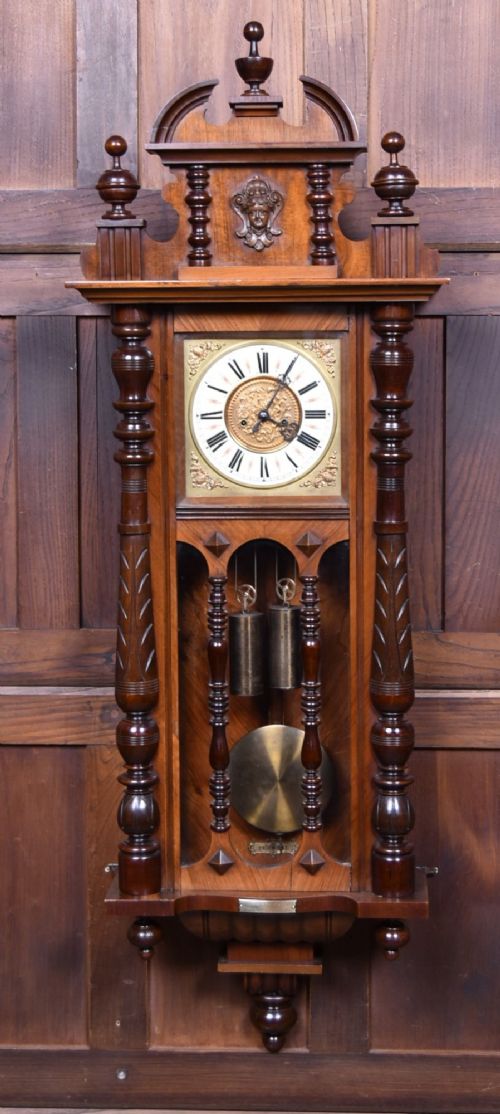
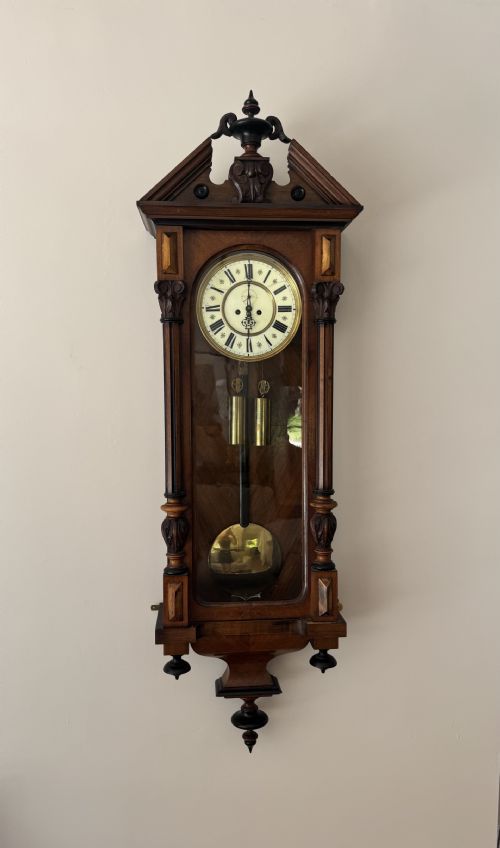
A 19th century vienna regulator is a wall clock designed for domestic and formal interiors, most frequently encountered in walnut cases with glass panels. These pieces span the Victorian period and earlier decades, appearing primarily as wall clocks with single, double, or triple brass weights.
Makers produced these clocks in various formats, including month duration movements, grande sonnerie striking, and miniature two-train configurations. The Biedermeier style and Austrian origins dominate the selection, alongside German and Victorian interpretations.
Buyers will find that the core of this selection relies on eight-day striking mechanisms housed in polished timber frames. Drop dial formats and carved walnut variations provide further choice for collectors seeking period accuracy.
What varies in quality
The standard of carving and the selection of walnut or mahogany timber distinguish higher grade pieces from simpler workshop productions. Cabinet construction, from tight joinery to the depth of the timber polish, marks the distinction.
Movement complexity further defines the range, moving from standard single-weight eight-day clocks to intricate triple weight grande sonnerie systems. The quality of the enamel dial and the crispness of the brass fittings complete the hierarchy.
19th Century Vienna Regulator Retail Price Guide 2026
Typical asking prices for 19th century vienna regulator among the pieces listed under this phrase on Sellingantiques today, from the lower quarter to the upper quarter. They describe what is for sale here now, not the wider market.
Every pendulum swing carries the quiet hum of nineteenth-century engineering, keeping domestic time precisely as intended over a century ago.
AG Lenzkirch·Gustof Becker·Gustav Becker
The 19th Century Vienna Regulator Glossary
- Regulator clock
- A precision timekeeper designed for high accuracy, typically featuring a long pendulum and a prominent seconds sub-dial. These clocks served as time standards in households and offices.
- Grande sonnerie
- A striking mechanism that chimes the hours and quarters automatically on every quarter hour. This complex movement requires multiple weight trains.
- Biedermeier
- An influential Central European design style from the mid-19th century prioritising clean lines and utilitarian elegance. Furniture and clocks from this period favour polished veneers and restrained ornamentation.
- Drop dial
- A clock case design where the dial sits above an extended glazed trunk that houses the pendulum. This form accommodates the longer swing required by precision movements.
- Two-train
- A movement configuration containing two separate gear trains, one for timekeeping and one for striking. This setup allows the clock to sound the hours independently of its drive power.
19th Century Vienna Regulator: Frequently Asked Questions
How do I wind a vienna regulator?
Use the winding key provided to turn the arbors on the enamel dial face until the weights reach the top of the case. Take care not to over-wind the movement.
Ensure you support the weight slightly if necessary to avoid straining the cord or chain during this process.
Where should I hang a wall clock?
Mount the clock on a solid interior wall using sturdy fixings that can support the substantial weight of the timber case and brass mechanism. Avoid exterior walls subject to dampness.
Level the case carefully on the wall so the pendulum swings with an even beat from side to side.
What is a double weight clock?
A double weight clock utilises two hanging brass weights to power separate trains within the movement, typically one for the time and one for the strike. This removes the need for spring barrels.
The weights require adequate drop space inside the wooden case to run for their designated duration before needing rewinding.
How do I tell Biedermeier from Victorian styles?
Biedermeier pieces emphasise smooth timber surfaces and minimal architectural details, reflecting a mid-19th century preference for restraint. Victorian examples often feature heavier carving and darker walnut finishes.
Examining the casework reveals these stylistic differences clearly through the presence or absence of applied ornamentation.