
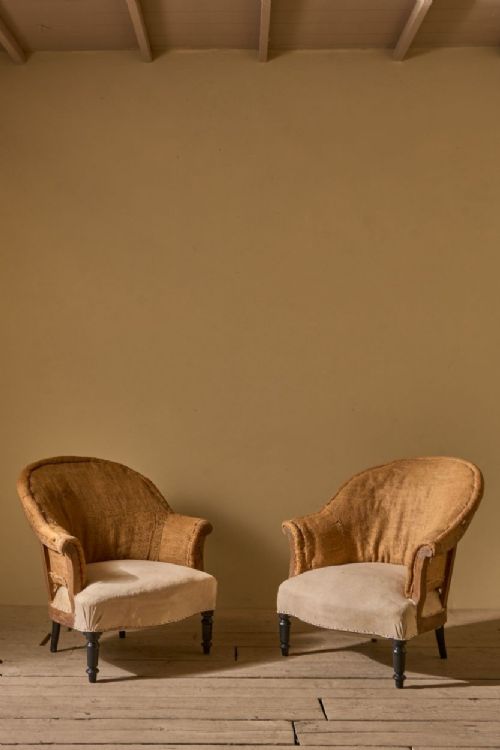
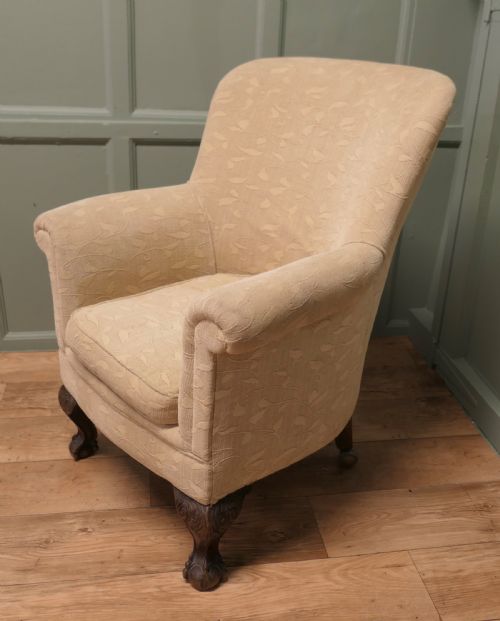
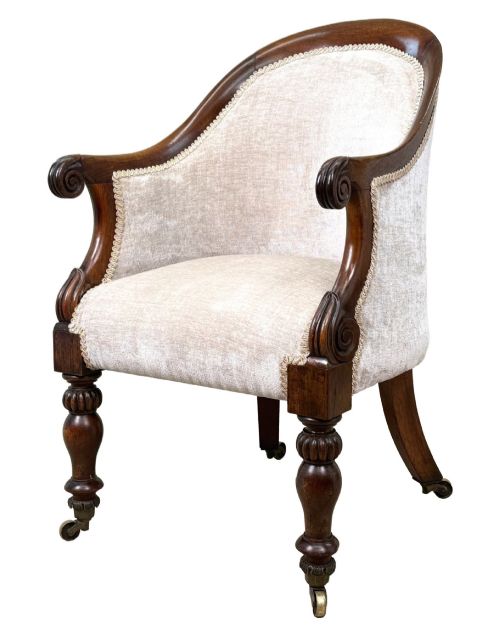
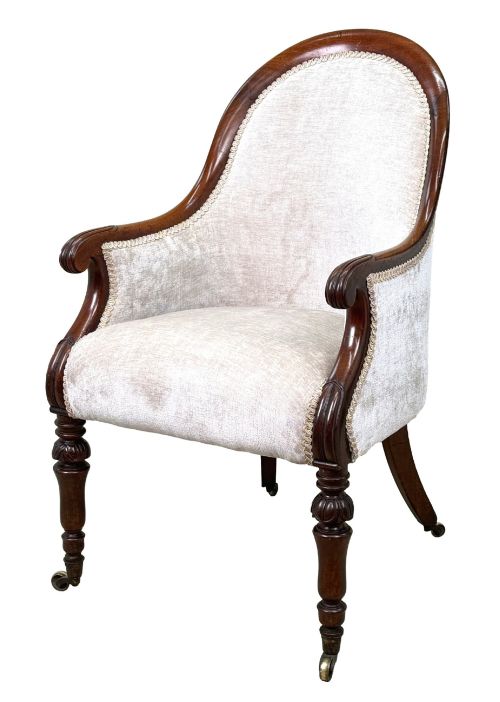
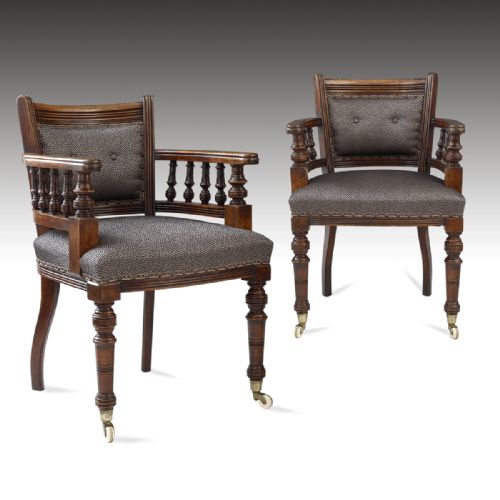
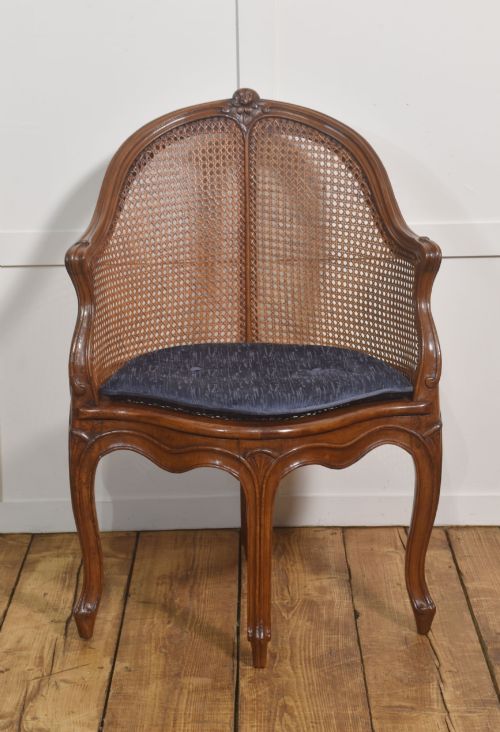
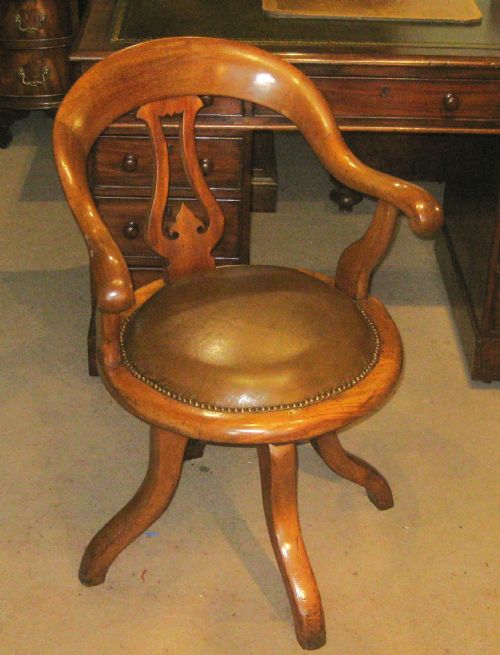
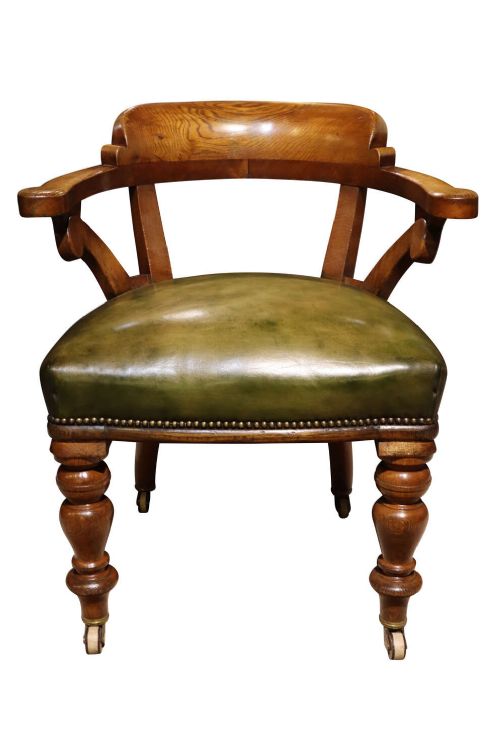
19th Century Tub Armchair
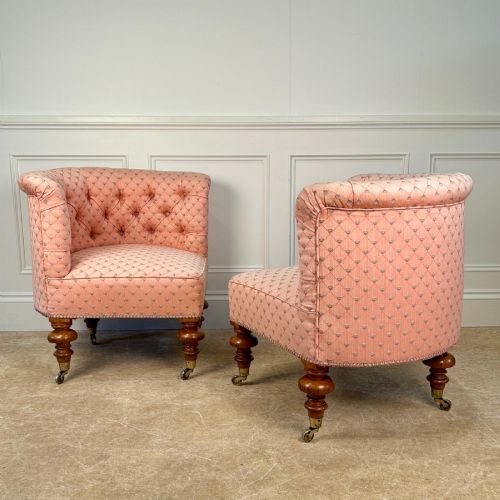
The 19th century tub armchair wraps the sitter in a continuous, curved back designed for warmth and long hours at the desk or fireside.
19th Century Tub Armchair
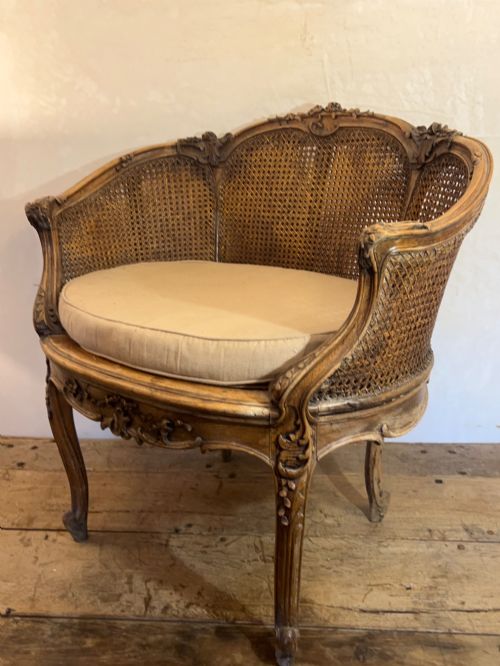
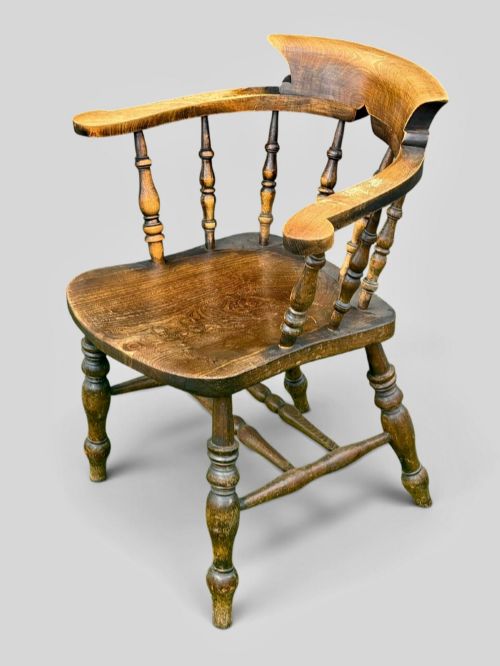
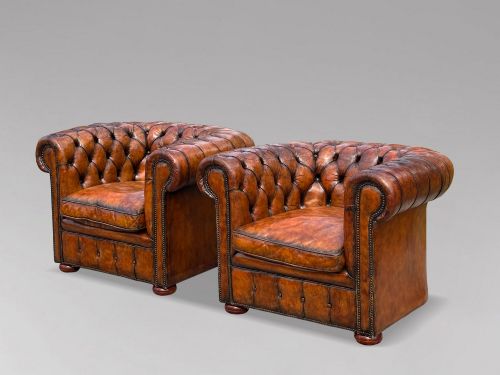
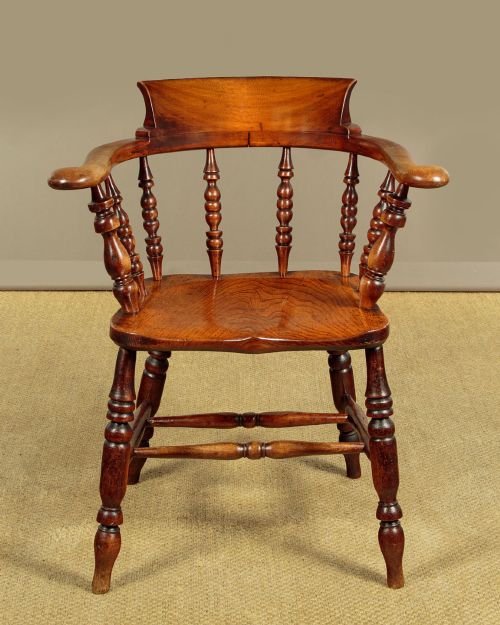
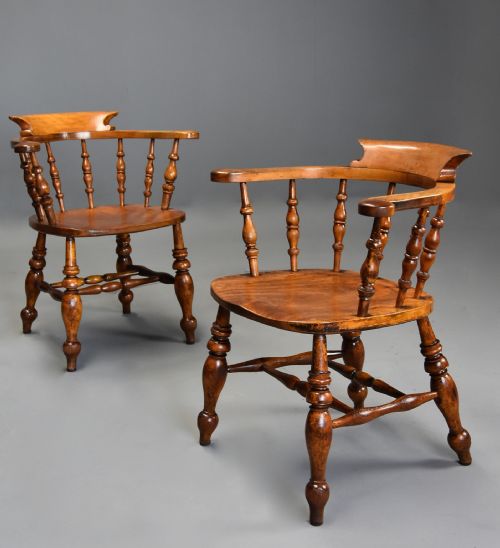
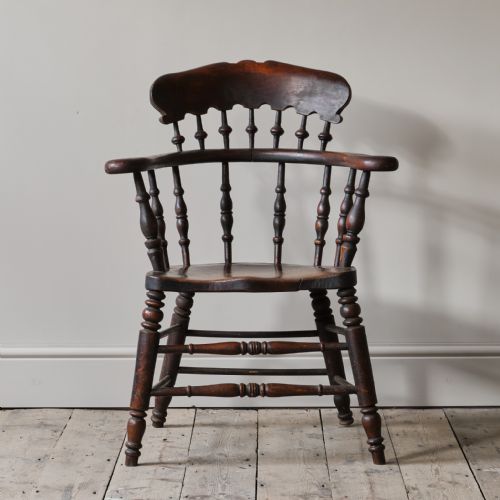
The versions most commonly met in daily selection range from sturdy mahogany library chairs upholstered in leather to elm and beech smokers bows, alongside French walnut and cane corbeille seats. Makers of the era shaped these forms for studies, drawing rooms, and country houses alike.
Beyond standard domestic seating, the category extends to revolving desk chairs, occasional chairs, and low ladies tub designs. Each shares the characteristic barrel-shaped back that defines the 19th century tub armchair.
Materials and construction
Cabinet makers built the frames of these armchairs using dense hardwoods such as mahogany, walnut, and rosewood for formal library and parlour pieces, while regional workshops relied on ash, elm, beech, and birch for Windsor and smokers bow variants. Brass castors, inlay, and ebonising often completed the finer Regency and Victorian examples.
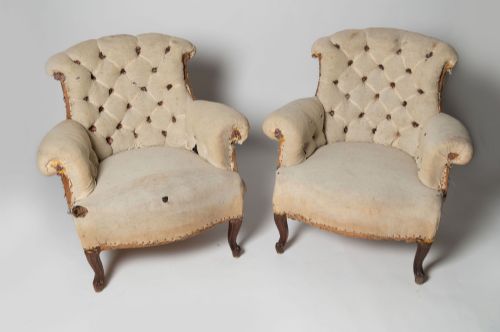
Upholstery methods defined the comfort of the tub shape, employing buttoned leather, hessian, velvet, and fabric stretched over coiled springs and traditional stuffing. Caning was frequently utilised on French Louis XV style frames to provide a lighter texture.
Joinery techniques combined traditional turned spindles, steam-bent wooden rails for the continuous back, and robust mortise and tenon joints capable of withstanding heavy daily use in studies and offices.
Listings feature mahogany, walnut, rosewood, oak, elm, and beech, alongside leather, velvet, hessian, and cane.
Distinctions in quality
The calibre of a piece rests primarily on the selection of timber and the precision of the joinery in the curved back frame, where steam-bending or segmented carving must maintain absolute structural integrity. Finer examples display crisp mouldings, carefully matched wood grain, and original brass hardware such as maker-stamped castors.
Upholstery standards create a distinct separation across the range, dividing utilitarian seating from works finished with meticulous hand-buttoning, quality leather, and traditional supportive stuffing that preserves the correct posture of the curved back.
Gillows·Cope and Collinson·Mackenzie and Mitchell·Howard and Sons·Holland and Sons
The 19th Century Tub Armchair Glossary
- Tub armchair
- An upholstered seat featuring a continuous curved back and arms forming a single barrel-like enclosure. This design originated to keep draughts away from the sitter.
- Smokers bow
- A sturdy wooden armchair with a low curved spindle back, closely related to Windsor chair forms. It was widely used in Victorian smoking rooms and offices.
- Bergère
- An enclosed upholstered armchair with wooden framing exposed around the sides and back. Many 19th century interpretations follow French Louis XV or Regency aesthetics.
- Corbeille
- A French term describing a basket-shaped armchair with a rounded, enveloping back. These pieces often feature carved walnut or gilt framework.
- Castor
- A small wheel attached to the base of chair legs to allow smooth movement. Better 19th century examples frequently feature brass fittings marked by specialist makers.
19th Century Tub Armchair: Frequently Asked Questions
What defines a tub armchair?
A tub armchair is characterised by a low, curved backrest that wraps around in a continuous semi-circle to form the arms.
This enclosed shape was originally designed to block draughts in chilly 19th century rooms while providing snug support.
Where were these chairs used?
These chairs served primarily in libraries, studies, and drawing rooms as comfortable seats for reading, writing, or resting by the fire.
Heavier leather versions typically stood in offices and gentlemen's clubs, while lighter cane and walnut variants belonged in formal parlours.
How do I distinguish Regency from Victorian examples?
Regency tub armchairs generally exhibit restrained classical lines, sometimes incorporating brass inlay, ebonised wood, or sabre legs reflecting early 19th century neoclassical tastes.
Victorian pieces tend to be heavier and more robust, frequently featuring deep buttoning, rich mahogany or walnut frames, and turned legs with castors.
How should I care for leather upholstery?
Leather upholstery on 19th century chairs benefits from regular dusting with a soft, dry cloth and occasional treatment with a suitable leather conditioner.
Keeping the material away from direct sunlight and heat sources prevents the historic hide from drying out and cracking.